
 By Bogdan Rancea
Best overall

Shopify
See pricing Visit Shopify →From $39/month
Basic plan, billed monthly
- Hosting and security included
- Large app and theme ecosystem
- Online, POS, and social selling
Closest open-source fit
WooCommerce
See pricing Visit WooCommerce →Free core
Hosting and extras cost more
- WordPress content integration
- Extensive plugin and theme library
- Free open-source core
Feature-rich open source

PrestaShop
See pricing Visit PrestaShop →Free core
Hosting and paid modules extra
- Built-in marketing and SEO tools
- Multiple languages and currencies
- Free open-source core
OpenCart has been a go-to open-source cart for small and mid-sized merchants for over a decade. It’s free, lightweight, and gives you full control over your store.
But in 2026, that “self-managed PHP cart” model is starting to feel like a heavy lift, especially when modern platforms handle hosting, security, and scaling for you out of the box. So if not OpenCart, then what?
We present 10 of the best alternatives to OpenCart across hosted SaaS platforms, self-hosted open-source carts, and modern headless backends, and explain why you might want to look beyond OpenCart in 2026.
Why Not OpenCart?
OpenCart is one of the most established open-source ecommerce platforms on the market, but like any platform, it has its strengths and weaknesses. Here are some of the biggest drawbacks merchants flag in 2026:
- Maintenance overhead. You’re responsible for hosting, backups, security patches, and PHP/MySQL upgrades. Skip a patch and you risk downtime or a breached store.
- Smaller ecosystem than rivals. OpenCart has a decent extension marketplace, but it’s a fraction of what WooCommerce or Shopify offer. You’ll occasionally hit a feature gap with no plugin to fill it.
- Performance depends on your stack. Page speed, security, and uptime live or die by your hosting choice. A cheap shared host means a slow, fragile store, no matter how clean OpenCart’s code is.
- Limited modern features out of the box. Headless commerce, native multi-channel selling, and built-in marketing tools either require third-party modules or custom dev work.
- Still “just” a self-hosted cart. You handle the server, the upgrades, the integrations, and the firefighting. For many merchants in 2026, that trade-off no longer makes sense versus a managed platform.
If these drawbacks of OpenCart are crucial for your project, it’s time to look for an alternative.
10 of the Best Alternatives to OpenCart
The best OpenCart alternative depends on what bothers you about OpenCart. Here are ten alternatives that are better than OpenCart in one way or another, grouped roughly from “easiest swap” to “most ambitious rebuild.”
| Platform | Type | Hosting | Starting Price | Best For |
|---|---|---|---|---|
| Shopify | Hosted SaaS | Fully hosted | $39/month | SMBs to mid-market wanting fastest setup |
| WooCommerce | WordPress plugin | Self-hosted | Free core | Content-driven brands on WordPress |
| PrestaShop | PHP open source | Self-hosted | Free core | SMEs scaling internationally |
| Magento Open Source | PHP open source | Self-hosted | Free core | Large catalogs and B2B complexity |
| BigCommerce | Hosted SaaS | Fully hosted | $39/month | API-first and headless-friendly SaaS |
| nopCommerce | .NET open source | Self-hosted | Free | Microsoft-stack development teams |
| Squarespace Commerce | Hosted SaaS | Fully hosted | $16/month | Design-led small stores |
| Medusa | Headless open source | Self-hosted | Free | Modern dev-led composable stacks |
| Saleor | Headless open source | Self-hosted or cloud | Free | GraphQL-first headless builds |
| WordPress + Custom Stack | CMS-led | Self-hosted | Free core | Maximum flexibility and ecosystem |
1. Best Overall: Shopify

Shopify is the fully-hosted SaaS platform that solves nearly every pain point merchants leave OpenCart for. Hosting, security, payments, and updates are handled for you, and the app ecosystem covers almost any feature gap. If you want to stop managing servers and start selling, Shopify is the most direct upgrade path.
For most merchants leaving OpenCart, Shopify is the obvious answer. The platform handles every infrastructure headache that comes with running an open-source cart, and its tooling is built around getting a store live quickly rather than configuring modules and tweaking PHP files.
What pushes Shopify ahead of OpenCart isn’t any single feature, it’s the removal of complexity. Hosting, SSL, PCI compliance, and security patches are all baked in.
The Shopify Payments gateway is built in, transaction fees disappear when you use it, and you get one dashboard for online, in-person, and social commerce. The Shopify App Store covers nearly every plugin gap OpenCart users typically run into, from advanced shipping to subscriptions to B2B pricing.
Pricing starts at $39/month for Basic, $105/month for Grow, and $399/month for Advanced, with Shopify Plus from around $2,300/month for enterprise needs. There’s a 3-day free trial followed by $1/month for the first three months.
Shopify is the better tool for merchants who want to stop being part-time sysadmins and focus on selling.
Pros
- Zero infrastructure management, hosting and security handled
- Quick setup, store can be live in under a day
- Massive app and theme ecosystem
- Strong native multi-channel (POS, social, marketplaces)
- Reliable global infrastructure with high uptime
Cons
- Monthly fees vs OpenCart’s free license
- Transaction fees on third-party payment gateways
- Less control over checkout and core code than open source
- Customizations beyond themes can require Shopify-specific dev skills
2. Closest Open-Source Alternative: WooCommerce
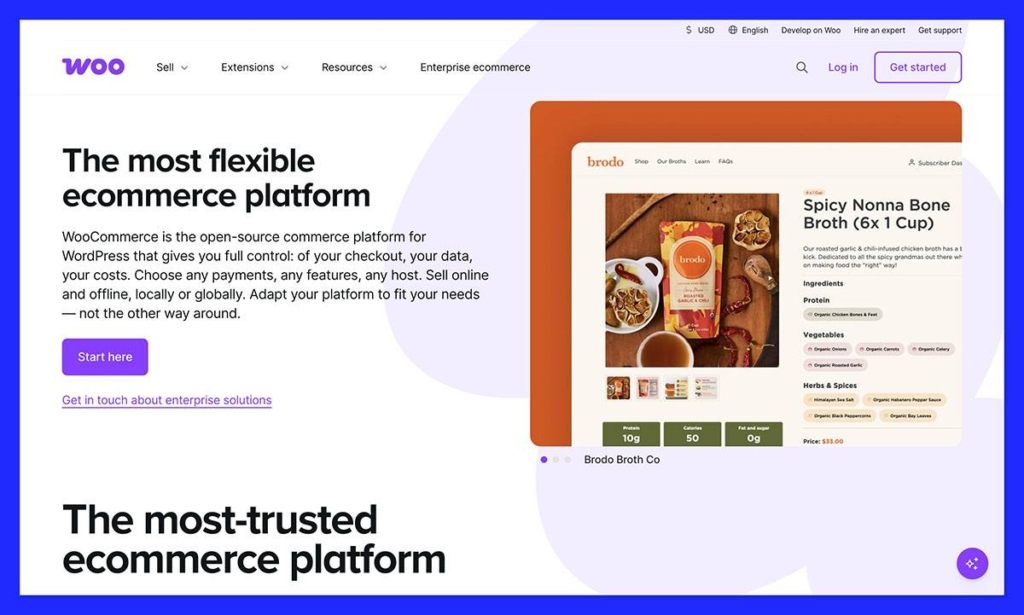
WooCommerce is the natural sideways move for OpenCart users who want to stay open source and self-hosted but join a much larger ecosystem. It’s a free WordPress plugin with the biggest plugin and theme library in ecommerce, ideal if your site is content-heavy or already on WordPress.
If you like OpenCart’s open-source, self-hosted philosophy but want a much bigger ecosystem, WooCommerce is the obvious move.
It’s a WordPress plugin, so you get every WordPress strength on top: SEO plugins, page builders, memberships, blogging, and a plugin marketplace far larger than OpenCart’s.
The trade-off is that WooCommerce inherits WordPress’s weaknesses too. Page speed and security are only as good as your hosting and plugin discipline. Stack too many plugins and the site bloats. But for content-driven brands or merchants already running WordPress, WooCommerce removes friction in a way no other cart can match.
Pros
- Massive ecosystem of plugins and themes
- Tight integration with WordPress content tools
- Free core with low entry cost
- Huge community and developer pool
Cons
- Performance hinges on hosting quality
- Plugin sprawl can introduce conflicts and security risks
- Still self-hosted, so you handle backups, updates, and patches
3. Best Feature-Rich Open-Source: PrestaShop
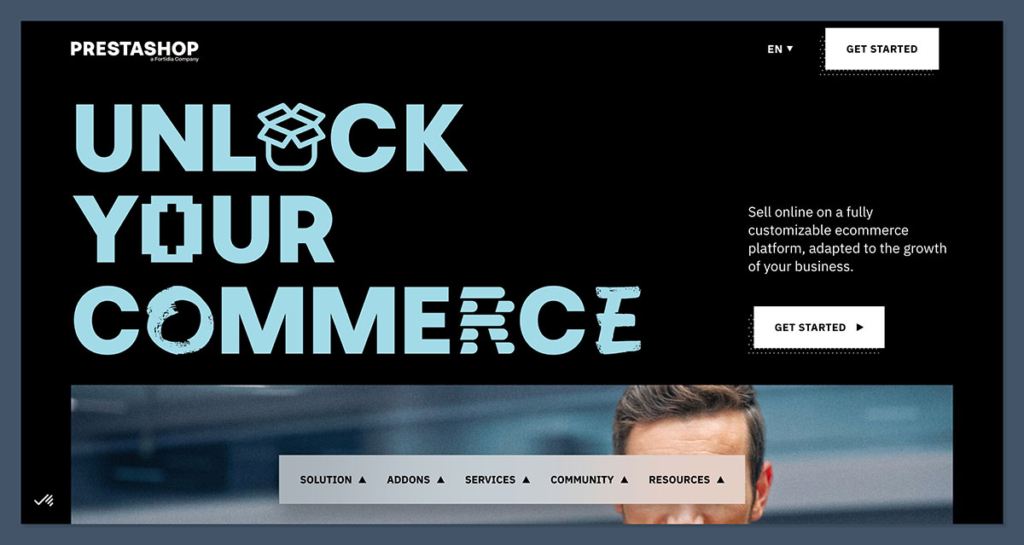
PrestaShop is often cited as the most direct OpenCart competitor, with deeper out-of-the-box features and stronger built-in tools for marketing, multi-language, and multi-currency stores. A solid pick for SMEs scaling internationally.
Like OpenCart, PrestaShop is self-hosted, built on PHP, and free at its core, but it includes a richer feature set.
Built-in tools for marketing campaigns, multi-language storefronts, multi-currency pricing, and SEO are stronger than OpenCart’s defaults, which means fewer modules to install and configure on day one.
The catch is complexity. PrestaShop’s admin is denser than OpenCart’s, and many advanced modules and themes are paid. Total cost of ownership can creep up despite the free license. Still, for SMEs running international stores who want depth without leaving the open-source PHP world, PrestaShop is hard to beat.
Pros
- Deep built-in marketing and SEO tools
- Strong multi-language and multi-currency capabilities
- Free open-source core
- Active module marketplace
Cons
- Steeper learning curve than OpenCart
- Many advanced modules and themes are paid
- Self-hosted, so hosting and maintenance are still on you
4. Best for Large Catalogs: Magento Open Source
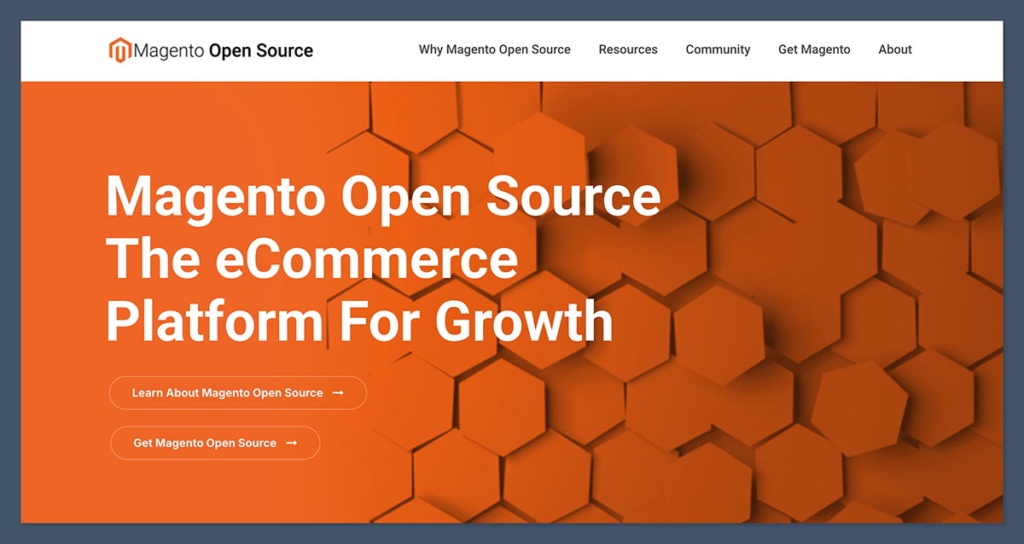
Magento Open Source (now Adobe Commerce OSS) is the go-to platform for large, complex catalogs and enterprise-grade self-hosted stores. It’s overkill for most small merchants but unmatched if you need to manage 100,000+ SKUs, multiple stores, or complex B2B pricing rules.
If OpenCart starts straining as your catalog grows past a few thousand SKUs, Magento Open Source is the natural step up.
It’s built for complex, large-scale stores: deep attribute systems, multi-store, multi-warehouse, sophisticated pricing rules, and B2B workflows are all native.
The trade-off is operational weight. Magento needs proper hosting, ideally with a Magento-savvy partner, and Magento-experienced developers aren’t cheap. For small merchants, this is overkill. But for brands with serious catalog or B2B complexity, the depth justifies the investment.
Pros
- Handles 100,000+ products and high traffic comfortably
- Deep customization and extensibility
- Strong B2B feature set
- Mature partner and hosting ecosystem
Cons
- Significant hosting and developer costs
- Overkill for simple stores
- Steep learning curve for store admins
5. Best API-First SaaS: BigCommerce

BigCommerce is positioned as the API-friendly Shopify alternative, hosted SaaS with strong headless support and no platform transaction fees. A good fit for mid-market brands that want SaaS ease without locking themselves into a closed system.
BigCommerce combines the convenience of Shopify with much of the flexibility of a headless backend. It gives you SaaS convenience but exposes a richer set of APIs, which makes it easier to build custom storefronts in React or Next.js while keeping inventory, orders, and payments on a managed platform.
The Standard plan also bundles features like reviews and reporting that on Shopify would mean paid apps.
Pricing starts at $39/month for Standard, $105/month for Plus, and $399/month for Pro, with custom Enterprise pricing above. The big drawback is the revenue-tied pricing. Each plan has a maximum annual sales threshold, and once you cross it, you’re moved up automatically. Worth modeling against your projections before committing.
Pros
- API-first design suits headless and custom storefronts
- No platform transaction fees on any plan
- More built-in features than competitors at the same price
- Strong multi-channel selling tools
Cons
- Sales-volume thresholds force plan upgrades
- Admin is less plug-and-play than Shopify for non-technical users
- Smaller app ecosystem than Shopify
6. Best for .NET Teams: nopCommerce
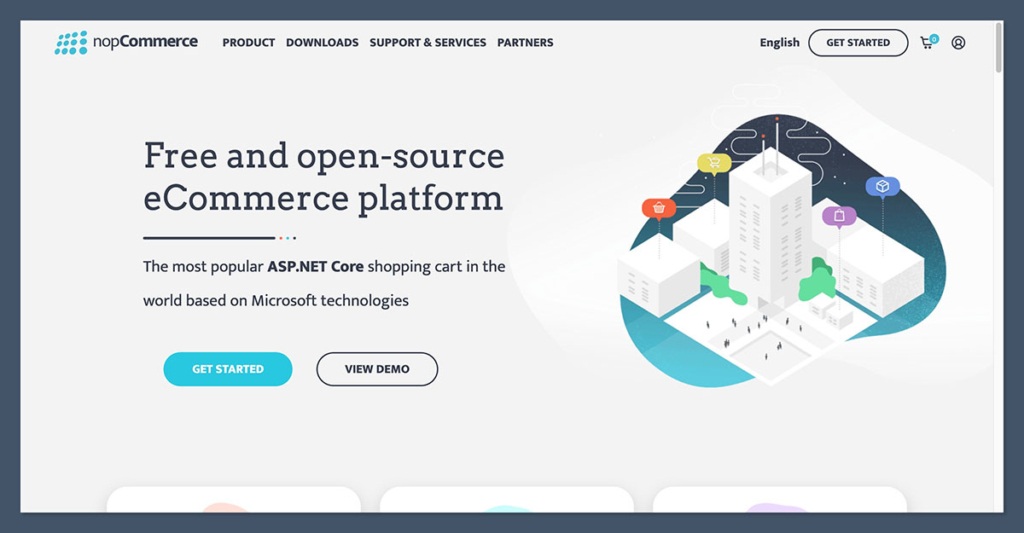
nopCommerce is the strongest open-source ecommerce platform in the Microsoft stack. If your team already lives in .NET, or you want C#-based architecture and tight integration with Microsoft tooling, nopCommerce is the natural OpenCart alternative.
nopCommerce is a niche but solid pick.
It’s free, self-hosted, and built on ASP.NET and C# rather than PHP, which makes it the go-to open-source cart for teams already invested in the Microsoft ecosystem. Multi-store and B2B features are stronger out of the box than OpenCart.
The catch is that the community is smaller than WooCommerce’s or PrestaShop’s, so you’ll find fewer plugins, themes, and Stack Overflow answers. If you’re not already on .NET, the other open-source carts will give you more momentum.
Pros
- Native fit for Microsoft-stack development teams
- Strong multi-store and B2B capabilities
- Free with no license fees
Cons
- Smaller plugin and theme ecosystem
- Less developer talent available than for PHP carts
- Self-hosted, so infrastructure is still your problem
7. Easiest to Use: Squarespace Commerce

Squarespace is a design-first website builder with built-in commerce. If your store leans creative or visual (boutiques, photographers, makers, small-catalog brands), Squarespace gives you elegant templates and the simplest path from blank canvas to live store.
If OpenCart’s biggest pain for you is “I just want a clean store without managing servers or wrestling templates,” Squarespace is the friendliest landing spot.
Designs are elegant by default, and the editor focuses on content over configuration. Pricing starts at $16/month for the Personal plan.
The trade-off is depth. Squarespace’s commerce features cover the basics well but lack the extensibility of Shopify or the raw control of an open-source cart. For small catalogs and design-driven brands, it’s perfect. For complex inventory or B2B workflows, look elsewhere.
Pros
- Best-in-class templates and design polish
- Extremely easy to use
- Site, blog, and store on one platform
Cons
- Limited app ecosystem vs Shopify
- Less flexibility for complex catalogs
- Fewer payment gateway options
8. Best Modern Headless: Medusa
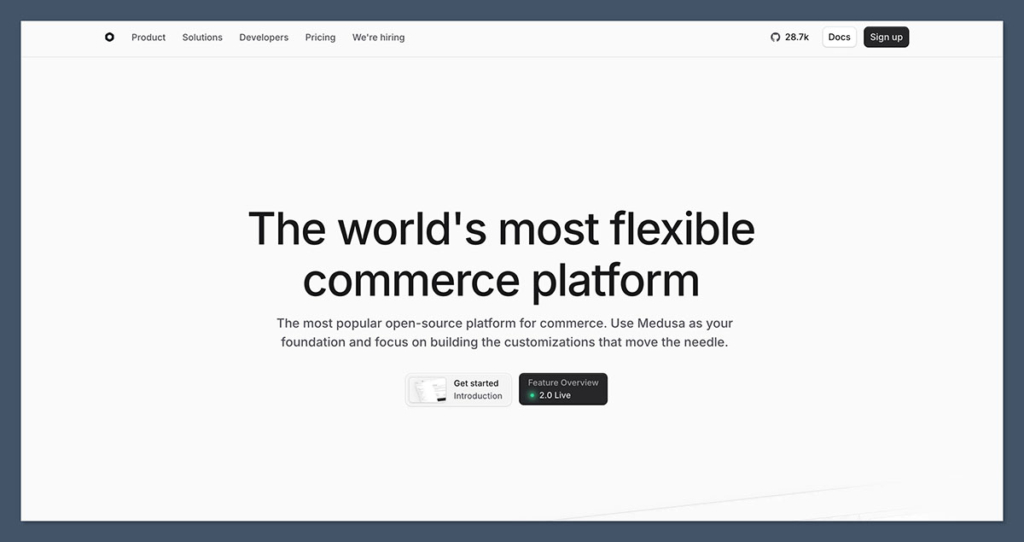
Medusa is one of the leading open-source headless commerce backends in 2026. Think of it as “Shopify, but you own the code”: a JavaScript and TypeScript engine that powers any frontend you want to build, from React to Next.js to native apps.
Medusa is what OpenCart might have looked like if it were designed today.
It’s an open-source headless ecommerce engine built in TypeScript, decoupled from any specific frontend, and meant to be paired with whatever storefront you want to build. For dev-led brands, it offers full ownership of code and data without the operational weight of Magento.
This isn’t a beginner option. Standing up a Medusa store requires real engineering, both for the backend and the frontend. But for teams who want a modern, composable stack and the freedom to build differentiated storefronts, it’s one of the strongest open-source picks of 2026.
Pros
- Modern TypeScript and Node.js stack
- Fully open source and self-hostable
- Headless by design, frontend-agnostic
- Strong fit for composable commerce stacks
Cons
- Requires significant development resources
- No “out of the box” admin polish like Shopify
- Smaller ecosystem than Shopify or WooCommerce
9. Best GraphQL Headless: Saleor
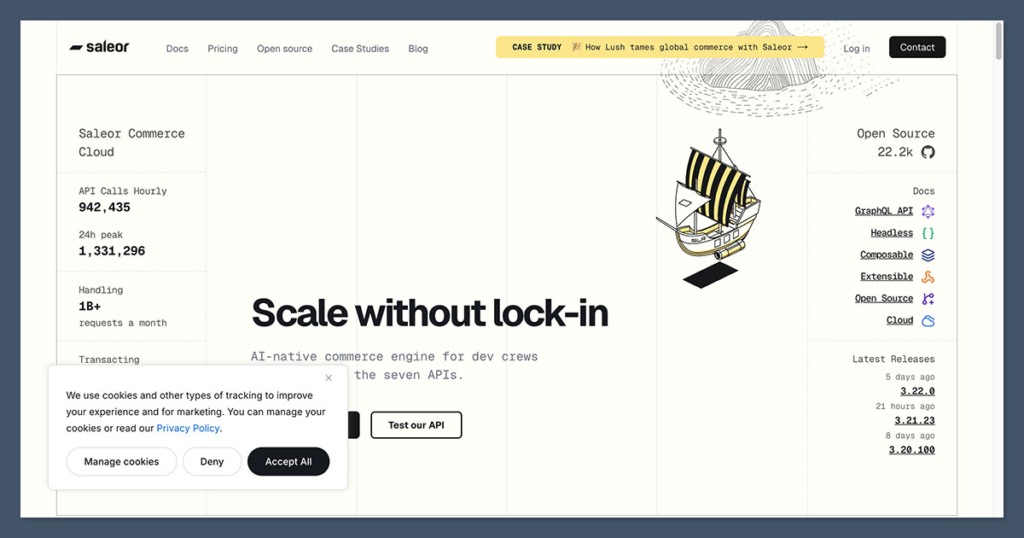
Saleor is a GraphQL-native, Python-based headless commerce platform built for teams that want a modern API-first backend with strong PIM, multi-warehouse, and B2B-ready features. A solid pick for ambitious composable commerce builds.
Saleor is another modern headless option, but it takes a different technical approach from Medusa: Python and Django on the backend, GraphQL on the API layer.
For teams already comfortable with Django or coming from a Python data background, it’s a natural choice. The platform’s PIM and multi-warehouse capabilities are notably mature for an open-source headless backend.
Like Medusa, Saleor is a developer’s tool. It’s not where you go to launch a store this weekend. But for brands building serious composable stacks with custom storefronts and complex catalog logic, it’s one of the most polished options on the market.
Pros
- GraphQL-first API design
- Strong PIM and multi-warehouse features
- Self-hosted or managed cloud options
- Active enterprise-leaning roadmap
Cons
- Python and Django stack is narrower than JS or PHP
- Significant dev work to launch
- Smaller plugin ecosystem than mainstream carts
10. Most Flexible Overall: WordPress + Custom Stack
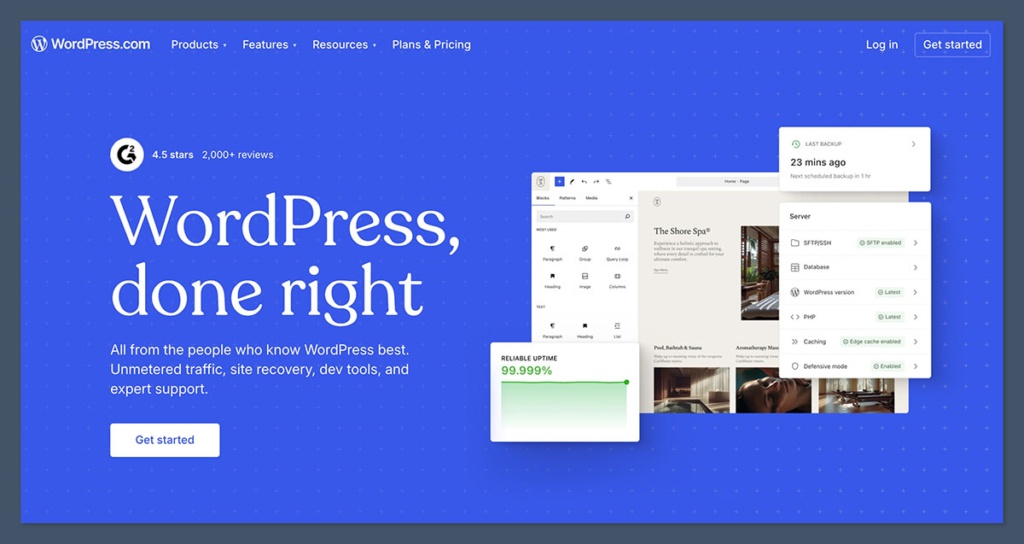
The platforms above are all carts in one form or another, hosted, self-hosted, or headless. They can’t fully escape their own architectural choices. If you want maximum flexibility and don’t want to be locked into anyone’s product roadmap, the answer is to step outside the cart category entirely and build on a CMS like WordPress (with or without WooCommerce) paired with whichever payment, fulfillment, and inventory tools fit your business.
WordPress is open source and free to use.
You handle hosting, security, plugins, and integrations yourself, the same trade-off OpenCart asks of you, but with a vastly larger ecosystem and a much wider talent pool.
For merchants who want the deepest control and are willing to either learn or hire technical help, this is the most flexible setup of all.
This approach makes sense if your store is part of a larger content, membership, or media operation, or if you want to mix and match best-in-class tools rather than commit to one platform’s ecosystem. It’s the highest ceiling, but also the most operational work.
Conclusion
OpenCart is still a capable platform, but in 2026 it’s no longer the obvious answer for most merchants. The ecosystem has shifted: SaaS platforms have closed the customization gap, headless tools have raised the bar for modern stacks, and the operational cost of running your own PHP cart has gone up while the value has gone down.
If you want the simplest, most direct upgrade, Shopify is the safest answer.
It removes nearly every operational headache OpenCart leaves on your plate and scales smoothly from solo founder to enterprise.
If you want to stay open source, WooCommerce is the closest spiritual replacement with a much bigger ecosystem, and PrestaShop offers more out-of-the-box depth. For large catalogs, Magento Open Source still leads. For modern, dev-led builds, Medusa and Saleor are the headless picks of 2026.
And for design-led small stores, Squarespace gives you the cleanest visual on-ramp.
The right move depends on your team, catalog, and ambition. Most OpenCart merchants will land happily on Shopify or WooCommerce. The rest of this list is what to consider when those two don’t quite fit.


