
 By Bogdan Rancea
Best Overall
Xero
See pricing Visit Xero →$25 per month
$27 per month from October 2026
- Free native Shopify connection
- Unlimited users on every plan
- AI tools for automation and data capture
Best for US sellers

QuickBooks Online
See pricing Visit QuickBooks Online →$38 per month
- Rebuilt Shopify and Amazon connectors
- More than 750 integrations
- Payments in over 145 currencies
Best for growth

NetSuite
See pricing Visit NetSuite →Custom quote
- Inventory controls across multiple locations
- No transaction fees on any plan
- Accounts, CRM and ERP in one database
I’ve never had the best head for numbers, so for me, managing accounting is one of the toughest parts of running any kind of business, but it can be particularly stressful for ecommerce store owners.
As your site grows, the figures get more complex. You’re not just accepting payments, you’re gathering income from different sources and locations, dealing with inventory, fees, tax, sometimes even VAT, figuring out payouts, or returns and chargebacks. There’s a lot to deal with.
Any accounting software can make basic financial tasks a little easier, but not all of them are designed to handle the specifics of ecommerce. These are the six platforms I’d probably recommend first to online sellers, although each one has a specific appeal for a certain audience.
The Best Ecommerce Accounting Software: The Top Six Picks
The size of your business, and how complicated it is to run will probably make most of your decision for you here. NetSuite, for instance, is way too much for a small ecommerce company selling a few products through Shopify, while Wave might not be enough for teams with international sales. I’ll get into the details in a minute, but for now, here’s a quick side-by-side look at all six:
| Software | Starting Price | Ecommerce features | Best For |
|---|---|---|---|
| Xero | $25 per month ($27 as of October 1st) | Native Shopify integrations, A2X/ Link My Books, basic inventory, multicurrency support, unlimited users | Best overall |
| QuickBooks Online | $38 per month | Shopify and Amazon integrations, inventory management, automation, multiple sales channel management, multicurrency support | US retailers |
| NetSuite | Custom quote | Extensive inventory management, SuiteCommerce, No transaction fees, B2B and B2C support, excellent multicurrency capabilities | Growing businesses |
| Zoho Books | Free option or plans starting at $20 per month | Works with all Zoho tools, including Zoho Inventory and Zoho Commerce, AI and automation, multicurrency support, marketplace support | Best value |
| Sage 50 | $128.67 per month | Plenty of integrations, customer portals, multicurrency support, ERP integration, automatic re-syncing, advanced tax and shipping features | UK/ EU stores and complicated inventory |
| Wave | Free option, plans start at $19 per month | Unlimited bank connections, multi-currency support, transaction tags, invoices | Beginners with limited needs |
1. Xero: Best Accounting Software for Ecommerce Overall
Starting Price: $25 per month but increases to $27 in October 2026.
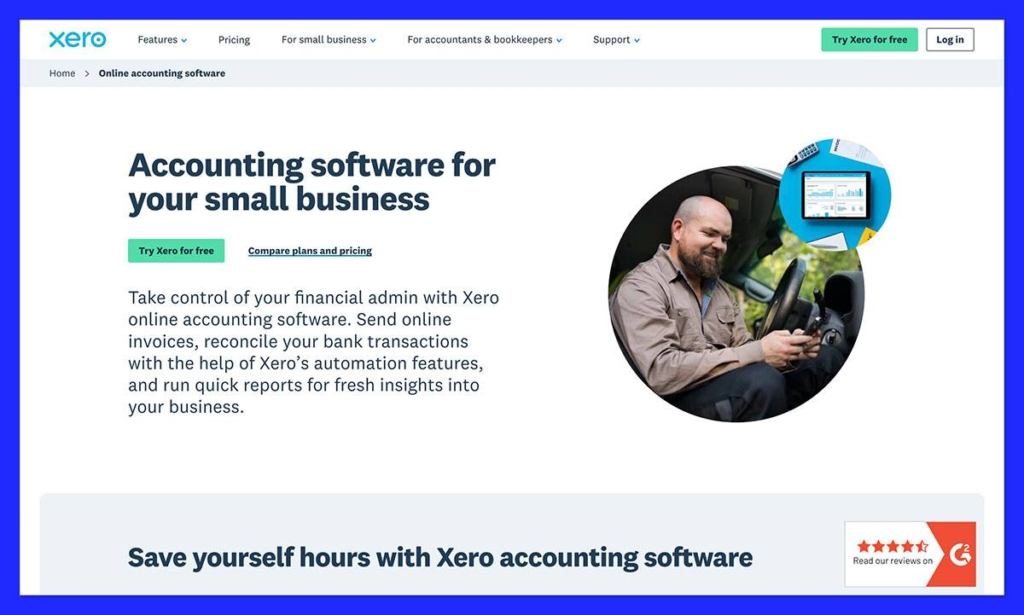
Xero is an easy number one choice, because it seems like it was designed almost specifically for ecommerce businesses, particularly with the free native Shopify connection. That integration can drag sales, payouts, feeds, refunds, and tax details from both online and POS transactions into your account, and let you choose between different types of summaries.
There are also connections for accounting automation tools like A2X, AI tools like JAX that can automate bookkeeping tasks, create dashboards, or answer questions, automatic receipt reading and bank reconciliation, as well as multicurrency support on higher plans.
Every plan also includes unlimited users, so you can have as many people as you like working with you on your books without paying extra. It’s not the best tool for inventory management (unless you pay for Inventory Plus), but everything else makes it an incredible pick for an online store, especially if you’re looking for something that’s both simple and scalable.
Pros
- Useful AI tools for automation, reporting, and data capture
- Unlimited users on every plan
- Free Shopify connection, plus dozens of other integrations
- Multi-currency support on higher tiers
- Full cloud access so you can check your books from anywhere
Cons
- Limited inventory features without Inventory Plus
- The first plan caps bills at 5, and invoices at 20
2. QuickBooks Online: Best for US Ecommerce Sellers
Starting Price: $38 per month
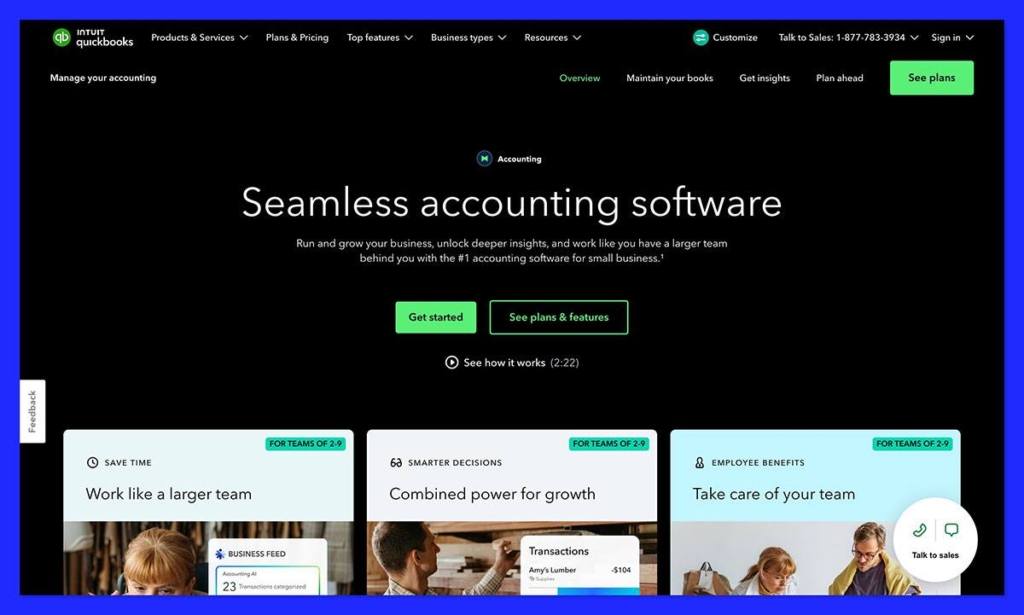
QuickBooks Online is the accounting software everyone’s accounting team probably already knows, and it’s a lot better at handling ecommerce work than it used to be. The connectors for platforms like Shopify and Amazon were rebuilt this year, and users can pull sales, refund, fee, and payout data into the system pretty easily. It even separates reserves, gift cards, or marketplace data.
Like Xero, QuickBooks also works with A2X, and gives you access through the cloud so you can check your details from any device, there are also collaboration tools to share figures with your accountant or team, although each user needs a separate plan.
QuickBooks has some brilliant automation tools too, with structured payout reconciliation, unified sales channel management if you’re selling across multiple platforms, and smart product and tax matching tools. It also lets you accept payments in more than 145 currencies with automatically adjusted exchange rates, although QuickBooks does recommend double-checking everything.
Pros
- More than 750 integrations, and upgraded Shopify/Amazon connectors
- Full cloud access for insights from any location
- Tools for downloading and sharing reports with your teams
- Better internal inventory tools than Xero
- Detailed customer and SKU matching and insights
Cons
- More expensive than other beginner-friendly tools
- Learning curve is higher, especially if you use multiple channels
- Inventory tools are still basic compared to NetSuite or Sage
3. NetSuite: Best for Growing Ecommerce Brands
Starting Price: Custom quote.
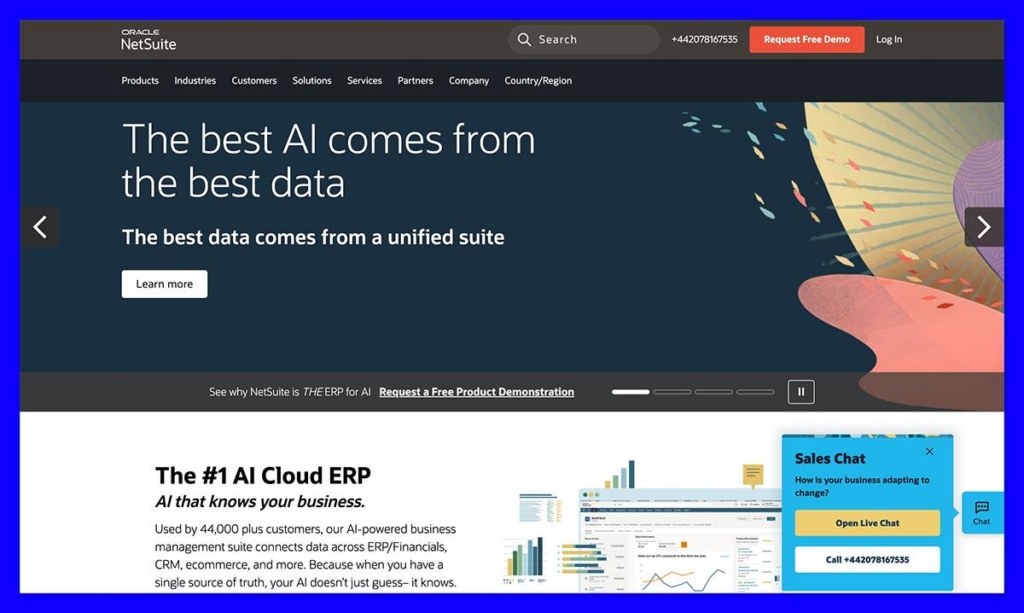
As I said before, NetSuite is going to be a bit too much for a small ecommerce team, but if you’re starting to grow, it gives you a lot of functionality, especially if you want accounting information, inventory and ERP connections in one place.
There are no transaction fees on any plan, and you can even combine B2B and B2C sales, with a pricing engine that supports cost-plus pricing and targeted rates by item, date, or customer. The AI tools have seriously improved too, with Ask Oracle to help you answer questions about your books as quickly as possible, and AI Canvas where teams can analyze data in a visual format.
There have been a few specific updates for ecommerce too, like the NetSuite Connector for Loop that syncs returns directly to your accounts, and the Amazon Seller Central settlement tools. Plus, you’re never locked in to one version, every time Oracle updates the system, it updates for you, too.
Pros
- Brilliant inventory controls for multiple locations
- Excellent Shopify B2B and returns support
- Strong Amazon settlement matching tools for marketplace sellers
- Unified database for your accounts, CRM, ERP, and more
- No transaction fees on any plans
Cons
- Can be very expensive, like most enterprise-level tools
- Bigger learning curve than most competitors
- Basic marketing tools
4. Zoho Books: Best Value
Starting Price: Free plan, paid plans starting at $20 per month
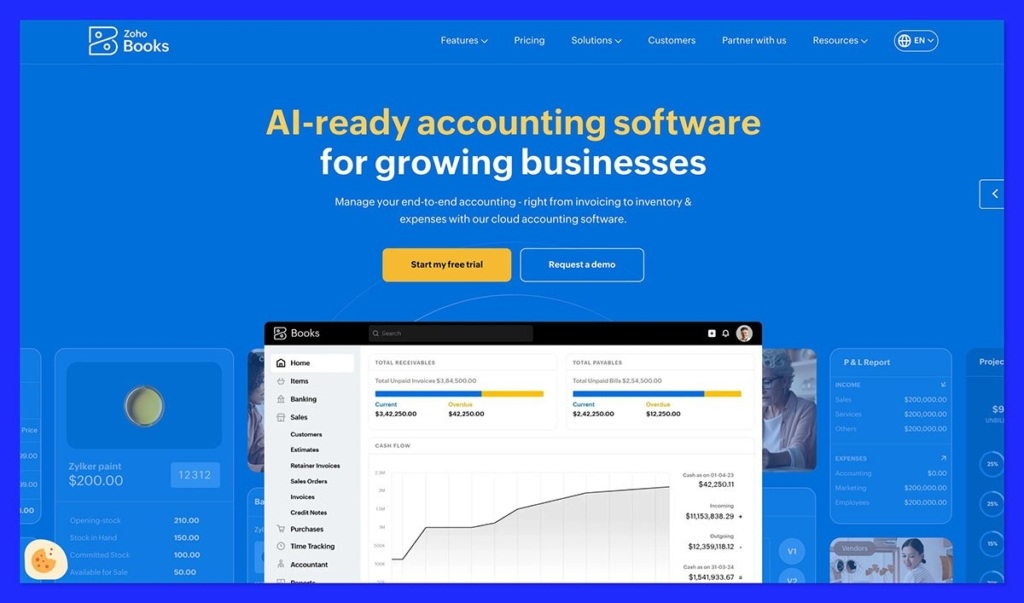
When I call Zoho the best value, I’m not saying it’s immediately the cheapest, just that it has the best selection of tools for the best overall price. Most people will start with the $20 plan rather than the free option, because it lets you connect bank feeds. Professional, for $50 per month gives you inventory, sales and purchase orders, multi-currency transactions, approvals, and custom automation.
The Elite plan at $150 per month is probably the best value, because you’ll have shipment tools, marketplace integrations, as well as warehouse management. Zoho is brilliant if you’re already using Zoho Inventory and Zoho Commerce to manage your store, but it’s also great if you want simple automation and AI to manage bank feeds and reconciliation, or if you’re using separate marketplace fulfilment tools.
Zoho Books also supports dashboards, bulk image imports for analyzing receipts, as well as return reports. The whole system works with everything from Shopify, to Amazon or WooCommerce, too, with some syncs happening every five minutes.
Pros
- Lots of features on each plan for the price you’re paying
- Multicurrency support on cheaper plans than some alternatives
- Automation and AI features included
- Works well with other Zoho tools, like Zoho Inventory
- Great Shopify and marketplace support
Cons
- The best features for ecommerce come on the Elite plan
- User limits are applied to every tier
- Inventory is limited unless you’re using other Zoho tools
5. Sage 50: Best for Businesses with Large Inventories
Starting price: $128.67 per month
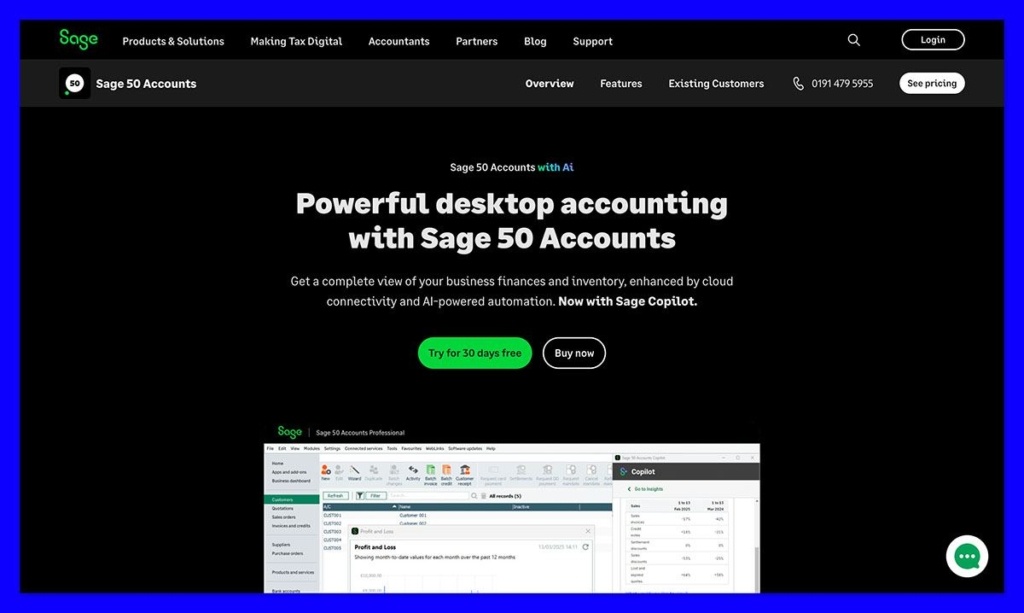
There are two groups I’d recommend Sage to, the first is EU and UK sellers, because of the cross-border VAT support, and OSS reporting for sales across different regions. The second is companies with larger and more complicated inventory requirements. The system automatically links your online shop with a full Sage Inventory system, which gives you a lot more control than you’d get from the other products on this list.
There’s real-time ERP integration, too, plus automatic resyncing that keeps the checkout running and still tracks incoming orders if you lose your internet connection. Sage also has fantastic tools for shipping management, a built-in CMS for handling content, and customer portals if you’re handling service sales or B2B selling.
It’s actually surprisingly easy to use, despite how many features there are too, and the AI features, like AI Document Capture, are genuinely helpful if you need help saving time. Sage also connects with Shopify, Amazon, Ebay, WooCommerce, and plenty of other sales platforms.
Pros
- Much better inventory management than most other tools
- Integrations with most of the top ecommerce platforms and marketplaces
- Customer portals for B2B or service sales
- AI features like automatic invoice and receipt capture
- Excellent purchase-order and job-costing tools
Cons
- Expensive starting price for beginners, and every user costs more
- Can be difficult to setup and customize at first
- Some of the menus feel a bit outdated
6. Wave: Best Free Accounting Software for Ecommerce Beginners
Starting Price: Free or paid plans start at $19 per month
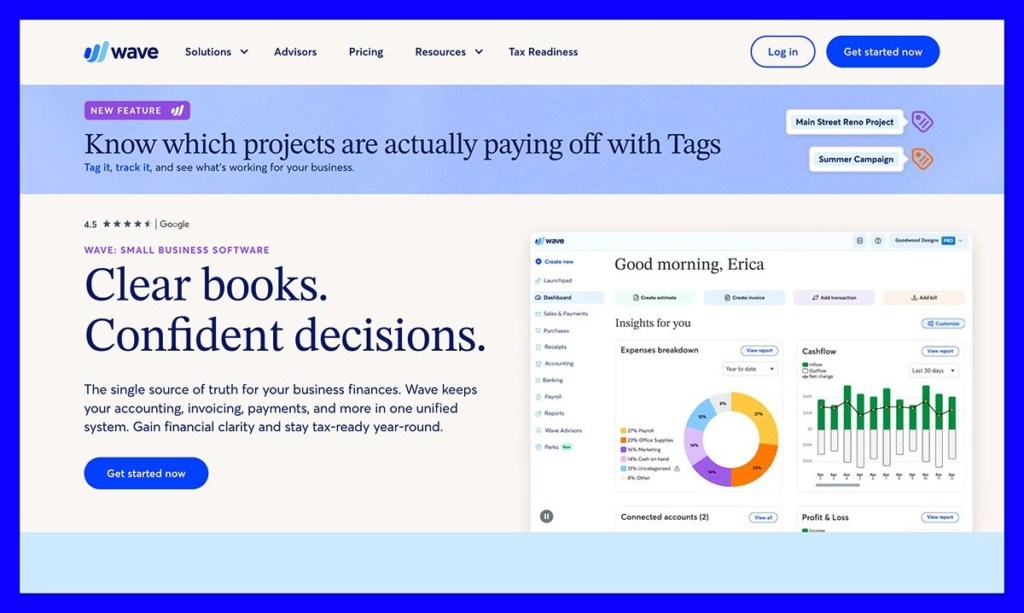
If you’re very new to ecommerce accounting, and you only need the basics to stay compliant and keep track of everything, Wave is a useful tool. You can start for free with unlimited income and expense tracking, and the paid plans give you automatic bank transaction imports, with automatic merging and categorization. You can also capture unlimited receipts, automated late payment reminders, add as many users as you want, and connect as many bank accounts as you choose, too.
Most of the features are pretty simple, but they’re still useful. The transaction tags, for instance, let you label invoices and expenses with custom variables, so it’s easy to keep track of projects. You’ve also got basic multi-currency support.
Unfortunately, there’s no real inventory management functionality here, and compared to the other tools we’ve reviewed, the integrations with tools like Shopify or Amazon are pretty limited. Most of the time you’ll have to handle imports manually. Still, if you’re only running a small store, and you’re more interested in saving money than time, Wave is a good choice.
Pros
- Useful free plan and affordable starter plans for beginners
- Unlimited connections for your bank accounts
- Multi-currency support available on premium plans
- Convenient transaction tags for keeping track of projects
- Automation tools included on Pro plans
Cons
- Still requires a lot of manual work, particularly on the free tier
- No real inventory management features
- Limited integrations with ecommerce platforms
How to Choose Accounting Software for Ecommerce
Hopefully, you’ll have a pretty good idea of which software option appeals most to you based on this list alone, but if you’re still struggling, think about a few things before you request a demo:
- Sales channels: Where do you accept transactions? All of these tools will work with something like Shopify or Etsy, but some require you to do more manual work to sync your records. Others make it harder to use multiple channels at once.
- Automation: Check whether you can connect something like A2X or Link My Books to help you with settlement reconciliation, or ask whether the tool you’re buying offers its own solutions for automating those tasks.
- Inventory: Most of these tools are pretty limited for inventory management unless you purchase an extra subscription or third-party app. Some, however, like Sage, give you more comprehensive stock management and payment tracking tools.
- Compliance: This should be easy to check, but any tool you pick should be compliant with your tax rules. If you’re selling globally, you might have to think about different rules, like the UK or EU VAT thresholds.
- Cost: Beyond the cost for the actual software subscription, pay attention to anything extra you’ll have to pay for multiple currencies, custom integrations, inventory software, extra users, payroll tools, or even accounting costs.
Which Ecommerce Accounting Software Would I Choose?
Again, it mostly depends on the size and complexity of your business. QuickBooks is ideal for US companies working closely with an accountant, while Sage 50 is fantastic for UK and EU businesses, as well as companies that are managing more complicated inventory.
Zoho Books is impressive if you want a lot of functionality for a lower price, and it’s particularly good if you’re already using other Zoho Software. NetSuite makes a lot more sense if your company is growing quickly and you need help dealing with several warehouses, wholesale, or complicated ERP work.
Xero, overall, is my number one choice, because it has the most to offer ecommerce companies upfront. The Shopify connection is excellent, the app marketplace helps you connect all your tools, and the fact that you have unlimited users on every plan keeps collaboration cheap.


