Clothbase 
Clothbase is a fashion discovery platform that aggregates luxury clothing, footwear, accessories, watches, beauty products, and lifestyle goods from thousands of brands and multiple retailers. Rather than operating as a conventional store with its own inventory and checkout, Clothbase works as an affiliate shopping index: customers discover products on the platform and use the “Buy It” action to continue their purchase with the relevant retailer. With more than two million indexed items from over 3,000 brands, the site is designed primarily for shoppers who want to search and compare a very large luxury-fashion catalog from one interface.
Website Design
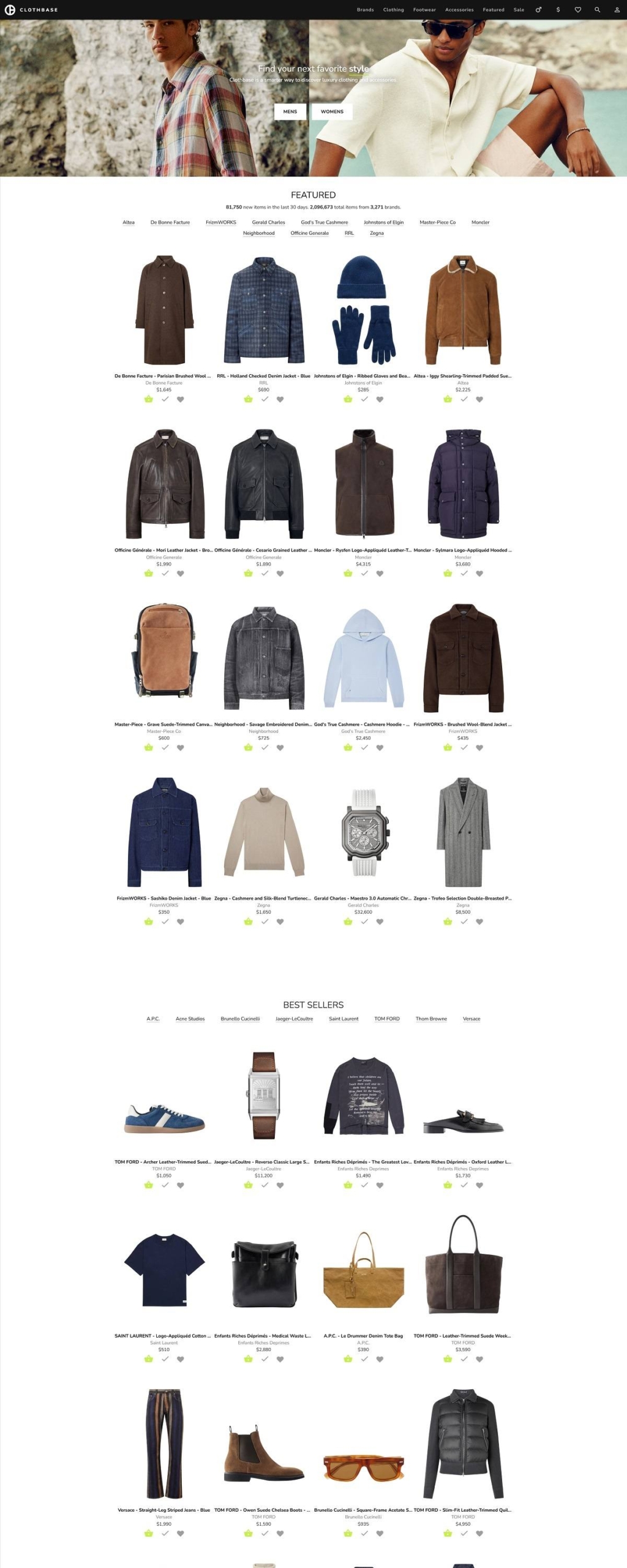
Clothbase uses a deliberately restrained visual system built around black, white, neutral backgrounds, and clean sans-serif typography. The interface itself rarely competes with the merchandise. Navigation labels, prices, product names, filters, and controls are presented functionally, while product photography supplies most of the color and visual variation.
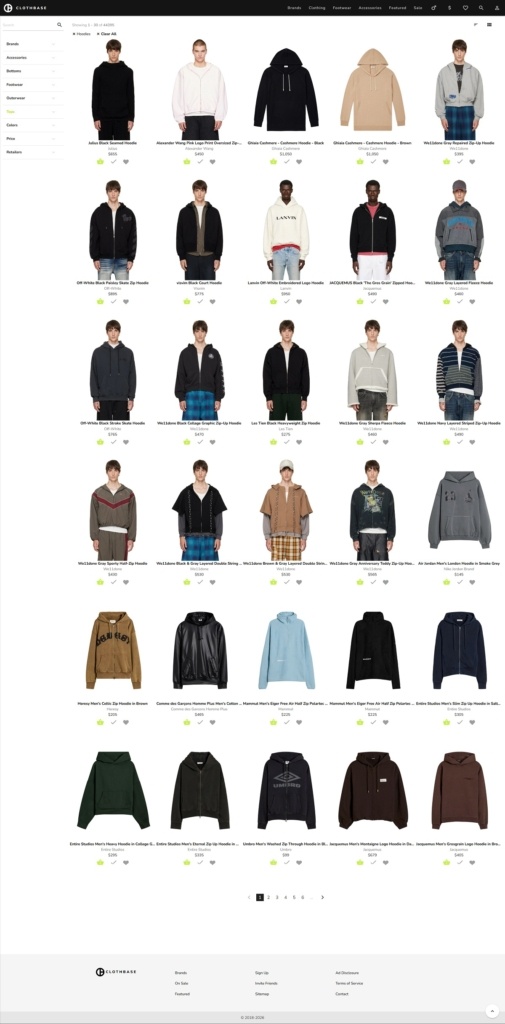
The homepage combines a simple introductory hero with product-led sections such as Featured and Best Sellers. Large amounts of whitespace around headings and merchandise help prevent the extensive catalog from feeling overly dense. Product cards follow a consistent grid structure, typically placing the image first, followed by the product title, designer, and price. Discounted products show both current and original pricing.
Because Clothbase pulls together products from many brands and retailers, its photography is naturally less art-directed than that of a single-brand ecommerce store. Studio backgrounds, model imagery, cropped packshots, and retailer-specific photography coexist throughout the catalog. The neutral interface acts as a framework that gives this varied imagery a degree of consistency.
Brand pages use the same understated presentation, combining basic company information and a short brand introduction with a grid of the latest available items.
Shopping Experience
Product discovery is the main focus of the experience. The primary navigation provides access to Brands, Clothing, Footwear, Accessories, Featured products, and Sale, along with search, favorites, account controls, gender selection, and currency options.
Search and category pages are built for narrowing down a very large inventory. Filters cover brands, detailed product categories, colors, price range, sale status, and participating retailers. Categories extend several levels deep, allowing shoppers to move from broad groups such as Accessories or Tops into specific types including backpacks, cardholders, hoodies, knitwear, denim, sneakers, and watches. Results can also be sorted by price, newest or oldest additions, and price changes.
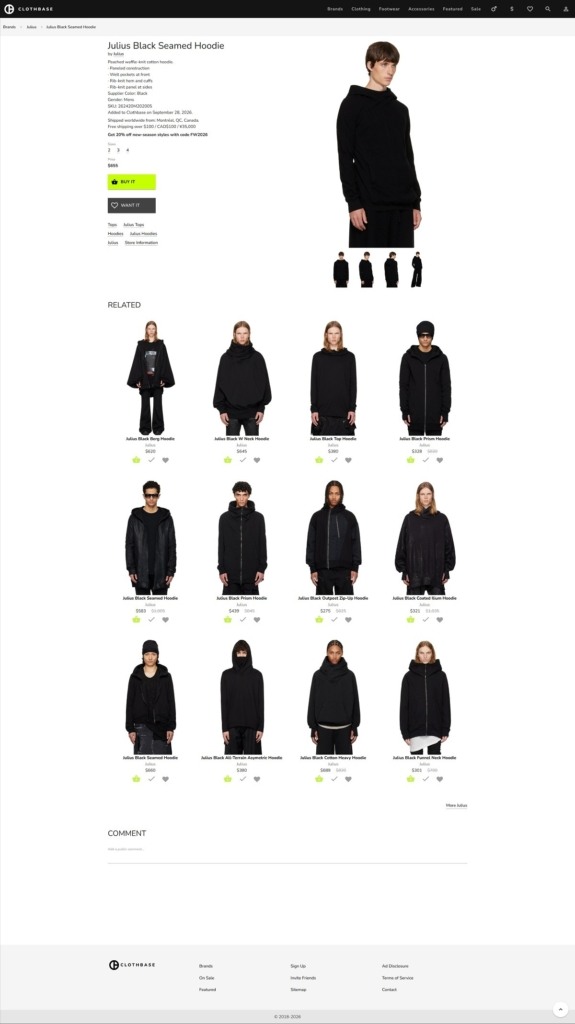
Individual product pages consolidate information sourced from the retailer, including product descriptions, materials, available sizes, SKU, pricing, shipping or return information, and the retailer responsible for fulfilling the order. A prominent “Buy It” call to action moves the shopper toward the external retailer rather than an internal Clothbase checkout.
A secondary “Want It” action supports saved-product behavior for signed-in users. Category and brand links on product pages also provide useful paths back into discovery rather than leaving each item as a dead end.
Brand Storytelling
Clothbase keeps its own brand personality relatively quiet. The homepage describes the service as a smarter way to discover luxury clothing and accessories, and most of the experience is structured around utility rather than editorial storytelling.
Instead, individual designers receive contextual treatment through dedicated brand pages. These can include information such as headquarters, founding date, a short overview of the label, and its latest products. The approach positions Clothbase closer to a searchable fashion database than a traditional digital department store.
Notable Features
One of Clothbase’s most distinctive features is the breadth of its filtering system. With millions of indexed products, filters are not supplementary controls but a central part of the interface.
Selected product pages also include price history, showing how the retailer’s original and sale prices have changed over time. This adds a comparison-oriented layer that is unusual for luxury fashion discovery sites and can help shoppers put current discounts into context.
The alphabetical brand directory offers another route through the catalog, while Featured and Sale sections provide more curated entry points for users who are browsing without a specific search in mind. Together, these features create an ecommerce experience centered on aggregation, filtering, comparison, and onward purchase rather than a conventional single-retailer conversion funnel.
Clarify the target audience and purposeReduce repetition around discovery and filtering
Clothbase Shop Category page example
Clothbase Product page example
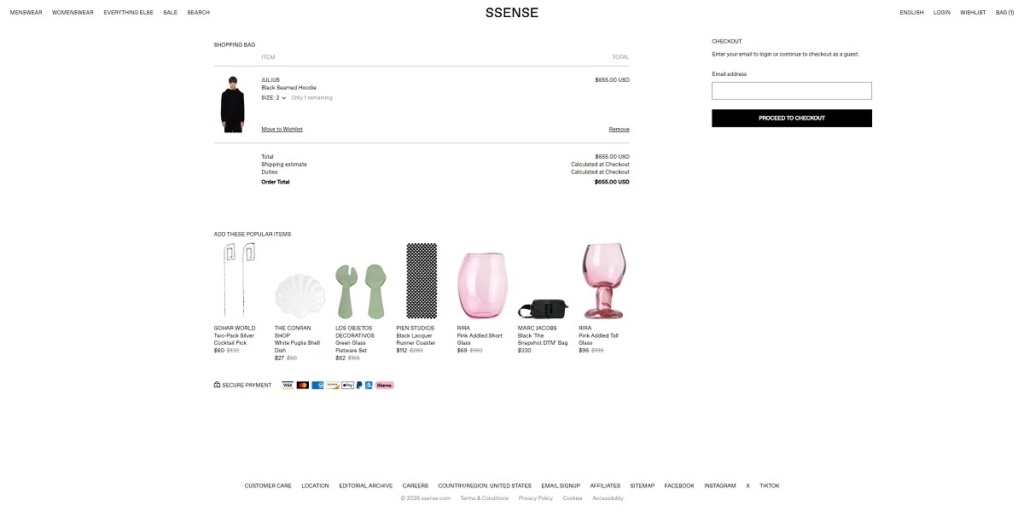
Clothbase Checkout page example
Clothbase Footer example

eCommerce Platform:
Tech Stack: