
 By Bogdan Rancea
Payhip and Shopify are two well-known platforms that help people launch and grow online businesses. But how do they actually compare?
I’ve tested both platforms to bring you an in-depth breakdown based on key areas like pricing, features, design, ease of use, and more.
In short, Shopify is the better option if you want to build a branded, scalable online store, while Payhip is ideal for creators or sellers of digital products who want to launch quickly with minimal setup.
Let’s take a closer look at what sets these two ecommerce platforms apart.
Quick Comparison: Payhip vs Shopify
Take a look at this overview to see how Payhip and Shopify stack up across the most important ecommerce features.
| Feature | Payhip | Shopify |
|---|---|---|
| Best for | Selling digital products quickly | Building scalable online stores |
| Monthly price | $0–$49 | $39–$399 |
| Transaction fees | Up to 5% (0% on Pro) | 0% with Shopify Payments |
| Digital products | Built-in | Requires app for advanced functionality |
| Physical products | Basic support | Advanced tools and fulfillment |
| Design customization | Limited | Full control with themes and code access |
| App store | Very limited | 8,000+ third-party apps |
| SEO features | Basic | Advanced SEO capabilities |
| Course hosting | Built-in | Requires app |
| Support | Email only | 24/7 chat and phone support |
Best for Pricing: Payhip
Both platforms have transparent pricing, but Payhip clearly wins on affordability for beginners and low-budget sellers.
Payhip Pricing
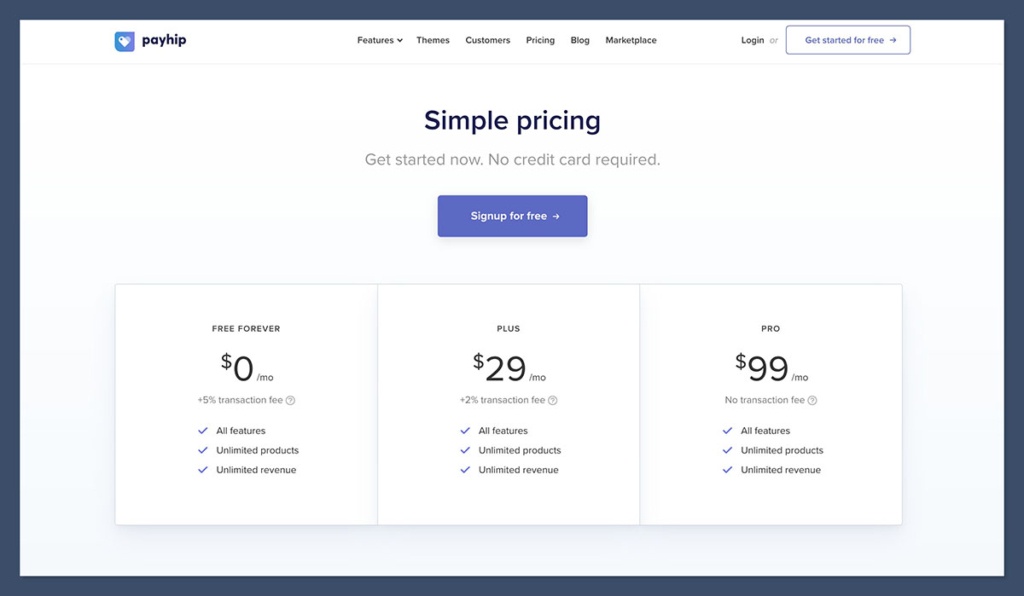
Payhip keeps pricing simple and transparent, with all plans including hosting, a checkout system, and access to core selling tools.
- Free Plan: No monthly fee with a 5% transaction fee, including unlimited digital products, a hosted storefront, built in checkout, basic customization, discount codes, affiliate management, and EU VAT handling.
- Plus Plan: $29 per month with a 2% transaction fee, including everything in the Free plan plus custom domain support, advanced store customization, product bundles, upsells, and improved branding control.
- Pro Plan: $49 per month with no transaction fees, including all Payhip features such as custom domains, advanced customization, product bundles, upsells, built in affiliate tools, subscriptions, course hosting, and priority support.
Payhip’s free plan is one of the easiest ways to start selling online with no upfront cost. You only pay when you make a sale, making it ideal for creators who are just starting out.
Shopify Pricing
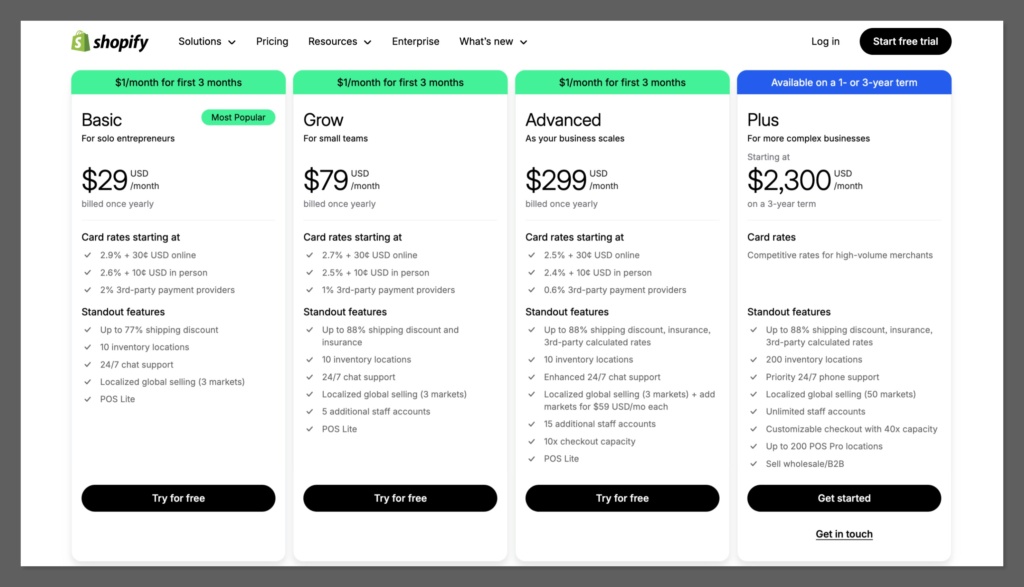
Shopify’s pricing is structured around growth, offering increasing levels of control and functionality as you move up through its plans.
- Basic: $39 per month, including an online store with unlimited products, two staff accounts, discount codes, abandoned cart recovery, access to Shopify Payments, and basic reports.
- Shopify: $105 per month, including everything in the Basic plan plus five staff accounts, professional reports, lower credit card fees, and more advanced shipping and inventory features.
- Advanced: $399 per month, including everything in the Shopify plan plus 15 staff accounts, advanced report building, third-party calculated shipping rates, custom pricing by market, and the lowest available payment processing fees.
Shopify doesn’t charge transaction fees if you use Shopify Payments, but if you connect a third-party gateway, fees can range from 0.5% to 2%. Most serious users end up using paid apps, which can increase monthly costs.
The Winner: Payhip is a more affordable option, especially for digital creators or small business owners testing a product idea. Shopify’s pricing can add up quickly as your store scales or as you add features via paid apps.
Best for Selling Online: Shopify

If your goal is to build a serious ecommerce store that grows with your business, Shopify has the edge.
Sales Features
Both platforms include basic tools to help you sell products, but Shopify offers far more flexibility and depth.
Payhip Includes:
- Digital and physical product sales
- Subscriptions
- Courses and coaching services
- Affiliate program management
- EU VAT management
- Discount codes
Shopify Includes:
- Inventory tracking
- Multi-channel selling (e.g., Amazon, TikTok, Instagram)
- Abandoned cart recovery
- Advanced discounting
- POS integration for in-person selling
- Support for multiple product variants
Product Management
Shopify’s backend lets you manage hundreds or thousands of SKUs with ease. You can organize products into collections, add tags, and use apps for bulk editing or advanced filtering.
Payhip works well for smaller catalogs and has useful features like automatic file delivery and access controls, but it’s not built to handle large inventories or fulfillment workflows.
The Winner: Shopify. It offers a more comprehensive set of features that support everything from one-product stores to global ecommerce brands.
Best for Design and Customization: Shopify
When it comes to building a professional-looking storefront, Shopify has a clear advantage.
Payhip Design
- Comes with a handful of simple, clean themes
- Limited visual customization
- No access to code or theme files
- Mobile-responsive out of the box
While Payhip lets you make some design tweaks—like uploading a logo and changing colors—there’s no way to fully customize the layout or user experience. The design tools are limited but simple to use.
Shopify Design
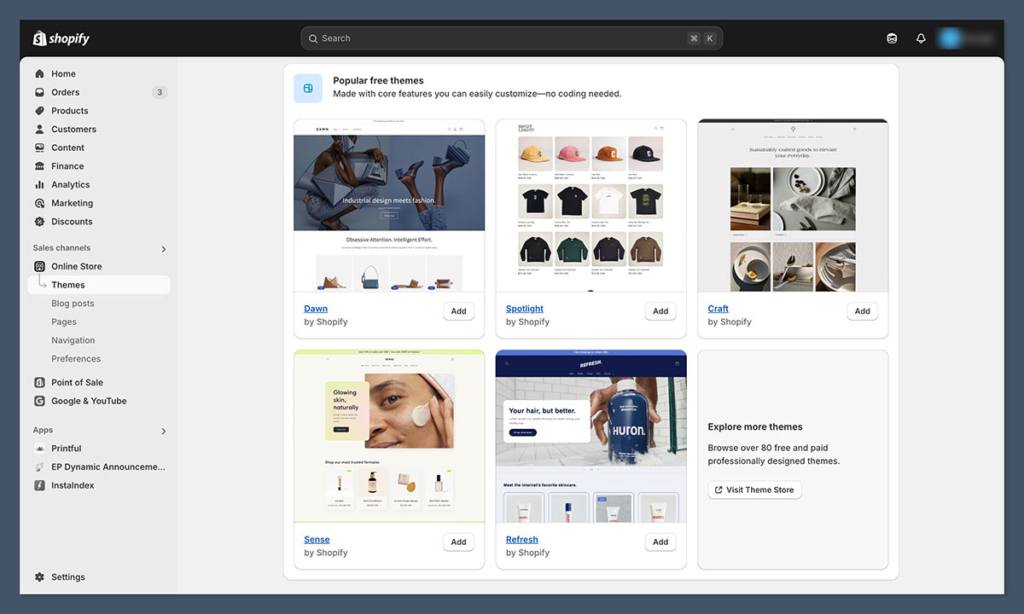
- Over 100 professional templates
- Access to HTML, CSS, and Liquid code
- Shopify’s Online Store 2.0 allows for custom layouts
- Third-party themes available for niche industries
Shopify gives you full control over your storefront. Whether you’re a designer or just want your store to reflect your brand, the theme editor allows you to create something unique.
The Winner: Shopify. It’s built for branding and performance, and lets you fine-tune every element of your store design.
Best for Digital Products: Payhip
Payhip was built with digital creators in mind. It handles digital product delivery out of the box, which gives it a major advantage if you’re selling things like:
- eBooks
- Notion templates
- Online courses
- Coaching sessions
- Music or audio files
You can even restrict access by download count, set licensing terms, or offer subscriptions.
Shopify supports digital products too, but you’ll need to install an app to unlock features like automatic file delivery or content protection.
The Winner: Payhip. Its native digital product features are strong, reliable, and easy to set up without extra apps.
Best for Ease of Use: Payhip
Both platforms are relatively easy to get started with, but Payhip has fewer moving parts.
Getting Started on Payhip
- Sign up in seconds
- Add your product
- Customize your sales page
- Connect Stripe or PayPal
- Share your product link
It’s possible to launch your store in under 15 minutes. The dashboard is minimal and intuitive, which is great if you’re not technically inclined.
Getting Started on Shopify
- Sign up with your store name and business info
- Choose a theme
- Add products and collections
- Configure taxes, payments, and shipping
- Start customizing pages
Shopify gives you more power, but that also means more time spent configuring your store before going live.
The Winner: Payhip. It’s better for beginners who want to start selling without needing to build out an entire website.
Best for Marketing Tools: Shopify
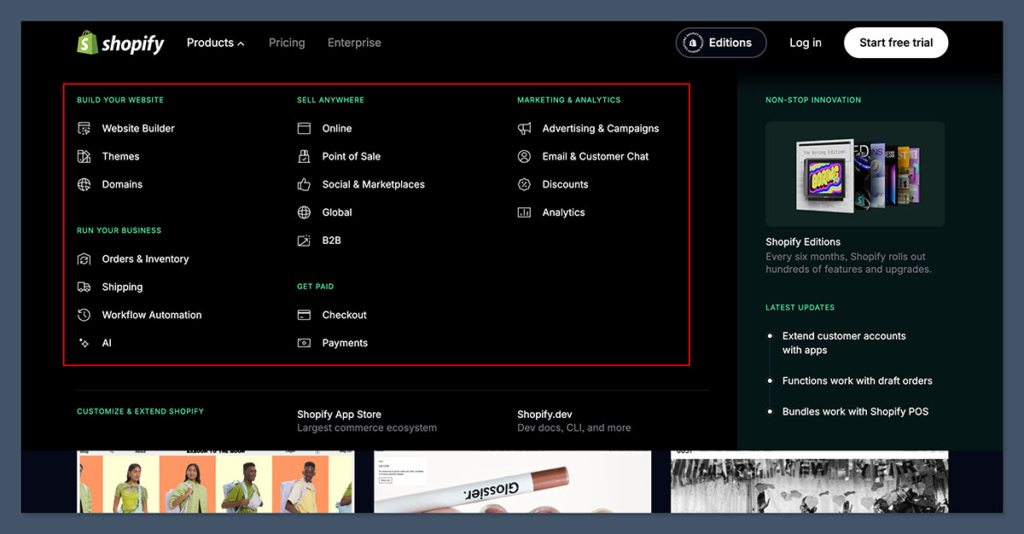
Marketing plays a huge role in ecommerce success, and Shopify provides more tools to help you grow.
Shopify Marketing Features
- Shopify Email for email marketing
- Facebook and Instagram Ads integration
- Marketplace integrations (Amazon, Etsy, Walmart)
- TikTok channel for native selling
- Built-in blog to support content marketing
Shopify also offers advanced retargeting and upsell features through its app ecosystem.
Payhip Marketing Features
- Coupon codes
- Affiliate program management
- Simple analytics dashboard
- Embeddable checkout
These are useful, but they don’t match the depth or automation available with Shopify.
The Winner: Shopify. Its built-in and third-party tools are more advanced and better suited to marketing at scale.
Best for SEO: Shopify
If you plan to rank your store in search engines, Shopify gives you more control and tools to do it.
Shopify SEO Features
- Editable meta titles and descriptions
- Optimized URLs
- Blog support
- Apps for structured data, schema, redirects
- Partnership with Semrush via Ecommerce Booster app
Payhip SEO Features
- Customizable page titles and descriptions
- SEO-friendly product URLs
- Minimal control over structured data
- No blog functionality
The Winner: Shopify. Its SEO capabilities are more advanced and make it easier to grow organic traffic long term.
Best for Support: Shopify
When running an online store, reliable support can save you a lot of headaches.
Shopify Support
- 24/7 live chat and email support
- Phone support for Shopify Plus
- Extensive Help Center with tutorials
- Large user community and forums
Payhip Support
- Email support only
- No live chat or phone support
- Help articles available for common issues
The Winner: Shopify. Its support is faster, more accessible, and available around the clock.
Payhip vs Shopify: Final Verdict
So, which platform should you choose? It depends on your business type, goals, and how much control you want over your online store.
Choose Payhip if you:
- Sell digital products, courses, or coaching
- Want to launch quickly with no upfront cost
- Don’t need full website design control
- Prefer an all-in-one solution with no apps required
Choose Shopify if you:
- Want to build a scalable ecommerce brand
- Sell physical products or need inventory tracking
- Care about advanced design and customization
- Need stronger marketing and SEO tools
Both platforms are solid choices, but they serve different audiences.
Payhip is best for individual creators who want to start selling fast. Shopify is the better option if you’re building a business that you plan to grow over time.


