
 By Bogdan Rancea
If I’m honest, a big part of me still sees Etsy as the selling platform creators get started with before they’re ready to dive into anything bigger. I know plenty of larger sellers do still use the marketplace regularly, but usually that’s as an extra platform alongside something else, like Shopify.
Fourthwall is more the kind of platform I expect sellers to use when they’re looking for an opportunity to scale straight away. It gives them more control over their brand, more flexible product options and ways to sell, as well as a lot of help with the extra parts of selling, like Merchant of Record tax management, print on demand fulfillment, or custom sourcing support.
So, if you’re deciding between the two this year, I’d say Etsy is still a brilliant place for initial reach and discovery, Fourthwall is better if you’re ready to own and expand the brand you’re building.
Fourthwall vs Etsy: My Quick Verdict
I’ve already basically covered this, but Etsy is the platform I’d recommend two different groups. The first is sellers who need to find their initial audience, since Etsy really does help you get in front of shoppers and earn their attention if you’re brand-new online. The second is people who already have an online store and want a pretty simple way to branch off into a new market.
Fourthwall is the first choice I’d give to anyone who wants to build and own their brand, and control everything around it. It won’t give you an audience, but it’ll give you a custom website and domain that you can control, a print on demand marketplace, options for selling digital products, physical products, or memberships, plus plenty of connectors to social and marketplace platforms, too.
Fourthwall vs Etsy: Side by Side
You can technically call both Fourthwall and Etsy selling platforms, but only if you follow that up by clarifying that they’re for different kinds of sellers, and sales.
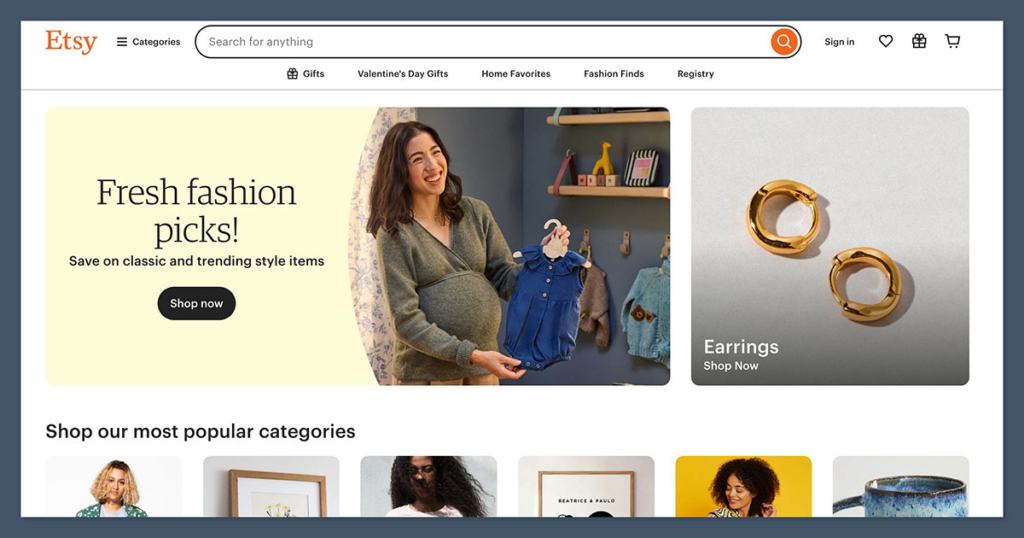
Etsy is a primarily a marketplace which allows sellers to list their products alongside thousands of others on the same site. You get a page where you can tell visitors a little about yourself, and sell very specific products. Those products have to be designed, handpicked, or specifically sourced by you. You can sell print-on-demand products and digital downloads too, but there are restrictions.
Fourthwall is a brand-building and ecommerce platform, which gives you a storefront with your own branding and domain, plus freedom to sell whatever you choose, including physical products (print-on-demand or custom sourced), digital downloads, memberships, or subscriptions.

| Factor | Fourthwall | Etsy |
|---|---|---|
| Type of platform | Brand building and ecommerce platform | Marketplace for creators |
| Instant traffic | No | Yes |
| Custom domain | Yes | Through Pattern |
| Types of products supported | Print-on-demand, digital downloads, custom sourced physical products, memberships, subscriptions, donations | Physical and digital products that follow Etsy’s rules |
| Fulfillment | Fourthwall, seller, or 3PL | POD supported within Etsy rules |
| Best for | Brand ownership and control over selling options | Finding your initial audience |
Fourthwall vs Etsy Pricing: Which Costs Less Overall?
Both Etsy and Fourthwall are technically free to use when you’re first getting started, although each free plan does come with fees to consider.
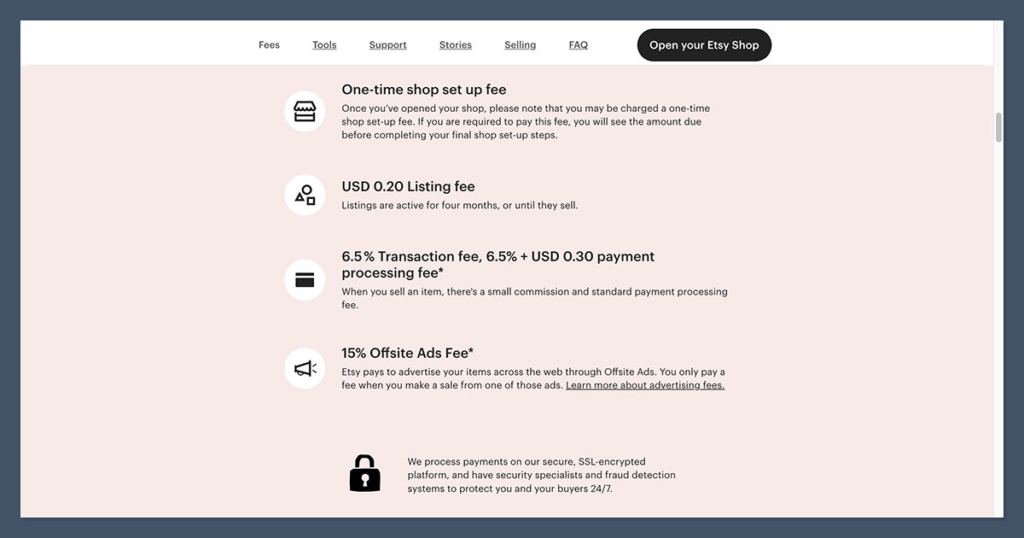
With Etsy, the standard free account costs you nothing monthly for a subscription, but every listing costs $0.20, with automatic renewals every month, sales have a 6.5% transaction fee, and there are processing charges that vary based on where you’re from.
Then there are other “extra” expenses. If Etsy finds it can attribute one of your sales to its ads, you pay 15% of the total order value, if you want more branding control with Pattern, that’s $15 per month, and there’s also Etsy Plus for $10 per month, which gives you 15 renewal or listing credits and $5 in advertising fees a month.
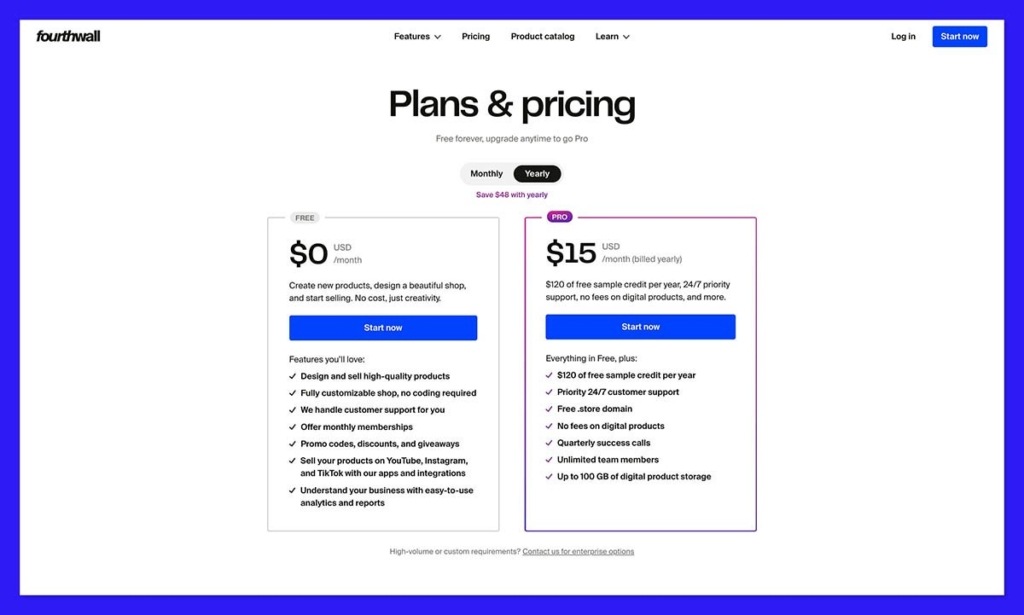
On Fourthwall’s free plan, the fees are only applied to digital products and membership sales (5% per transaction), selling physical products doesn’t incur a transaction fee, although obviously if you’re selling Fourthwall’s print on demand items, you’ll need to account for base costs.
The free plan gives you a free .store domain, your full website, and access to all of the selling tools, while the paid plan for $15 per month gives you a few bonuses, like unlimited team members, sample credits for your store, digital product storage, and priority support. It also removes the 5% fee on digital downloads, but you’ll still pay it for membership sales.
Fourthwall vs Etsy: Store Building and Integrations
Fourthwall is the easy winner from a store design perspective, since it’s built to give you a fully customizable website straight away. You choose your own domain, adjust the layout, create all the pages and collections you want, and control fonts, imagery, colors, and how products are presented. You don’t get quite the same level of control you’d get from something like Shopify, but you can make Fourthwall’s site look completely your own, and there’s even some custom code available.
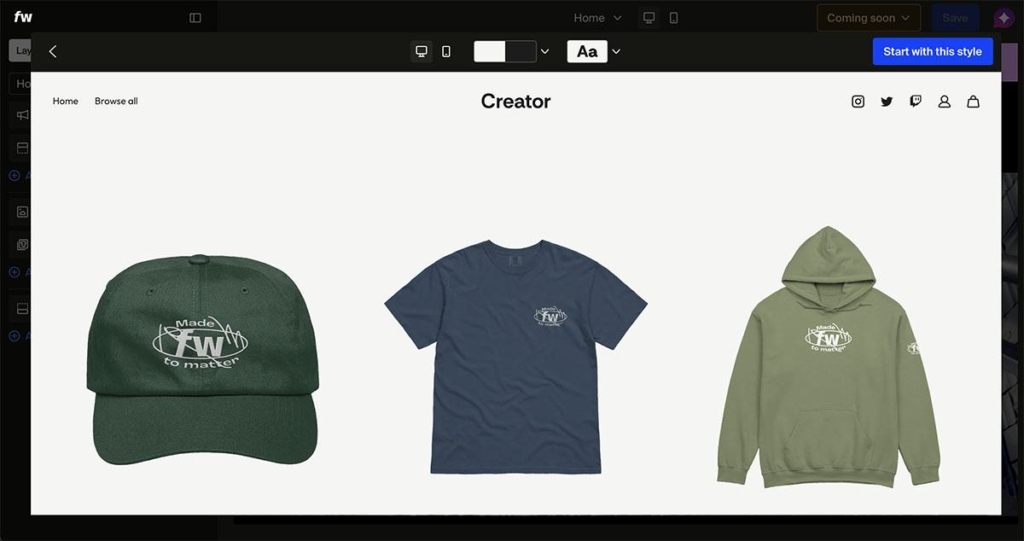
The integrations are focused on helping you connect to your fanbase. There are social media selling connections for platforms like TikTok, Facebook, or Instagram shop, plus integrations with Klaviyo and MailChimp for email marketing, and a handful of new integrations with tools like Karat for financial support, Throne for community wish lists, or Kit for personalized email workflows.
With Etsy, if you’re just selling on the marketplace, you don’t get a store so much as a simple page that looks pretty similar to everyone else’s. You can add your logo, banner, and specific images and descriptions, but that’s all. If you do want more control, Pattern gives you a separate (simple) store with its own Domain, but that means you lose direct access to Etsy’s main benefit: traffic.
On the plus side, Etsy does integrate with quite a lot of other business tools, mostly ecommerce platforms like Shopify, print-on-demand tools like Gelato, or accounting and bookkeeping software.
Fourthwall vs Etsy: Traffic and Marketing
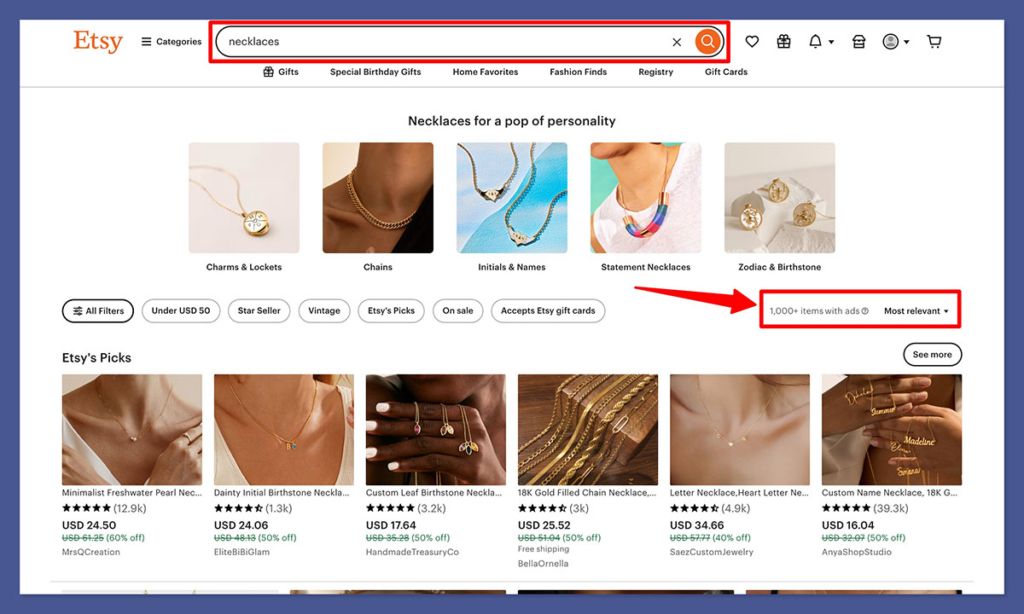
As I said before, Etsy definitely deserves a place in your initial launch strategy if you’re struggling to find potential customers, and need access to an audience fast. There are more than 87 million buyers on the platform already, and Etsy does a lot of work to help people find you, from adding AI-assisted discovery to search, to running off-site ads.
There’s also a Marketplace Insights section that can give you information on competition performance and search volume. You’ll still need to run ads, create content, and potentially produce social media campaigns yourself, but Etsy helps a lot with initial visibility.
Fourthwall expects you to either already have an audience, or be willing to put the time and effort into earning attention yourself. You do get integrations with email marketing tools (something Etsy doesn’t really offer), and you can create a blog for content marketing, update your site with RSS feeds, and link your store to social media. You’ll also have some useful reporting tools that could help you make better decisions about your promotion strategy.
Still, most of the work of finding sellers and keeping them is on you with Fourthwall, Etsy helps you more with the initial part.
Fourthwall vs Etsy: What Can You Sell?
I will say that Etsy gives you more freedom than it used to. It used to be associated entirely with handmade products, and while that’s still a big part of the system, you can technically almost sell anything that was made, designed, chosen, or sourced by you. That means you’re free to sell vintage products (over 20 years old), craft supplies, digital downloads, or print on demand products, if your supplier and designs follow Etsy’s rules.
Etsy’s restrictions aren’t necessarily bad, because they do ensure that customers know exactly what to expect from the platform, and you’re not competing with as many generic sellers, but you will eventually reach a point where your catalog starts to feel limited.
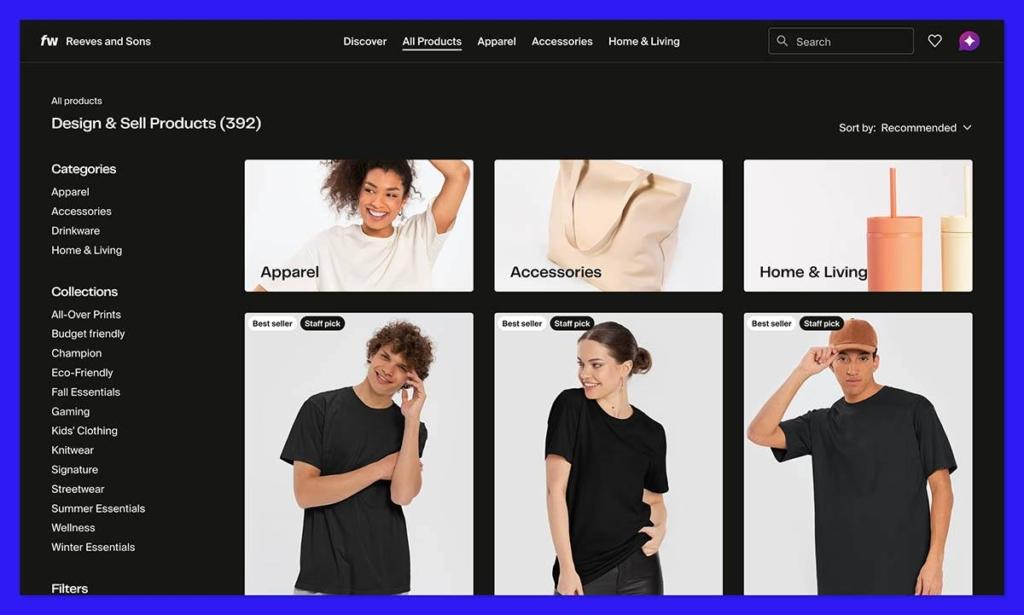
Fourthwall immediately gives you the freedom to combine a range of different revenue streams. You can start with the premium print on demand catalog, create custom products, and have Fourthwall handle all of the production and shipping for you. They even deal with some aspects of customers service. Then you can move into custom sourced products that you can choose yourself or ask Fourthwall to help you find.
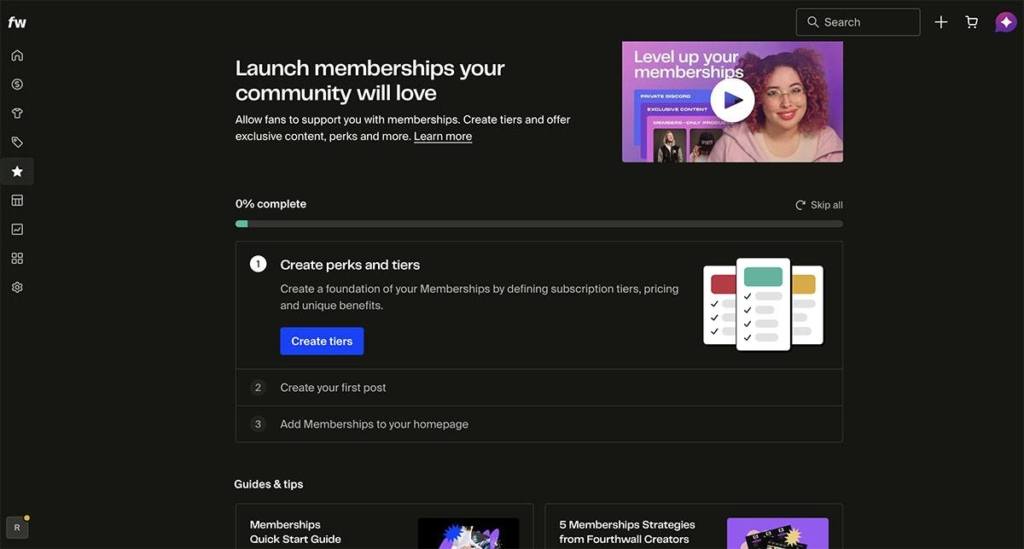
You’ve also got support with digital product downloads, memberships, or subscriptions, and there’s an option to accept donations. Fourthwall lets sellers mix-and-match too, so you can create product bundles that include both physical and digital options.
Fourthwall vs Etsy: Which Gives You the Most Support
Etsy and Fourthwall are reasonably evenly matched from a support perspective. Both act as your Merchant of Record to help out with tax issues, and both give you plenty of resources if you find yourself stumbling into problems with the platforms themselves.
Fourthwall does cover quite a few things that Etsy won’t touch, though. If you’re selling print on demand products, for instance, Fourthwall’s partners deal with all the fulfillment tasks automatically, whereas with Etsy you need to find and collaborate with your own partner. Fourthwall also handles customer service requests for products from its POD catalog.
It also gives you a handy marketplace full of designers to help you create artwork, assistance with sourcing custom products, and an AI assistant that can help with editing parts of your site, creating campaigns, or managing product listings.
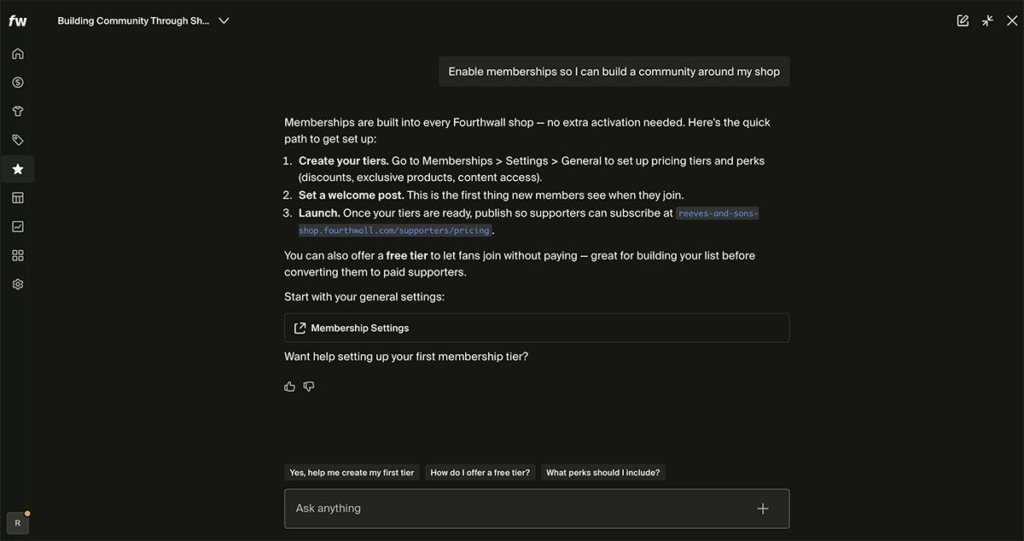
With Etsy, you do a lot of searching for support yourself, and you handle everything to do with customer service, although Etsy does have a Purchase Protection option that gives you coverage on eligible orders up to $250.
Fourthwall vs Etsy: Ease of Use
Again, this is a closer head-to-head battle than you might imagine, even if Fourthwall is the more comprehensive platform. Arguably, Etsy is a little faster to set up and use, because you can create a shop and work through the listing forms in seconds. There’s also an app that you can use for things like issuing full or partial refunds, or managing postage labels.
It does take a little more time to master Etsy after everything is set up though, because you’ve got very specific listing rules, renewals, advertising strategies, production partner requirements and policies to deal with.
Fourthwall may take a little longer to set up initially, since you’re designing a full website rather than a page, although it does give you templates to help with that. The AI assistant can also assist with the complicated parts like figuring out catalog management and shipping rules. It can even analyze sales and edit products, prices, or promotions for you.
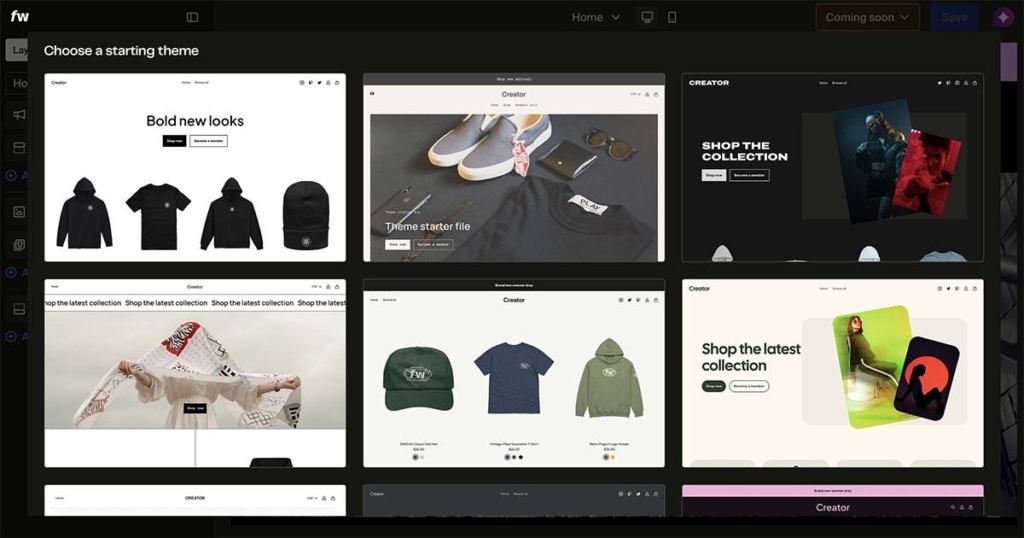
In the long-term, though, Fourthwall seems a little more straightforward, once you’ve got everything set up, it feels wonderfully easy to keep everything running smoothly, and Fourthwall keeps adding new features to help out, too. There’s the MCP connector if you want to integrate your own AI assistant, plus convenient tools for creating custom gift cards, Spotify walls, and fulfillment alerts.
Fourthwall or Etsy: Which One Should You Use?
I still think both Etsy and Fourth wall are great, and both platforms keep getting better. Fourthwall keeps adding new features that make it easier to manage your store and build stronger relationships with customers, like the “Kit” integration that helps with marketing to subscribers. Etsy keeps adding tools that give businesses more valuable insights, and improve product discovery, like the “Interested Shopper Offer” tool.
Still, they both remain firmly grounded in a specific toolkit for different kinds of sellers. Etsy is still the platform you use when you need help getting attention straight away, and you have the right kind of creative products to sell.
Fourthwall, on the other hand, is the tool that’s worth using if you want to build a brand you can own from scratch, choose from a wide range of options for the types of products you want to sell, and focus on making the most of the relationships you build with your community.
Really, there’s nothing stopping you from using both, and that’s a great idea for some sellers. You can use Etsy for initial discovery and a personalized product line, then use Fourthwall as your main home for your growing audience, and your new sources of revenue.


