
 By Bogdan Rancea
After ranking 12 AI ecommerce tools across seven store workflows and cross-checking every price against more than 10,600 G2 reviews, Shopify Magic and Sidekick is the best AI ecommerce tool for most SMB stores, because it is free with any Shopify plan, covers descriptions, images, SEO, email, and support in one place, and saves solo operators an estimated 5 to 10 hours a week without adding a line to your bill.
In this guide I walk you through the AI features, real pricing, and honest drawbacks of each tool, so you can find the right fit for your store. Almost every “best of” list you will find was written by a vendor that ranks its own product at number one. Fin ranks Fin first, WisePops ranks itself, and WearView puts its fashion tool on top. This one is ranked by overall SMB value instead: free, high-impact tools rank highest, and enterprise-priced picks are clearly flagged so nobody gets blindsided.
The best AI ecommerce tools at a glance
- Shopify Magic and Sidekick, best free all-in-one AI for Shopify merchants
- Omnisend, best value AI email and SMS for SMBs
- Klaviyo, best for advanced AI email and retention
- Tidio with Lyro, best budget AI chat (powered by Claude)
- Gorgias, best AI customer service built for ecommerce
- Photoroom, best budget AI product photography
- Jasper, best AI copywriting at scale for DTC brands
- Surfer SEO, best for AI-optimized SEO content
- Triple Whale, best AI analytics and attribution for DTC
- Flair.ai, best for AI lifestyle product imagery
- Nosto, best AI personalization for scaling brands (enterprise-priced)
- Fin AI, best enterprise-grade autonomous support for scaling stores
Key takeaways
- Using AI is not a tool problem, it is a sequencing problem. Most small teams run just 3 to 5 tools, not fifteen, and you should start with your biggest revenue leak, not the shiniest demo.
- Email automation pays back fastest, in 2 to 4 weeks, followed by customer support, then product photography. SEO, personalization, and analytics pay off later and suit bigger stores.
- The best free stack is already in your Shopify admin. Magic, Sidekick, and Inbox cost nothing, and Omnisend’s free plan includes every feature rather than a stripped-back sample.
- Two popular “free” picks are really trials. Tidio Free is 50 lifetime Lyro conversations, and Photoroom’s free exports are watermarked and non-commercial, so they cannot go on a live listing.
- Four tools here are priced out of SMB reach: Nosto, Fin AI, Bloomreach, and Constructor. Skip them until revenue justifies the spend.
Pricing is reconciled and tagged “as of 2026” (AI pricing moves fast, so confirm before you buy), and I use G2 ratings as a neutral credibility signal. Budget readers, stick around: there is a concrete $0 to $100/month starter stack near the end, and it starts with free, Shopify-native tools.
1. Shopify Magic and Sidekick: Best Free All-in-One AI for Shopify Merchants
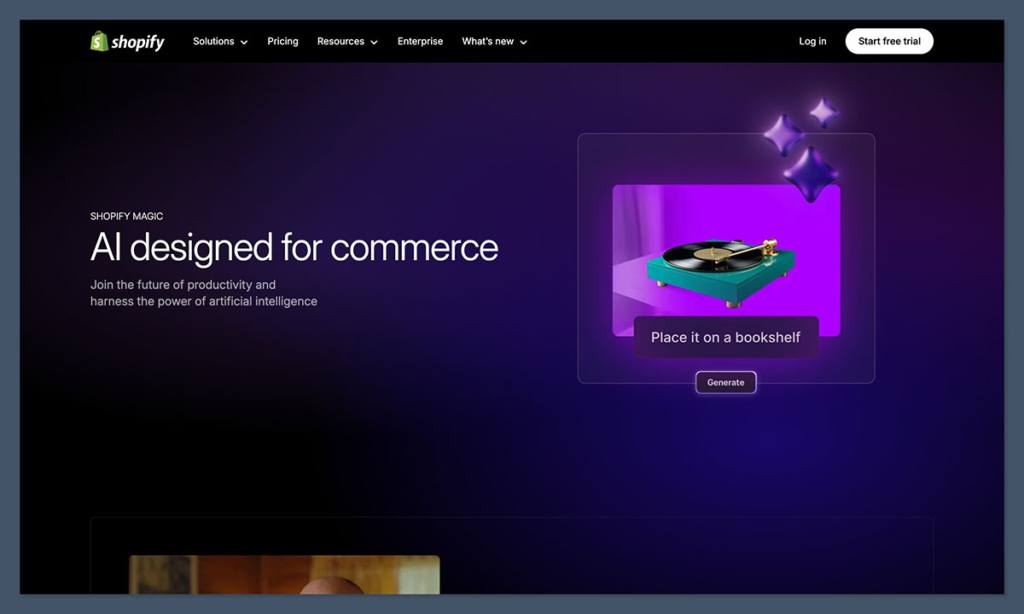
The single best AI tool for most readers is free and already sitting in your admin. For solo operators, Shopify’s native AI saves an estimated 5 to 10 hours a week, which is $250 to $500 of recovered time at typical rates. In one 60-day test on an $80K/month store, new product launches dropped from 2 to 3 hours down to 45 minutes.
Shopify Magic is platform-native AI baked across your store. It is best for any Shopify merchant who wants real AI wins at zero extra cost before paying for anything else. The native free stack folds in three surfaces: Magic, Sidekick, and Inbox.
Key AI features
- Shopify Magic handles product descriptions, image background removal and generation, email copy, SEO meta titles and descriptions, product tagging, and customer reply suggestions in Inbox.
- Sidekick is conversational store-management AI: it answers store questions, builds Flow automations from plain English, and generates basic custom apps.
- Sidekick Pulse proactively surfaces business insights instead of waiting for you to ask.
- Agentic Storefronts (Winter 2026 Edition, launched March 2026) make your products discoverable on ChatGPT, Perplexity, and Microsoft Copilot. Retailers running branded shopper agents grew holiday sales 59% faster than those that did not (6.2% vs 3.9% YoY).
Pricing (as of 2026, FREE)
- Free with every Shopify plan ($39+/month). No add-on cost.
- Sidekick is free across all plans.
- Custom app generation is gated to Grow, Advanced, and Plus (Basic had temporary access through April 2026).
- G2: not separately rated, and I will say that honestly rather than borrow a score.
✔️ What works
- Zero added cost makes it the best ROI by default in this entire list.
- Deep integration across descriptions, images, SEO, email, and Inbox.
- Sidekick Pulse surfaces insights without prompting.
- Agentic Storefronts future-proof you for AI-driven product discovery.
❌ What doesn’t
- Shopify-only with zero portability if you ever migrate.
- Generic copy that cannot be trained on brand guidelines, so you edit nearly every output.
- Surface-level analytics from Sidekick, per reviewers.
- Occasional image artifacts and no fashion-specific photo features.
2. Omnisend: Best Value AI Email and SMS for SMBs
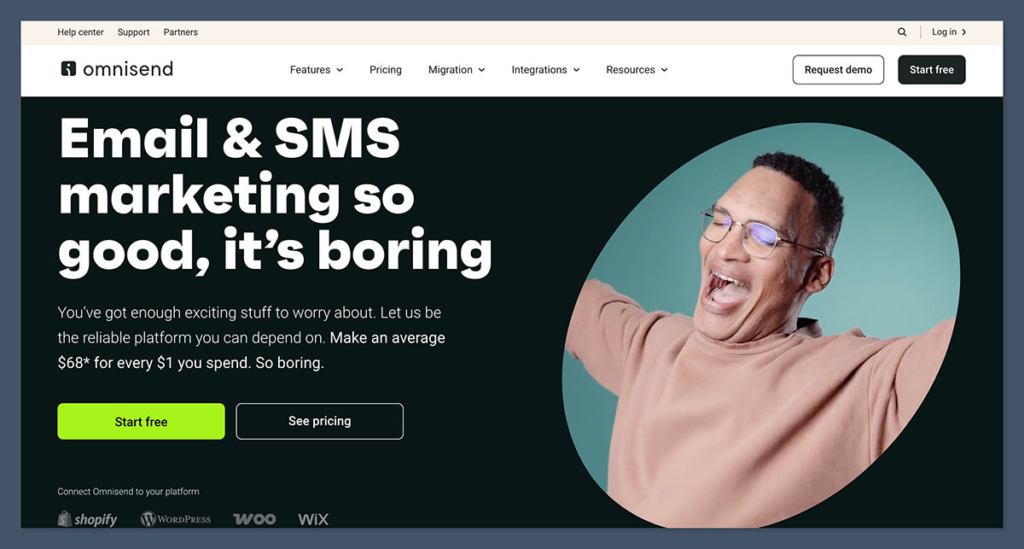
Most lists put Klaviyo first. For stores under roughly $500K in revenue, the smarter buy is the cheaper tool. Omnisend delivers about 80% of Klaviyo’s functionality at 50% of the cost, and the gap widens as your list grows: around $65/month vs Klaviyo’s $100 at 5K contacts, $209 vs $400 at 25K (48% cheaper), and $330 vs $700 at 50K (53% cheaper).
Omnisend is AI-driven email, SMS, and web push built for ecommerce. It is best for budget-conscious SMB and DTC stores that want full lifecycle automation without Klaviyo’s bill shock.
Key AI features
- AI customer segmentation to target by behavior, not guesswork.
- Pre-built ecommerce flows for cart abandonment, welcome, browse abandonment, and order confirmation. Automated flows generate 30x more revenue per recipient than broadcasts, and abandoned-cart emails show a 6.7% conversion lift.
- MCP feature that lets AI agents access Omnisend directly.
- All of the above are included in the free plan, not held back behind a paywall.
Pricing (as of 2026, FREE + PAID)
- Free: 500 emails/month, 60 SMS, 500 web push, with ALL features included.
- Standard: from $16/month.
- Pro: from $59/month.
- G2: 4.6/5 (1,181+ reviews).
✔️ Strengths
- Genuinely full-featured free tier, not a stripped trial.
- 35 to 53% cheaper than Klaviyo at comparable list sizes.
- All multichannel features (email, SMS, push) from the free plan.
- Faster setup than Klaviyo in practice.
❌ Weaknesses
- Less advanced segmentation than Klaviyo.
- Less sophisticated predictive analytics.
- Not the pick for $5M+ brands that need deep data depth.
3. Klaviyo: Best for Advanced AI Email and Retention
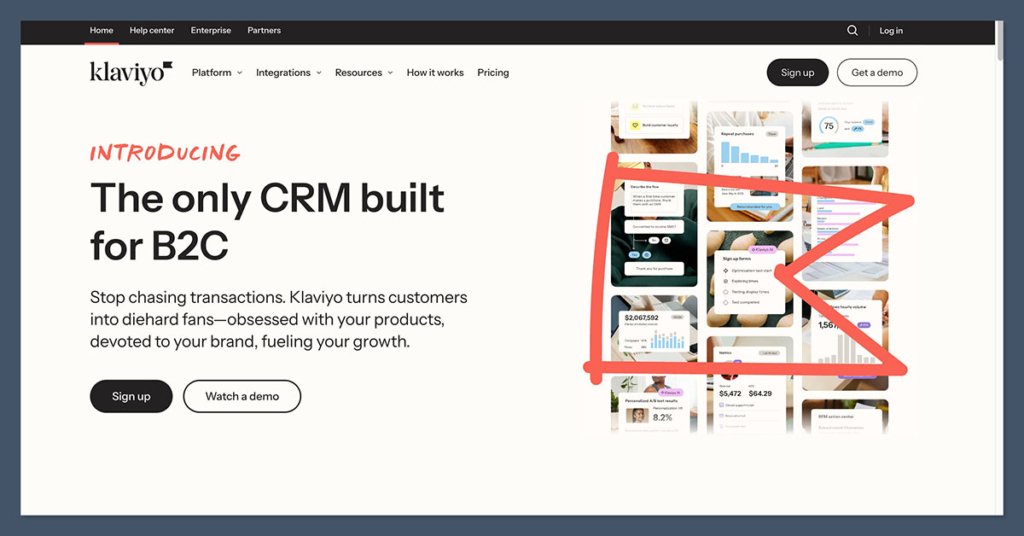
This is the retention platform everyone recommends, with a billing model that surprises people. The real minimum is about $45/month for 251 to 500 profiles, not the $20 figure often quoted. And since the February 2025 active-profile billing change, you pay for your whole database, dormant contacts included. Merchants have reported bills jumping from $39 to $200 overnight, and one documented case ran roughly EUR40,000/year for 277K profiles.
Klaviyo is advanced AI email, SMS, and CRM. It is best for stores with roughly 1K to 100K contacts that need best-in-class segmentation and predictive analytics and are ready to pay for that depth.
Key AI features
- K:AI Marketing Agent (launched September 2025, bundled into all paid plans at no extra cost) plans, builds, and launches campaigns across email, SMS, WhatsApp, and push from a brand URL.
- Predictive analytics: customer lifetime value, churn-risk scores, and expected next order date.
- Smart Send Time optimizes delivery per contact.
- Honesty note: K:AI has near-zero verified user reviews so far. Smart Send Time and the predictive models are the more proven features.
Pricing (as of 2026, FREE tier + PAID, scales expensive)
- Free: up to 250 profiles (Klaviyo branding required).
- ~$45/month (251 to 500 profiles); ~$150/month (10K); ~$720/month (50K); ~$1,380/month (100K).
- No annual discount, month-to-month only. Customer Agent AI add-on starts at $140/month.
- G2: 4.6/5 (1,346 reviews).
✔️ Strengths
- K:AI agent bundled free in paid plans.
- Predictive CLV, churn, and next-order modeling.
- Smart Send Time and 350+ integrations with deep Shopify sync.
- Flows drive far higher open rates than broadcasts.
❌ Weaknesses
- Three price hikes in four years and active-profile billing means surprise spikes.
- No annual discount, and unused SMS credits don’t roll over.
- Flows auto-stop when you hit your send limit.
- Gets expensive past 10K profiles, plus a clunky template editor.
4. Tidio with Lyro: Best Budget AI Chat (Powered by Claude)
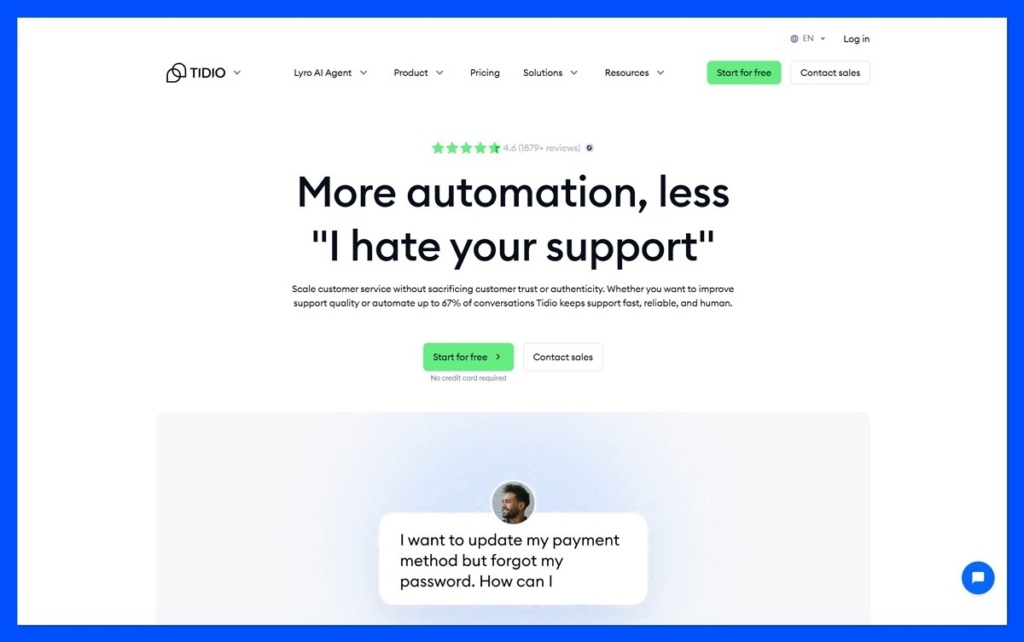
The AI answering your customers here runs on Claude (Anthropic). Tidio has stated it chose Claude because the model was fine-tuned to be “helpful, honest, and harmless,” confirmed publicly in a LinkedIn post tagged #lyro #anthropic #claude. For a customer-facing bot, that safety profile is a real credibility signal.
Tidio is no-code AI live chat (Lyro) for ecommerce. It is best for small Shopify stores under roughly 500 tickets/month that want fast-setup AI chat for order status, returns, and shipping FAQs.
Key AI features
- Lyro autonomous resolution, marketed at 67%. Tidio’s own support team hit 58% in real-world use, which is the number I would plan around.
- Multichannel across chat, email, and social.
- No-code setup that goes live in an afternoon. Shoppers who chat convert at 12.3% vs 3.1% (a 4x lift), and returning chat users spend 25% more.
Pricing (as of 2026, trial-grade free + PAID)
- Free: 50 Lyro conversations TOTAL (lifetime, not monthly, so it is effectively a trial).
- Starter $29/month; Growth $59/month; Plus from $749/month.
- Lyro add-on: ~$32.50/month (50 convos) or ~$78/month (200). Real-world Growth + Lyro + Flows runs $115 to $145+/month.
- G2: 4.6/5 (1,904 reviews), the largest review base in the support category.
✔️ Strengths
- Powered by Claude for strong safety and accuracy.
- Fast no-code setup with multichannel reach.
- Biggest G2 review base of any support tool here.
- Genuinely cheap to start experimenting.
❌ Weaknesses
- Free tier is 50 lifetime conversations, a trial and not a free plan.
- Lyro is a paid add-on on top of the base plan.
- 12x jump from Growth to Plus with no mid-tier.
- Thin backend action depth (refunds, order changes), so real cost runs above the headline.
5. Gorgias: Best AI Customer Service Built for Ecommerce
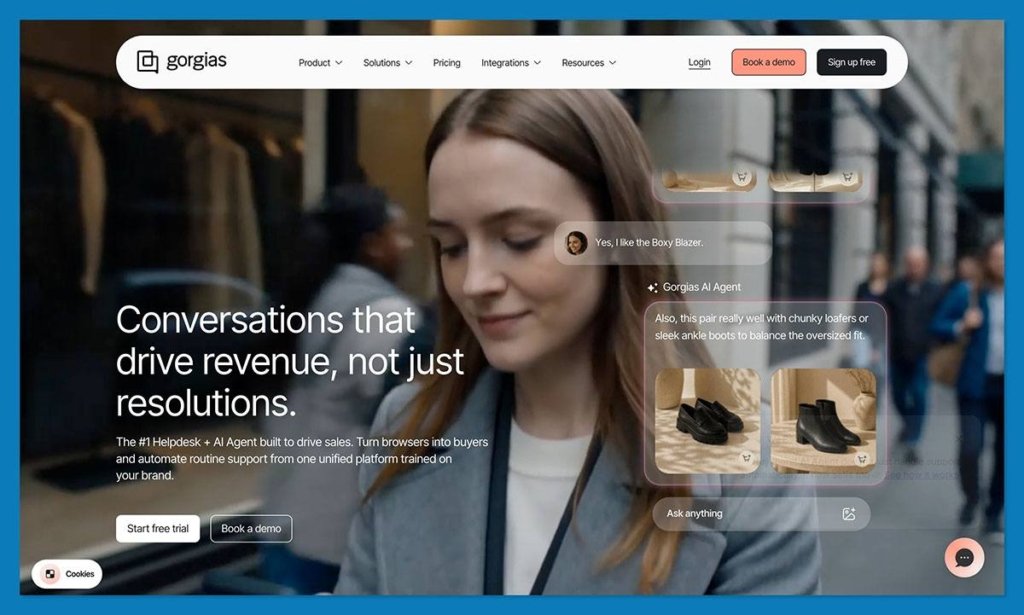
Pay-per-resolution sounds fair until you read the invoice, so let me answer the question everyone asks: do you get double-billed when AI hands off to a human? No. You pay only the helpdesk ticket fee on a handoff, not both. But you do carry two line items, and that catches people out.
Gorgias is a purpose-built ecommerce helpdesk with an AI Agent. It is best for Shopify stores with roughly 100 to 1,000+ tickets/month that want AI support fluent in their order data and tied to revenue.
Key AI features
- AI Agent resolves tickets autonomously while pulling full Shopify order context.
- Shopping Assistant drives pre-sale revenue, not just deflection.
- Revenue attribution per interaction shows the ROI of each conversation.
- Proactive engagement reaches out before customers ask. For a 300-ticket/month store at 60% automation, that is 180 resolutions x $0.90 = $162 in AI cost vs $600 to $900 for humans.
Pricing (as of 2026, PAID, no free tier)
- Helpdesk base from $10/month.
- PLUS $0.90 per resolved interaction (standard) or $1.00 (Starter).
- Overage: $1.50 per interaction beyond your allowance. At 1,000+ resolutions/month the AI line ($900+) can match the base plan.
- G2: 4.6/5 (558 reviews).
✔️ Strengths
- Built for ecommerce, pulling full Shopify context automatically.
- Pay-per-resolution aligns cost with value.
- Shopping Assistant drives revenue, not only deflection.
- Per-interaction revenue attribution that few rivals offer.
❌ Weaknesses
- No free tier to test before committing.
- AI fee is separate from the helpdesk plan, easy to underestimate.
- $1.50 overage fees add up fast.
- Real automation often below 60%, so budget a 3-month ramp, and reviewers find analytics underwhelming.
6. Photoroom: Best Budget AI Product Photography
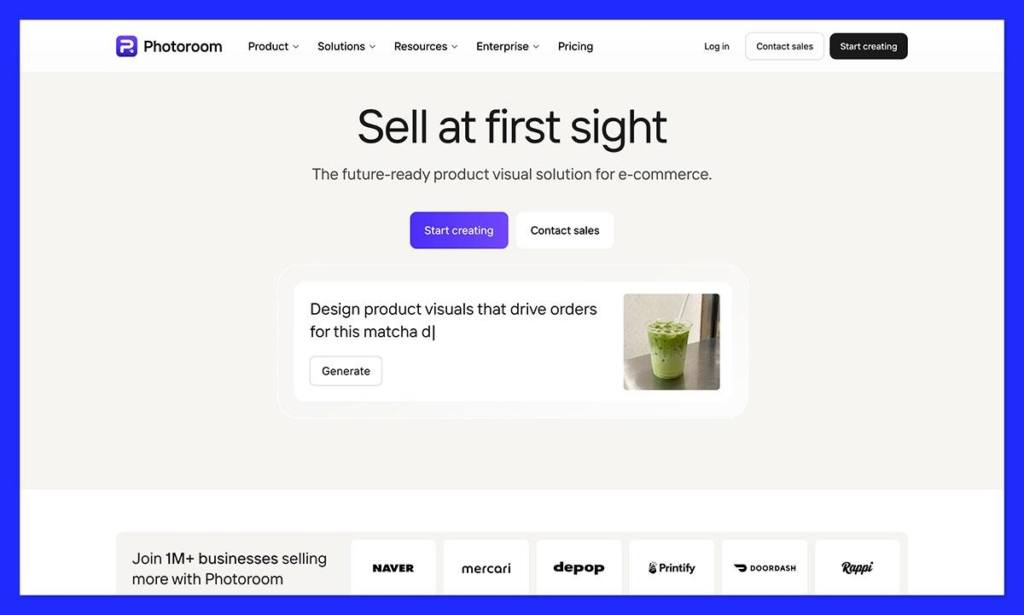
That “free” AI photo tool you keep seeing recommended cannot legally go on your store. Photoroom’s free exports are watermarked AND non-commercial under its own license, which makes the free tier a trial, full stop. The good news is that paid access is cheap.
Photoroom is AI background removal and product image editing at scale. It is best for marketplace and Shopify sellers (Amazon, eBay, Etsy) who need fast, affordable clean product shots and batch refreshes.
Key AI features
- Best-in-class background removal for the price.
- Batch Mode processes hundreds of images at once.
- AI scene and studio backgrounds generated on demand.
- Mobile apps and an API. One hour of batch processing replaces a $200 to $500+ studio session, and a 500-SKU seller can refresh the whole catalog over a weekend for $7.99/month.
Pricing (as of 2026, trial-grade free + PAID)
- Free: 250 exports/month, watermarked AND non-commercial only.
- Pro: ~$7.50/month annual, $7.99/month monthly.
- Max $26.99/month; Ultra from $99/month; enterprise custom.
- G2: 4.3/5 (18 reviews), a small sample worth flagging.
✔️ Strengths
- Best-in-class background removal at this price.
- Batch Mode built for high-SKU catalogs.
- 150M+ downloads, the most-used AI photo tool.
- Mobile plus API access for automation.
❌ Weaknesses
- Free exports are watermarked and non-commercial, so the free tier is a trial.
- Virtual-model feature is basic versus dedicated tools.
- AI backgrounds can look repetitive.
- Weak for fashion and body draping.
For fashion-only stores, WearView is the niche alternative for virtual try-on and AI model generation ($29 to $99/month, credit-based).
7. Jasper: Best AI Copywriting at Scale for DTC Brands
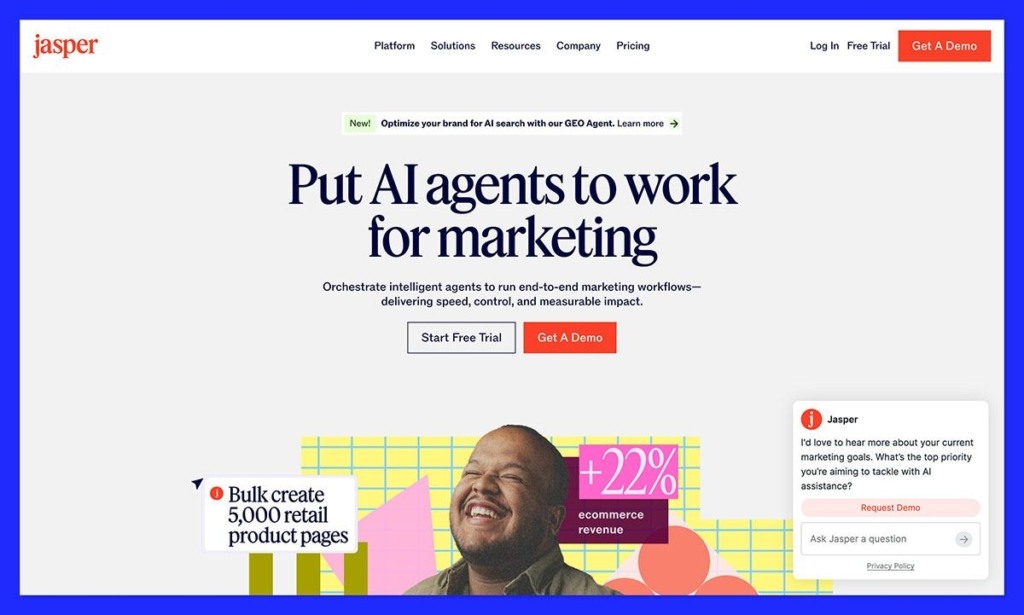
If product copy is your bottleneck, Brand Voice is the feature that makes AI actually sound like you. Content generation is the most mature ecommerce AI use case and the shortest path to documented ROI.
Jasper is an AI copywriting platform built around Brand Voice. It is best for DTC brands pumping out high volumes of product descriptions, ad copy, and blog content that must stay on-brand.
Key AI features
- Brand Voice trains on your existing content and produced the most consistent output of any tool I tested.
- 50+ ecommerce templates for descriptions, ads, and emails.
- AI Workflows chain multi-step content jobs.
- 30+ languages and GPT-4-quality output. Jasper is a Brand Voice and template layer over OpenAI’s models, so the value over raw ChatGPT is consistency, templates, and team features. Large-catalog launches dropped from 2 to 3 hours to 45 minutes per SKU batch, though every output still needs a human read.
Pricing (as of 2026, PAID, no free tier)
- Creator: $39/month annual, $49/month monthly (1 user, 1 Brand Voice).
- Pro: $59/month annual, $69/month monthly (3 Brand Voices, AI image generation).
- Business: custom (~$900+/month). 7-day free trial only.
- G2: 4.7/5 (1,270 reviews), the highest-rated tool in this lineup.
✔️ Strengths
- Brand Voice delivered the most consistent AI output I tested.
- 50+ ecommerce templates out of the box.
- AI Workflows plus 30+ language support.
- Highest G2 rating in this entire list.
❌ Weaknesses
- No free tier, and $39/month is hard to justify for occasional use.
- Output quality varies by template and needs editing.
- Brand Voice setup is time-intensive up front.
- Image generation only on Pro+.
8. Surfer SEO: Best for AI-Optimized SEO Content
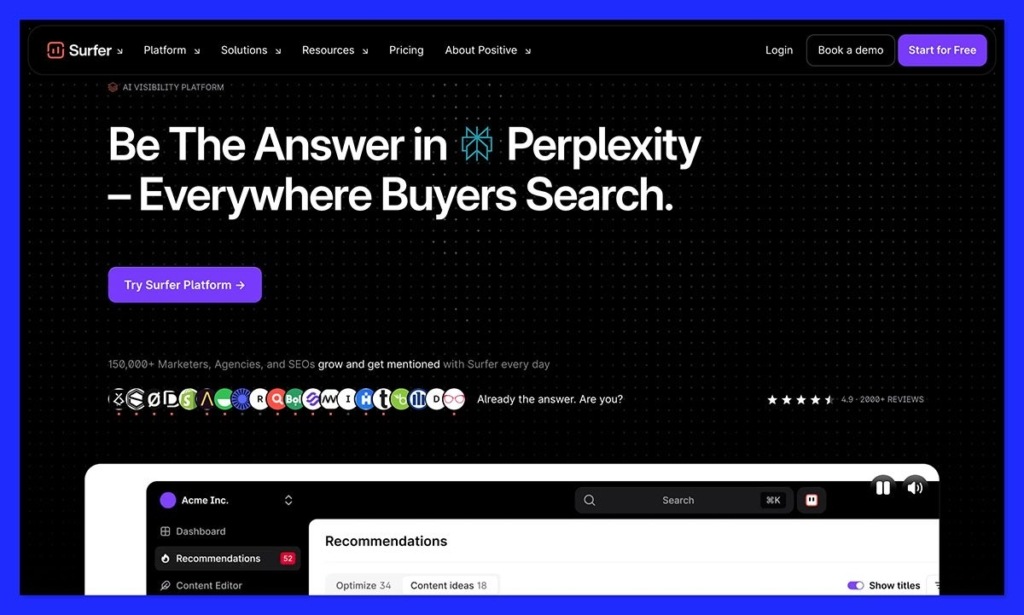
A 0-to-100 score that tells you exactly how to beat the pages ranking above you. The catch: this is the one tool here with no free way in, not even a trial. So it suits established stores already investing in content, not a day-one shop.
Surfer SEO is AI on-page SEO and content optimization. It is best for ecommerce brands already running content marketing who want data-driven optimization and have patience for SEO timelines.
Key AI features
- Content Score (0-100) measured in real time against top-ranking pages.
- Grow Flow delivers a weekly AI-prioritized SEO task queue.
- Keyword research and rank tracking included.
- AI article generation (at extra cost) plus Google Docs and WordPress integrations.
Pricing (as of 2026, PAID, no free tier or trial)
- Essential: $79/month annual, $99/month monthly (30 Content Editor articles, 5 AI articles).
- Scale: $175/month annual, $219/month monthly.
- Enterprise: from $999/month. No free trial (7-day money-back guarantee only). AI articles cost $29 each on Essential, and SERP Analyzer is a $29 add-on.
- G2: 4.4/5.
One honesty flag: organic SEO is a 3-to-6-month payoff, so this is a slow-ROI category best suited to brands with existing content to optimize.
✔️ Strengths
- Actionable real-time Content Score with clear guidance.
- Grow Flow weekly task queue keeps SEO moving.
- Keyword research and rank tracking included.
- Solid Docs and WordPress integration.
❌ Weaknesses
- No free tier or trial to test the fit.
- $79/month is steep for solopreneurs.
- AI articles and SERP Analyzer cost extra.
- Technical-SEO gaps (no crawling or backlinks), a learning curve, and slow ROI versus other categories.
9. Triple Whale: Best AI Analytics and Attribution for DTC
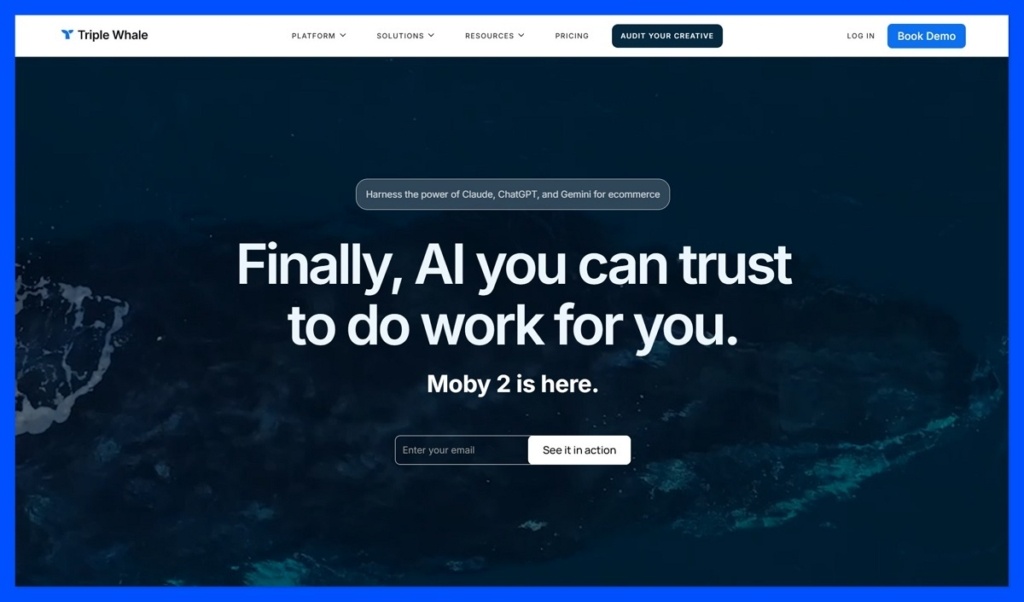
One of the few serious analytics platforms with a free tier that is a real plan, not a countdown trial. That makes it the rare attribution tool an SMB can actually start with before committing budget.
Triple Whale is AI analytics and multi-touch attribution for ecommerce. It is best for Shopify and DTC stores running paid ads. The free tier works for small stores, and the paid tiers shine at $500K to $20M+ GMV, when you need to know which channel truly drives revenue.
Key AI features
- Moby AI operator runs automated analysis, KPI alerts, ad monitoring, creative generation, audience building, and landing-page generation.
- True multi-touch attribution via the Triple Pixel.
- One dashboard consolidating Shopify, ad platforms, and email.
- SQL editor and custom dashboards on Foundation and up.
Pricing (as of 2026, FREE + PAID, scales by GMV)
- Free: basic attribution, 12-month lookback, 10 users, Moby Chat.
- Foundation: from $219/month.
- Automate: from $749/month (required for Moby Automations). Custom from $539/month base for $20M+ GMV. Pricing adjusts by annual GMV.
- G2: 4.5/5 (481 reviews).
Attribution is a later-stage ROI category, so for sub-$500K stores I would start on the free tier and upgrade only when ad spend justifies it.
✔️ Strengths
- Moby AI operator automates analysis and alerts.
- True multi-touch attribution via Triple Pixel.
- One dashboard across Shopify, ads, and email.
- Genuinely useful free tier.
❌ Weaknesses
- Foundation ($219/month) is steep under $500K GMV.
- Moby Automations gated to the $749/month Automate plan.
- Cost is hard to predict as GMV grows.
- Primarily Shopify-focused, and some Moby Specialists are still “coming soon.”
10. Flair.ai: Best for AI Lifestyle Product Imagery
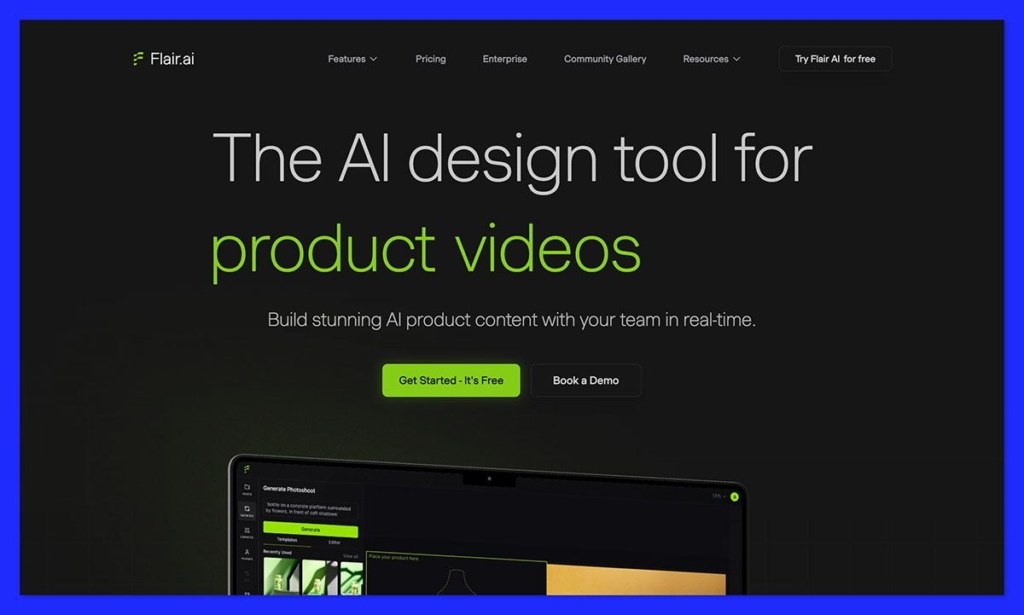
Great for a candle on a marble counter, risky for anything with a logo. Set that expectation now and Flair earns its place. It pairs well with Photoroom: use Photoroom for clean cutouts, Flair for lifestyle scenes.
Flair.ai is AI lifestyle and scene product photography on a drag-and-drop canvas. It is best for brands wanting creative lifestyle shots of simple products (home goods, plain packaging) where logo and text accuracy are not critical. It is NOT for branded, food, or text-heavy products.
Key AI features
- Drag-and-drop canvas for hands-on composition control.
- Lifestyle scene generation from a single product image.
- Accessible to non-designers with no photography skill needed.
- Usable free tier (~50 generations/month, no watermark, unlike Photoroom’s watermarked exports).
Pricing (as of 2026, FREE + PAID)
- Free: ~50 image generations/month.
- Paid: from $10/month.
- G2: 4.3/5 (only 7 reviews), a thin sample I would not lean on heavily.
✔️ Strengths
- Drag-and-drop creative control over the scene.
- Accessible to non-designers.
- Generates lifestyle scenes straight from a product photo.
- Free tier is more usable than Photoroom’s for testing.
❌ Weaknesses
- Product-fidelity problems: one G2 reviewer reported very poor results and low fidelity even after uploading 35 images.
- Cannot reliably hold logos or text.
- Pricing called “unreasonably high” by a reviewer for the output.
- Only 7 G2 reviews and unsuitable for accuracy-critical products.
11. Nosto: Best AI Personalization for Scaling Brands (Enterprise-Priced)
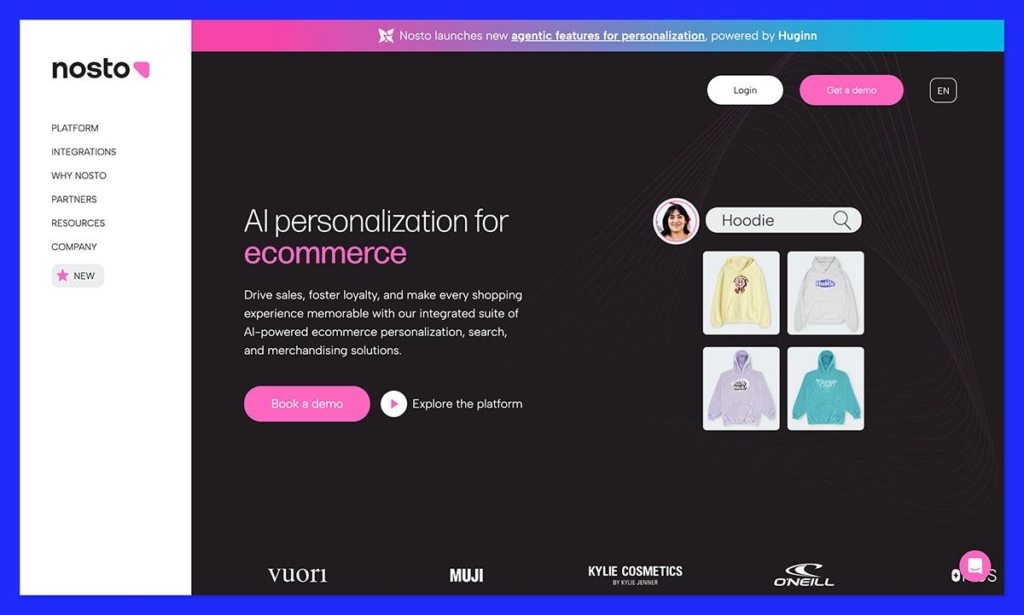
AI personalization drives the biggest revenue numbers in this whole article, and that is exactly why it is priced out of reach for most small stores. McKinsey finds personalization leaders see 40% higher revenue, AI recommendations can drive up to 31% of ecommerce revenue, and recommendation-engaged sessions show a 369% AOV lift.
Nosto is AI personalization, recommendations, and merchandising. It is best for mid-market brands with roughly $1M+ in annual revenue and meaningful traffic. It is explicitly NOT for early or small stores.
Key AI features
- experience.AI engine for real-time personalization.
- Behavioral recommendations and dynamic bundles.
- Personalized banners and semantic AI search.
- Visual AI analysis, serving 3,500+ brands including Kylie Cosmetics, Princess Polly, and Muji.
Pricing (as of 2026, ENTERPRISE / custom)
- Custom, performance-based pricing tied to conversions.
- Estimated ~$500/month basic, $1,000+/month mid-market.
- No transparent pricing; a sales demo is required. The SMB warning is blunt: businesses under $1M revenue pay enterprise prices for a small slice of the value.
For even larger budgets, Bloomreach (~$50K+/year, Loomi AI, G2 4.6) and Constructor (custom enterprise, G2 4.8) sit further upmarket and out of SMB scope. For early stores, Shopify Magic’s built-in recommendations are the free starting point.
✔️ Strengths
- Comprehensive personalization engine.
- Behavioral recs, dynamic bundles, and semantic/visual search.
- Performance-based pricing ties cost to ROI.
- Trusted by major DTC brands.
❌ Weaknesses
- Not SMB-friendly by design.
- Opaque pricing with a required sales call.
- Complex implementation.
- Overkill for small stores under $1M.
12. Fin AI: Best Enterprise-Grade Autonomous Support (For Scaling Stores)
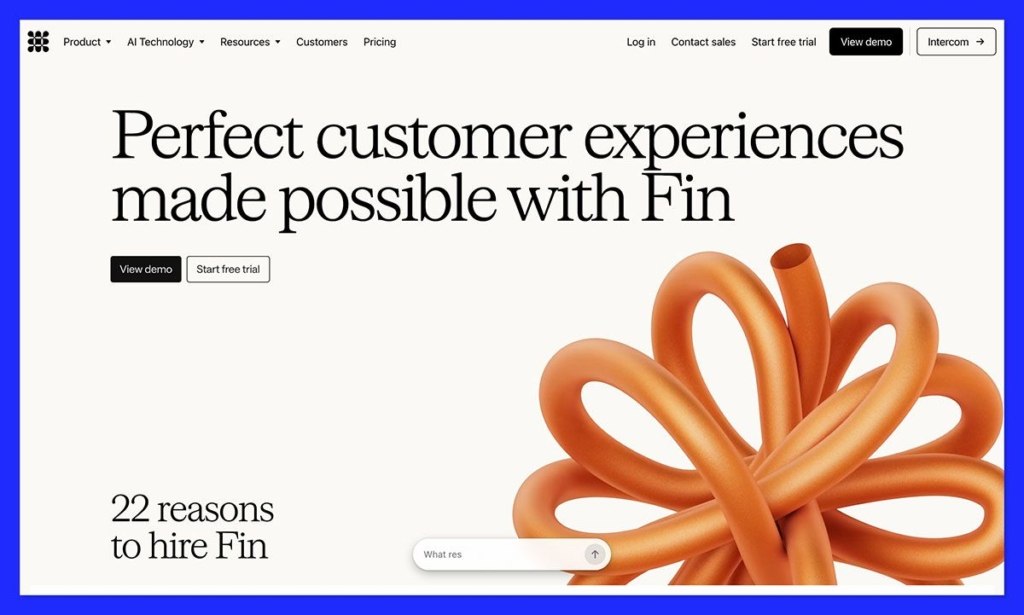
The support AI that does not just answer the question, it processes the refund. That action-taking ability is what separates Fin from the plug-and-play picks, and also why it lands last among the tools and carries an enterprise flag.
Fin (Intercom’s autonomous AI agent) is channel-agnostic AI support. It is best for mid-market to enterprise stores wanting omnichannel AI that executes multi-step workflows. It is NOT the plug-and-play SMB pick. That is Gorgias or Tidio.
Key AI features
- Channel-agnostic: chat, email, voice, WhatsApp, Instagram, Facebook, Slack, and SMS.
- Real backend actions: processes refunds, updates shipping addresses, runs multi-step workflows.
- 45+ languages plus MCP integration for real-time data.
- Proven outcomes: Peddle saw $163K annual savings, 38% faster chat, and 67% faster email; Nuuly reported 49% instant resolution and 95% CSAT.
Pricing (as of 2026, ENTERPRISE)
- $0.99 per resolution.
- Custom volume pricing for larger contracts.
- No free tier.
- G2: 4.5/5 (3,855 reviews), the largest review base in the support category.
✔️ Strengths
- Truly omnichannel across eight-plus channels.
- Executes real backend actions, not just replies.
- 45+ languages supported.
- Strongest case-study evidence and largest G2 base in the category.
❌ Weaknesses
- No free tier.
- Custom enterprise pricing, not SMB-accessible.
- More complex to implement than Gorgias or Tidio.
- Not Shopify-native, so less plug-and-play.
13. The Best AI Ecommerce Tools Compared (Plus a $0-100/Month Starter Stack)
Here is the single neutral scoreboard the vendor lists never give you, since each one only tables its own subset. All pricing is reconciled and tagged as of 2026, and AI pricing moves fast, so confirm before you buy.
| Tool | Category | Starting price (as of 2026) | Free tier? | G2 rating | Best for |
|---|---|---|---|---|---|
| 1. Shopify Magic + Sidekick | All-in-one (native) | Free with Shopify ($39+/mo plan) | Yes (included) | Not rated | Any Shopify merchant wanting free AI |
| 2. Omnisend | Email/SMS/Push | $16/mo (free tier) | Yes (all features) | 4.6 (1,181+) | Best-value lifecycle email for SMBs |
| 3. Klaviyo | Email/SMS/CRM | ~$45/mo (free up to 250 profiles) | Yes (250 profiles) | 4.6 (1,346) | Advanced segmentation + retention |
| 4. Tidio + Lyro | Support/Live chat | Free (50 convos total); $29/mo | Trial-grade | 4.6 (1,904) | Budget Claude-powered AI chat |
| 5. Gorgias | Support/Helpdesk | $10/mo + $0.90/resolution | No | 4.6 (558) | Shopify-native AI support |
| 6. Photoroom | Product photography | $7.99/mo (free watermarked) | Trial-grade | 4.3 (18) | Budget background removal at scale |
| 7. Jasper | Copywriting | $39/mo (7-day trial) | No | 4.7 (1,270) | On-brand copy at scale |
| 8. Surfer SEO | SEO/content | $79/mo | No | 4.4 | Data-driven on-page SEO |
| 9. Triple Whale | Analytics/attribution | $219/mo (real free tier) | Yes | 4.5 (481) | DTC attribution + AI insights |
| 10. Flair.ai | Lifestyle imagery | $10/mo (free ~50 gen) | Yes | 4.3 (7) | Lifestyle scenes for simple products |
| 11. Nosto | Personalization | Custom ~$500-1k+/mo | No (demo) | Custom | Personalization for $1M+ brands (enterprise) |
| 12. Fin AI | Support/AI agent | $0.99/resolution | No | 4.5 (3,855) | Omnichannel autonomous support (enterprise) |
Now turn that into an action plan. Build your stack in stages and start with your biggest revenue leak, not the longest feature list.
- Stage 1 ($0): Shopify Magic + Sidekick + Inbox (free), Omnisend Free for email, and Tidio Free as a chat trial. A complete starting kit at zero cost.
- ~$34/month: Omnisend Standard ($16) + Gorgias Starter ($10) + Photoroom Pro ($7.99). That covers email, AI support, and product photography.
- ~$73/month: add Jasper Creator ($39) when content becomes the bottleneck, for content + email + support + photography.
- The rule: high cart abandonment means email first; high support cost means support first; weak product pages mean photography and content first.
FAQ
What are the best free AI tools for ecommerce?
The strongest genuinely free options are Shopify Magic, Sidekick, and Inbox (free with any Shopify plan), Omnisend’s full-featured free tier (500 emails/month with all features), and Triple Whale’s real free analytics tier (basic attribution, 12-month lookback, 10 users, Moby Chat). Watch the fine print on two popular picks: Tidio Free is 50 lifetime Lyro conversations and Photoroom Free is watermarked, non-commercial exports. Both are trials, not free plans.
Klaviyo vs Omnisend: which is better for a small Shopify store?
Omnisend wins for most stores under roughly $500K in revenue. It delivers about 80% of Klaviyo’s functionality at 50% of the cost, with a free tier that includes every feature. Choose Klaviyo only when you need advanced predictive analytics (CLV, churn scores), very deep segmentation, or you are scaling past $500K. At 25K contacts Omnisend runs about 48% cheaper ($209 vs $400), and the gap reaches 53% at 50K contacts.
How much does Klaviyo actually cost?
The real minimum is about $45/month for 251 to 500 profiles, not the $20 figure often quoted, with a free tier up to 250 profiles. Since the February 2025 active-profile billing change, you pay for your entire database, dormant contacts included, and there is no annual discount. A 5,000-contact list runs roughly $100/month email-only, climbing to about $720/month at 50K profiles and $1,380/month at 100K.
Can I use Photoroom’s free tier for my product photos?
No. Photoroom’s free exports are watermarked AND non-commercial under its own license, so they cannot go on Shopify, Amazon, or Etsy listings. You need the Pro plan (about $7.99/month monthly, ~$7.50 annual) for any commercial use. Treat the free tier strictly as a trial to test the background removal before you pay.
What AI model powers Tidio’s Lyro chatbot?
Claude, made by Anthropic. Tidio has said it chose Claude because the model was fine-tuned to be “helpful, honest, and harmless,” and confirmed it publicly in a LinkedIn post tagged #lyro #anthropic #claude #tidio. The practical takeaway is strong safety and accuracy for customer-facing chat, which matters when a bot is speaking for your brand.
Which AI ecommerce tools are enterprise-priced and not worth it for a small store?
Flag these as not SMB-accessible: Bloomreach ($50K+/year), Constructor (custom enterprise), Fin AI (per-resolution enterprise), and Nosto ($500 to $1K+/month, needs ~$1M+ revenue). Triple Whale’s $749/month Automate plan and Surfer’s $79/month minimum are steep but workable for the right store. Steer toward the free and low-cost picks first, then upgrade only when revenue justifies the spend.


