
 By Bogdan Rancea
Shopify is one of the most widely used ecommerce platforms in the world, but whether it’s right for your business is a more nuanced question.
Its strengths in sales features, multichannel selling, and ecosystem maturity make it a default choice for many brands. Yet its rising costs, content limitations, and customization guardrails mean it isn’t the right fit for everyone.
To help you decide, we’ve broken down Shopify’s biggest pros and cons based on thorough research and hands-on testing, so you know exactly what you’re signing up for.
Shopify Pros and Cons at a Glance
Before we get into the details, here’s a quick overview of where Shopify shines and where it falls short:
| Pros | Cons |
|---|---|
| Easy to launch and manage, even without technical skills | Plans have risen significantly in price since 2023 |
| Massive app ecosystem with 6,000+ integrations | Heavily reliant on third-party apps for advanced features |
| Strong multichannel selling across social and marketplaces | Hard limit of 100 variants and 3 options per product |
| Reliable hosting, SSL, and PCI compliance built in | URL structure is opinionated and can’t be fully customized |
| Powerful, conversion-optimized checkout | Blogging and CMS features lag behind specialist platforms |
| Solid POS solution for hybrid online/physical businesses | Transaction fees apply if you don’t use Shopify Payments |
| AI tools for product setup, descriptions, and marketing | Section-based editor limits creative design freedom |
Shopify Pricing
Shopify’s pricing is split across three core plans. As of 2025, public pricing sits at approximately $39/month (Basic), $105/month (Shopify), and $399/month (Advanced) when billed monthly. Annual billing brings these costs down noticeably.
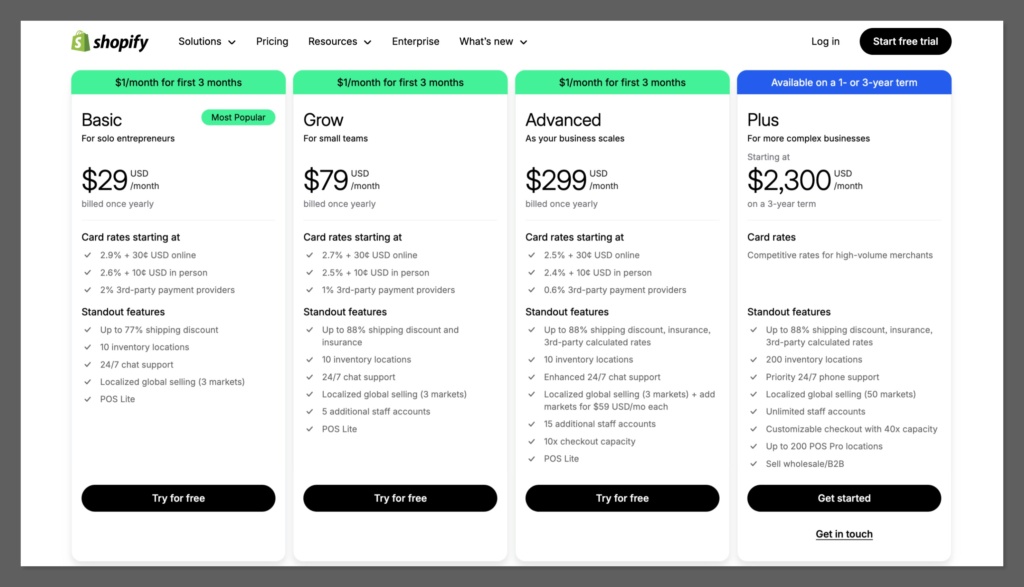
It’s worth noting that Shopify raised prices by roughly 30–35% on its main plans between 2023 and 2024, which has made the total cost of ownership a more serious consideration for growing merchants.
Beyond the base subscription, you’ll likely encounter additional costs for premium themes ($100–$500 one-time), apps (many carry monthly fees), and transaction fees of up to 2% if you don’t use Shopify Payments.

For enterprise-level stores, Shopify Plus pricing has also increased, with higher base fees and a revised GMV percentage, making the economics less attractive for some large brands compared to alternative platforms.
The Pros of Shopify
1. Genuinely Easy to Get Started
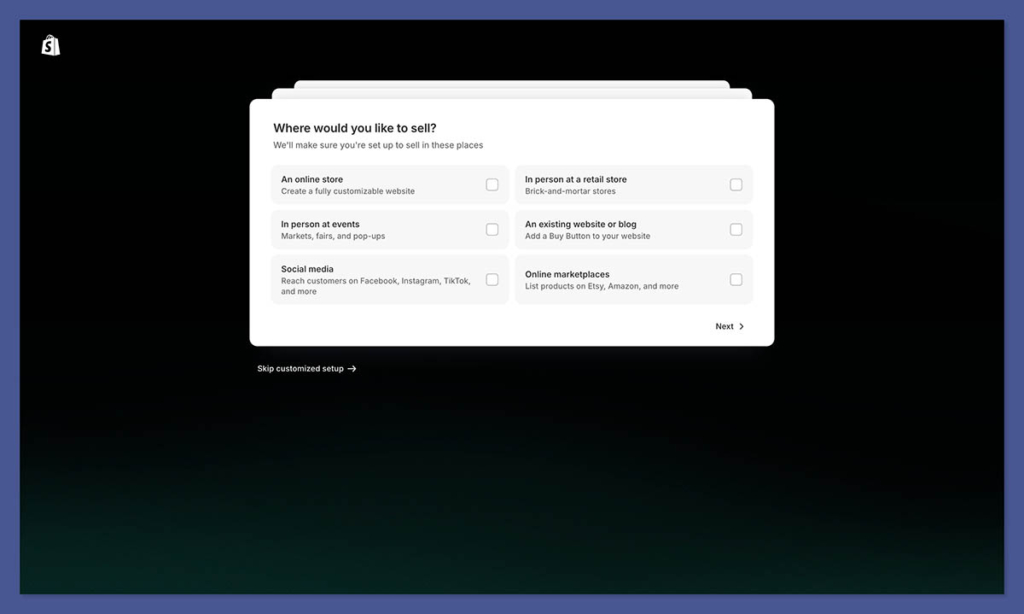
Shopify’s onboarding is one of the smoothest in the industry. A guided setup, intuitive admin dashboard, and 24/7 support via chat, email, and phone (on core plans) mean that even non-technical founders can launch a professional store quickly. The step-by-step checklist after signup gives you a clear path forward without feeling overwhelmed.
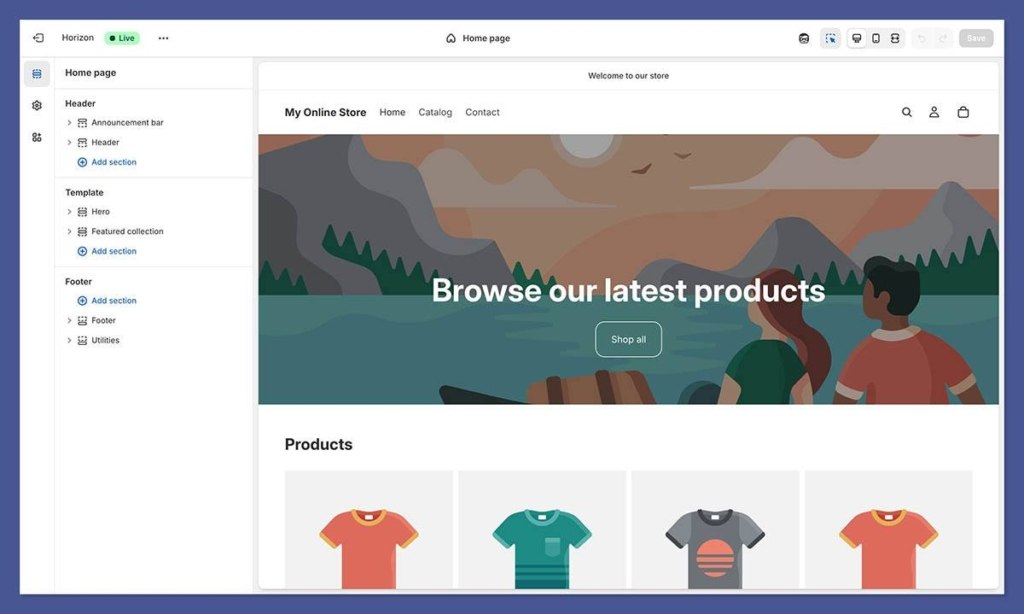
The theme editor has also improved considerably, and Shopify now includes the Horizon theme — a modern, visually polished option added to the free theme lineup.
On top of that, Shopify’s built-in AI assistant can help you customize and configure your store directly from the sidebar: adjusting colors, fonts, and layout, updating text and images, rearranging sections, and even generating full theme variations from a short text prompt describing your business.
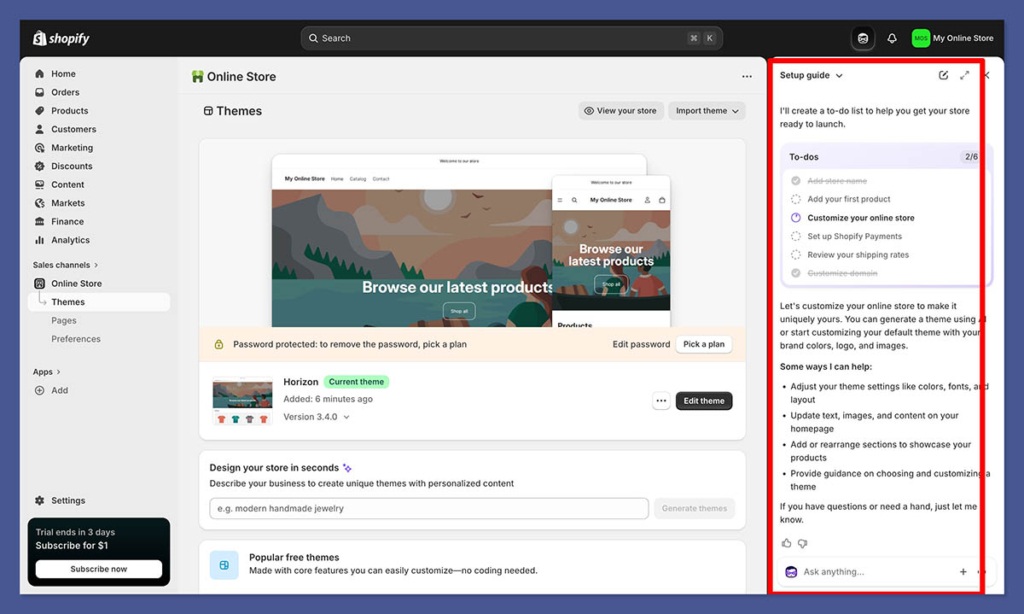
It’s not a full AI website builder, but it meaningfully reduces the friction of getting a store looking the way you want it.
2. Best-in-Class Sales Features
Shopify’s sales toolkit is arguably the strongest among SaaS ecommerce builders. From its cheapest plan, you get abandoned cart recovery, discount codes, and unlimited products. Higher-tier plans add advanced reporting, more inventory locations, and lower transaction rates.
The checkout experience is conversion-optimized by design. Shopify claims it’s the world’s best-converting checkout, and the platform continues to improve it, the “Boring Edition” announcement in December 2024 brought faster load speeds and bundle options, among other refinements.
You can also customize the checkout with local pickup, express checkout, and tipping options, all without needing a developer.
3. Massive App Ecosystem
With over 6,000 apps in the Shopify App Store, there’s an integration for almost every use case, reviews, subscriptions, B2B, loyalty programs, bundles, upsells, and more.
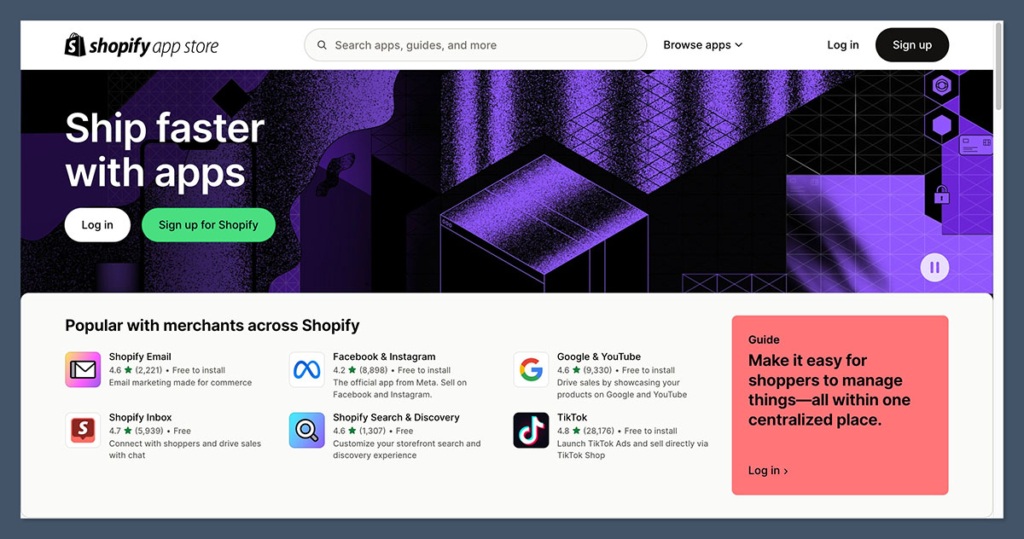
This breadth means you can test new features without committing to custom development, which is a genuine advantage for iterating quickly.
Modern extensibility around checkout (Checkout UI Extensions, Checkout Branding API, Functions, and web pixels) also enables meaningful customization of upsells, custom fields, discount rules, and tracking, all within Shopify’s controlled environment.
4. Multichannel Selling and POS
Shopify makes it straightforward to sync your store with social platforms like Instagram and TikTok, as well as marketplaces like Amazon, Walmart, eBay, and Etsy via the Marketplace Connect app. Managing all of these channels from a single backend is a significant operational advantage as your business scales.
The Shopify POS is one of the better solutions in the ecommerce space, syncing products, inventory, and customers in real time.
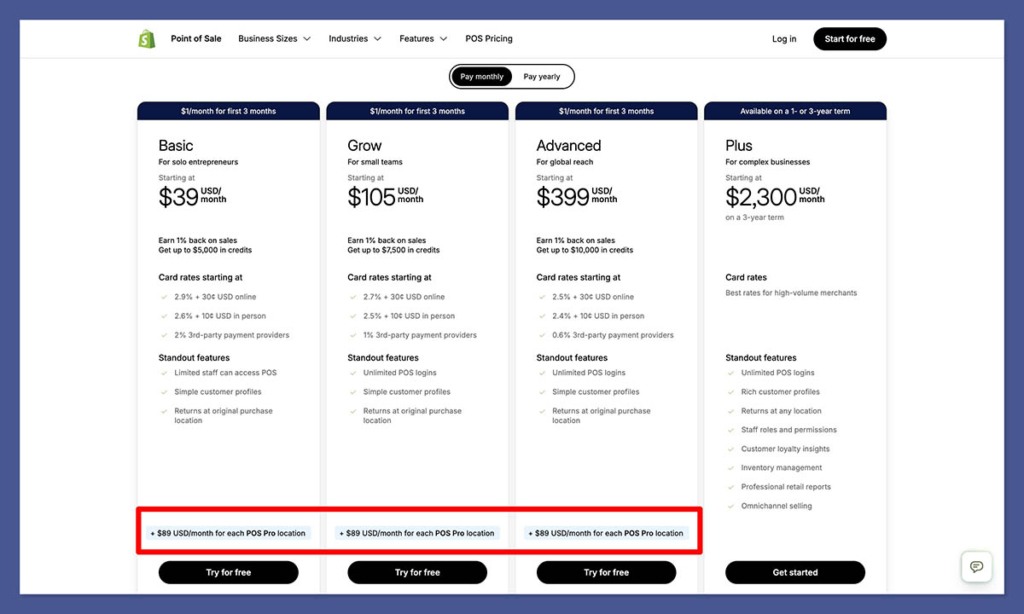
It’s particularly well-suited to hybrid businesses that sell both online and in physical locations or at pop-ups.
5. Reliable Infrastructure You Don’t Have to Think About
Shopify handles hosting, SSL certificates, PCI compliance, and platform updates entirely. Merchants rarely need to deal with server maintenance, security patches, or downtime management. For most businesses, this is a meaningful time and cost saving compared to self-hosted alternatives.
6. Strong AI Tools
Shopify Magic is a capable built-in AI tool that supports product description generation, image background editing, email marketing content, and customer response personalization. It’s well-integrated into the platform rather than bolted on as an afterthought.
Shopify Sidekick, an AI-powered assistant and advisor, has also begun rolling out to merchants following the Winter ’25 announcement, adding another layer of in-platform guidance.
7. Good Fit for Dropshipping and Print-on-Demand
Shopify has deep integrations with leading dropshipping and print-on-demand apps, making it a natural home for these business models. Key advantages include:
- Centralized inventory and order management across suppliers
- Streamlined order routing and fulfillment automation
- Native connections with top POD suppliers like Printful and Printify
- Dropshipping app integrations for product sourcing and syncing
This ease of entry has a compounding effect. Because the learning curve is shallow, merchants spend less time figuring out the platform and more time focused on their actual business, sourcing products, building an audience, and refining their offer.
For first-time store owners especially, that reduction in friction can be the difference between launching and stalling indefinitely on setup tasks.
The Cons of Shopify
1. Costs Add Up Faster Than the Base Price Suggests
The headline plan price is rarely what you’ll actually pay. App subscriptions, premium themes, and transaction fees (if you’re not using Shopify Payments) can meaningfully increase your monthly outlay. For merchants on thin margins or in the early stages of building a store, this cost creep is a real concern.
Multi-user access, advanced reports, and certain automation features also require higher-tier plans, meaning your costs grow alongside your team and operational complexity.
2. Product Variant Limits Are a Genuine Problem for Complex Catalogs
Shopify enforces hard limits of 3 product options and 100 variants per product. For apparel brands with multiple sizes, colors, and fits, or any merchant with a complex assortment, this is a serious structural constraint. Working around it typically means using third-party apps, which adds cost and operational overhead.
3. SEO and Content Flexibility Are Limited
Shopify’s URL structure is opinionated and can’t be fully customized. For SEO-heavy strategies, particularly those built around content hubs or programmatic page structures, this rigidity can be frustrating.
The blogging and CMS features also lag behind specialist platforms.
There’s limited support for complex content models, editorial workflows, or advanced on-page SEO controls. Duplicate content handling is another pain point that often requires workarounds or additional apps.
Specific limitations include:
- Fixed URL structures for products, collections, and blog posts
- Limited blogging and CMS capabilities compared to specialist platforms
- No support for complex content models or editorial workflows
- Restricted low-level on-page SEO controls
- Duplicate content issues that often require apps or workarounds to resolve
For brands that rely on content marketing as a primary acquisition channel, this is a meaningful strategic limitation. Running a high-volume blog, building topical authority through interconnected content, or executing programmatic SEO campaigns all become harder than they need to be.
Merchants in this position often find themselves maintaining a separate CMS, such as WordPress, alongside their Shopify store, which adds complexity and cost that wouldn’t exist on a more content-capable platform.
4. The Editor Limits Design Creativity
Shopify’s section-based editor is functional but restrictive. You can stack sections, adjust settings, and swap content within a fixed structure, but you can’t freely position elements or achieve the kind of design flexibility you’d get with a drag-and-drop editor like Squarespace or Wix.
For brands where storefront aesthetics are a core part of the customer experience, this can feel limiting.
There are also only 13 free themes, with the rest ranging from $100 to $500 each, an extra cost that’s easy to overlook when comparing headline plan prices.
5. Platform Lock-In Is a Real Consideration
Once you’re deep into the Shopify ecosystem, migrating to another platform is complex and costly. The factors that create this lock-in include:
- Proprietary data models that don’t export cleanly to other platforms
- App dependencies that may not have equivalents elsewhere
- Custom theme work tied to Shopify’s Liquid templating language
- Reliance on Shopify’s APIs and product roadmap for core functionality
For merchants planning significant long-term investment in their platform, this dependency is worth thinking through carefully before committing.
The lock-in risk compounds over time. The longer you operate on Shopify, the more integrations you accumulate, the more customization you layer in, and the more your team’s workflows are built around Shopify-specific tooling.
Merchants who migrate after several years consistently report that the process takes longer and costs more than anticipated, a reality worth factoring in early, even if migration feels like a distant concern right now.
6. Checkout Customization Has Guardrails
Shopify’s checkout is powerful within its intended parameters, but it’s also tightly controlled. Key limitations include:
Advanced post-purchase flows or tracking setups may require developer time to implement via the official Extensions framework
No arbitrary custom JavaScript allowed in checkout or order status pages as of 2025
Customization limited to what’s available within Checkout UI Extensions and the Branding API
Shopify Pros and Cons by Merchant Type
The value Shopify delivers varies considerably depending on the size and nature of your business. Here’s a breakdown of where it fits well and where it doesn’t:
| Merchant Type | Key Advantages | Key Drawbacks |
|---|---|---|
| Solo / early-stage brands | Fast setup, low technical burden, essential tools included on the cheapest plan | Rising base price and app costs can squeeze low-margin businesses |
| Established DTC / mid-market | Strong multichannel selling, solid checkout, rich app ecosystem | Variant limits, app reliance, and higher-tier requirements as you scale |
| High-SKU / complex catalogs | Robust hosting, POS, some built-in inventory tooling | Product option/variant caps, bulk operations, ERP integration complexity |
| Content-driven / SEO-heavy sites | Fast storefront, decent basic SEO fundamentals out of the box | Rigid URL structure, weak blog/CMS, limited low-level SEO control |
| Enterprise / Shopify Plus | Advanced APIs, automation, B2B features, and genuine scalability | Higher base and GMV fees since 2024, ecosystem lock-in, customization guardrails |
Is Shopify Worth It?
For most small to mid-sized ecommerce businesses, Shopify remains the strongest all-round SaaS store builder available.
Its ease of use, mature ecosystem, and conversion-optimized checkout make it a defensible default choice — especially if you’re selling physical products, running a hybrid business, or operating in dropshipping or print-on-demand.
The clearest cases where Shopify isn’t the right fit: merchants with complex product variant structures, businesses with heavy editorial or SEO needs, stores that require granular control over checkout behavior and tracking, and anyone sensitive to cumulative SaaS and GMV-based fees as they scale.
The honest framing is this: Shopify is a very good platform with a growing price tag. If your business model maps well to what it does best, the costs are justifiable. If you’re working around its limitations from day one, it’s worth exploring alternatives before committing.
Frequently Asked Questions
What are the main pros of Shopify?
Shopify’s strongest advantages are its ease of use, best-in-class sales features, large app ecosystem, and reliable multichannel selling tools. Its hosted infrastructure also removes the need to manage servers, SSL certificates, or security updates.
What are the main cons of Shopify?
The most significant drawbacks are its rising costs (base plans, apps, and transaction fees combined), the 100-variant per product limit for complex catalogs, limited SEO and CMS flexibility, and the creative constraints of its section-based editor.
Is Shopify good for beginners?
Yes — Shopify’s onboarding, admin interface, and 24/7 support make it accessible for non-technical founders. That said, the editor has a steeper learning curve than some competitors, and the costs can be challenging for businesses that are just starting out.
Does Shopify charge transaction fees?
Shopify charges transaction fees of up to 2% per sale if you use a third-party payment processor instead of Shopify Payments. Using Shopify Payments removes these fees, leaving only standard card processing rates.
What are the alternatives to Shopify?
The most common alternatives depend on your priorities. BigCommerce offers more built-in features and no transaction fees. WooCommerce gives you more control if you’re comfortable with WordPress. Squarespace and Wix are better for design-led stores with lighter selling needs. For enterprise-level requirements, platforms like Salesforce Commerce Cloud or custom builds may offer more flexibility.
Is Shopify good for SEO?
Shopify handles SEO basics well — it generates canonical tags and sitemaps automatically, and storefronts load quickly on its hosted infrastructure. However, its rigid URL structure, limited blogging tools, and lack of low-level page control make it less suited to content-heavy SEO strategies than platforms built around CMS flexibility.


