
 By Bogdan Rancea
Shopify and Shopline are two seriously powerful ecommerce platforms that let you build and manage an online store – but which one is best for your business?
To figure that out, I’ve put both platforms through their paces in just about every key area that matters to store owners – from how much they cost and how flexible the design options are, right through to sales features, payment options, SEO capabilities and international support.
Wherever you are in your ecommerce journey – whether you’re just starting out or you’re running a well-established brand – choosing the right platform is going to have a huge impact on how smoothly things run, how quickly you can scale, and how much you sell in the end.
Based on my hands-on experience, I have to say that Shopify is probably the better choice for most businesses – especially if you’re looking to sell into different countries or want the very best design and marketing tools.
But Shopline isn’t far behind at all – and for businesses that are really focused on Asian markets, particularly those selling into Chinese-speaking regions, it’s got some clear advantages when it comes to localization and regional tools.
Let’s break down the key differences.
Shopify vs Shopline: Quick Takeaways
Shopify – Best overall for building and growing your store, selling internationally and getting access to all the advanced design and marketing tools.
Shopline – A strong choice for businesses targeting Asia – especially those who need built in support for local payments and logistics.
Both platforms are more than capable of handling just about everything an ecommerce business might need – but their strengths really are geared towards very different business profiles.
Shopify is a solid all-rounder – but Shopline’s regional focus makes it a smart pick if your store is rooted in Southeast Asia or Greater China.
Quick Comparison: Shopify vs Shopline
Here’s a quick overview of how the two platforms compare in a nutshell:
| Feature | Shopify | Shopline |
| Market Focus | Global | Southeast Asia & Chinese-speaking users |
| Pricing | $39–$399/month + Shopify Plus | $60–$150/month (USD equivalent) |
| Transaction Fees | 0–2% (based on plan and payment method) | None if using ShoplinePay |
| Free Trial | 3 days + $1/month for 3 months | 7–14 day free trial |
| Templates | 13 free, 100+ paid ($180–$380) | 30+ free, fewer premium options |
| App Store | 8,000+ apps | Limited, mostly Asia-focused tools |
| SEO Tools | Advanced with apps and features | Basic, but covers essentials |
| Customer Support | 24/7 live chat, help center | Live chat, email, phone (Asia time zones) |
| Language Support | 30+ languages | Excellent for Chinese and SEA languages |
Shopline – Better for Local Pricing
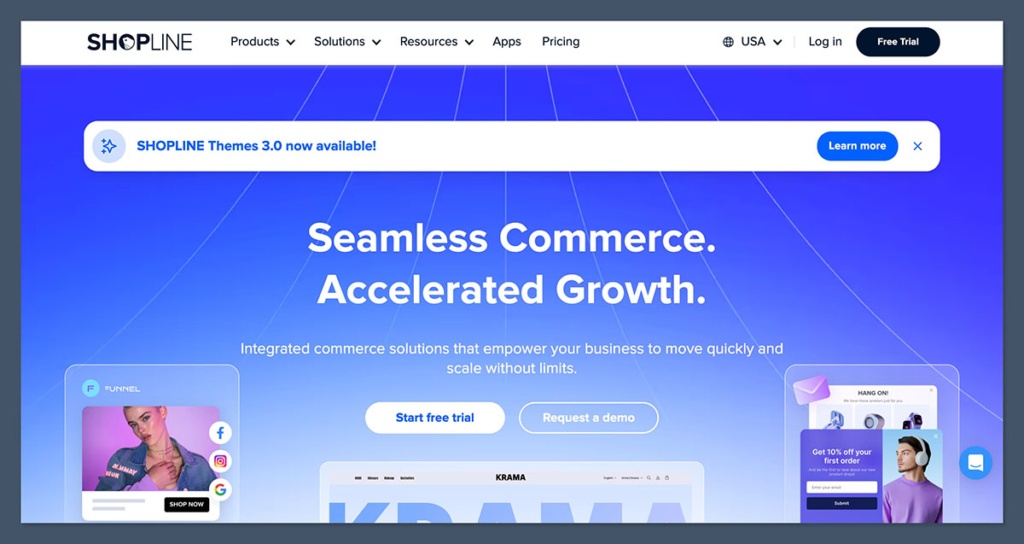
When it comes to pricing, Shopify and Shopline are pretty different – and what works best for you really depends on where you’re selling and how fast you’re planning to grow.
Shopify Pricing Breakdown
Shopify’s pricing is tiered to scale with your business – plans start at $39 for the Basic package and go right up to $399 for the Advanced one. If you’re running a high-volume store, Shopify Plus is also available, starting at $2,000/month.
- Basic ($39/month) – Good for new or smaller stores. Covers the essentials like a website, product catalog, checkout and Shopify’s point of sale app.
- Grow ($105/month) – Adds more detailed reports, better international selling support and lower transaction fees.
- Advanced ($399/month) – Built for scaling brands. Offers custom reporting, advanced shipping rates and the lowest transaction fees before you go enterprise.
- Shopify Plus (starts at $2,000/month) – For the really big stores. Includes priority support, headless commerce, custom checkout and dedicated account management.
As well as the monthly subscription fee, you’ll want to factor in any transaction fees if you’re not using Shopify Payments – these range from 0.5% to 2.0% depending on your plan.
Loads of useful Shopify apps are also paid, which can add anywhere from $10 to $200+ to your monthly costs depending on what you need.
There’s a 3-day free trial, and Shopify has a deal that lets new users pay just $1 for the first three months – giving you a nice low-risk way to try it out.
Shopline Pricing Breakdown
Shopline’s pricing is generally lower – especially if you’re in Southeast Asia. Plans are listed in local currencies, but the USD equivalents are usually between $60 and $150/month.
The platform doesn’t charge transaction fees if you use ShoplinePay – its own payment gateway.
- Starter ($60/month) – Good for small sellers who need to get up and running quickly.
- Business Pro ($150/month) – Adds marketing automation, bulk product uploads, multi-store support and regional integrations.* Enterprise (Custom Pricing) – For Large-Scale Stores with High Volume, B2B Support, or Advanced Shipping Needs
Shopline’s big cost advantage is that you don’t get hit with any extra transaction fees, so budgeting is a lot more predictable. Plus, it supports a 7 to 14-day free trial, depending on where you are in the world.
The Winner
Shopline is more attractive to local or regional sellers who aren’t looking to put money into apps or fancy design features.
But once you start growing and need robust analytics, international shipping, or super complex store set-ups, Shopify is going to give you more long-term value – even if it costs a bit more upfront.
Best for Selling Online: Shopify

Both platforms cover the basics pretty well when it comes to ecommerce functionality, but Shopify is a lot more powerful when it comes to depth, flexibility, and integrations.
Shopify’s Sales Tools
Shopify was built from the ground up to help businesses sell efficiently at a huge scale. Whether you’re only selling a few products or thousands, Shopify can handle it.
Some standout features worth mentioning are:
- Abandoned cart recovery – Remind users to complete their purchases with automated email sequences.
- Product bundles and subscriptions – You can get these through official or third-party apps.
- Multichannel selling – List products on Amazon, eBay, TikTok, Instagram, and Facebook directly.
- Point of Sale – Sync your physical and online sales with Shopify POS.
- Shopify Magic – AI tools that generate product descriptions, automate customer service replies, and even write SEO content for you.
Shopify’s app ecosystem also gives you access to advanced upsell tools, loyalty programs, analytics dashboards, and shipping platforms – all with super seamless integrations.
Shopline’s Sales Features
Shopline does pretty well on the core stuff like product management, discount tools, inventory control, and customer segmentation.
It also includes:
- Native integrations with Shopee, Lazada, and LINE – Super important for sellers targeting SEA markets.
- Local logistics and payment integrations – Designed for sellers in Taiwan, Hong Kong, Singapore, and Malaysia.
- Automated marketing campaigns – Some automation built into Pro plans.
- Social commerce tools – Helps sell directly through live streams and messaging apps popular in Asia.
However, Shopline falls short on the depth of third-party apps, integrations with global marketplaces, and features like subscriptions or super advanced checkout customization.
The Winner
Shopify takes the lead with a much broader, more advanced suite of sales tools.
If you want to scale, run ads, sync with multiple marketplaces, or use AI to speed up marketing, Shopify’s ecosystem is significantly more powerful.
Shopline does a good job for SEA-centric sales and localized campaigns but it can’t match Shopify’s global flexibility.
Best for Payment Options: It’s a Tie
Both Shopify and Shopline offer solid payment functionality, but they’re prioritizing different markets – which is key in deciding which one will work best for you.
Shopify Payments
Shopify gives you access to over 100 payment providers, with Shopify Payments as the default gateway in supported regions. Using Shopify Payments reduces or eliminates transaction fees, depending on your plan.
You can also use:
- Major credit/debit cards (Visa, Mastercard, AMEX)
- Apple Pay, Google Pay
- PayPal, Stripe, Klarna, AfterPay
Shopify Payments is completely integrated and easy to set up, with built in fraud protection and chargeback handling.
If Shopify Payments isn’t available in your country, you can still connect external gateways, but you’ll pay additional fees (typically 1%–2%).
Shopline Payment Support
Shopline focuses more on Asian markets and offers local payment integrations right out of the box.
These include:
- Shopline Payments (its built-in gateway)
- Alipay, WeChat Pay
- GrabPay, PayNow, Touch ‘n Go
- Various regional banks in Taiwan, Hong Kong, Singapore, and Malaysia
The real advantage is Shopline doesn’t charge extra transaction fees if you use its gateway. This helps keep costs lower and improves compatibility with local payment habits.
The Winner
It’s a draw – Shopify gives you better global payment coverage, while Shopline supports more local options for Southeast Asia. Choose based on where your primary customers are.
Best for Templates and Design: Shopify
Shopify really starts to shine when it comes to design. If your brand image, layout, and user experience matter (and they really should), then Shopify is the stronger platform.
Shopify Templates
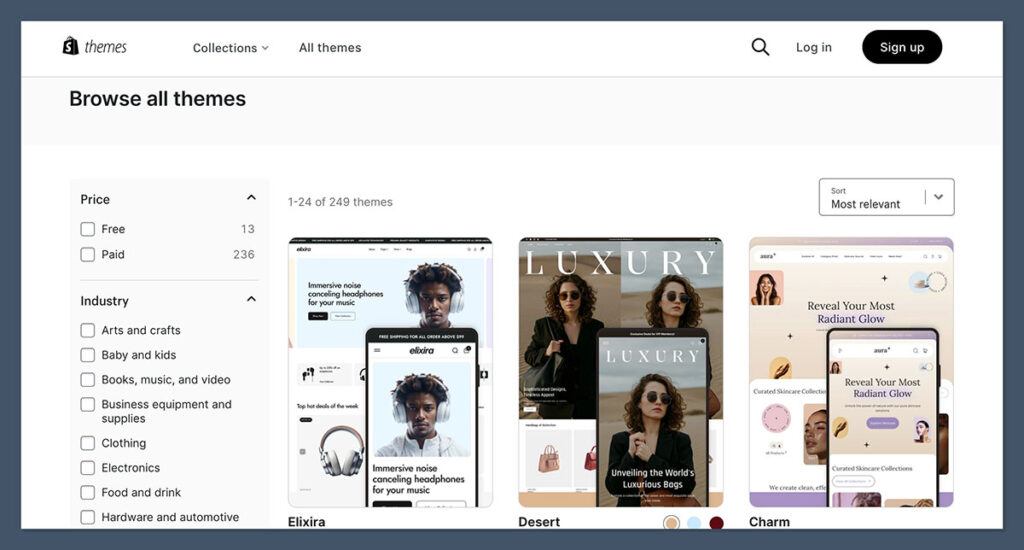
Shopify offers over 100 professionally designed themes, with a growing number optimized for mobile and conversion-focused layouts.
You get 13 free templates with full functionality
- 100+ premium themes ($180–$380 one-time cost)\
- Industry-specific options (Fashion, Electronics, Home, B2B)\
- Customization via drag-and-drop Sections* Full access to HTML/CSS/Liquid for the developers on your team
Templates are nice and easy to look at on a phone, preview just like you’d want, and built to expand. Plus they play well with Shopify’s built in speed boosters and search engine optimisation settings.
Shopline Templates
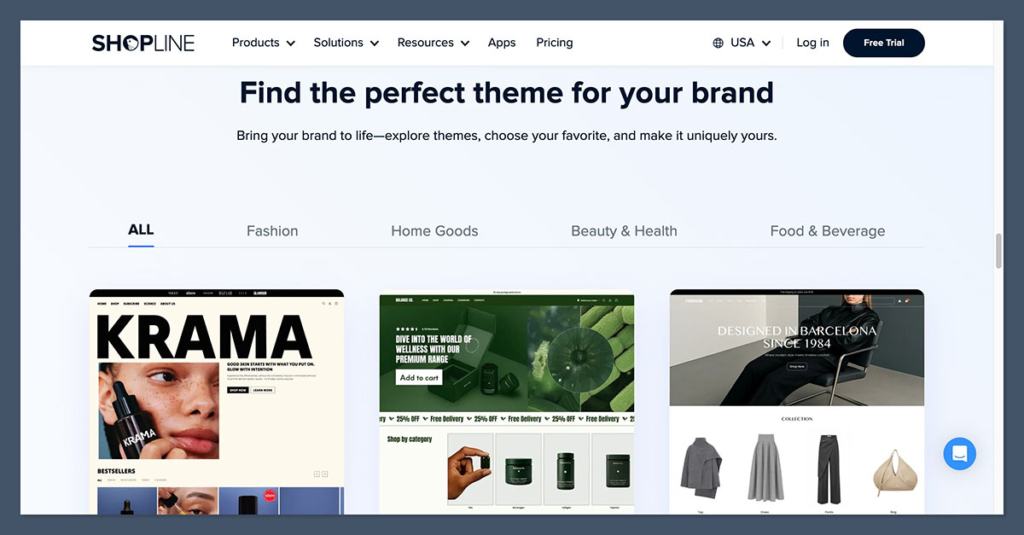
Shopline has around 30 to 40 templates that you can use – most are free. They’ve been designed with people in local areas in mind and cover things like food, health and electronics.
- Mobile-friendly designs so you know it’ll look good on any size screen
- Some free templates for industry specific layouts
- Keep in mind that there’s not a lot of flexibility to customise them
- If you need to get into some custom coding its a bit of a pain
Shopline’s editor is basic, and while it’s great for zooming in on the basics and getting something up and running, it’s missing that extra bit of precision and control that Shopify offers.
The Winner
Shopify offers a much more robust design experience with far more themes available, way better customisation and the tools to really make your brand stand out.
Shopline is more simple and inflexible, which might be a problem as your store starts to grow.
Best for SEO: Shopify
Getting your store seen on search engines is the difference between getting traffic and being a ghost-town.
Shopify has consistently been one of the top platforms for ecommerce SEO, with some really powerful tools that come as standard – and plenty of support for scaling that search traffic.
Shopify’s SEO Strengths
With Shopify you get direct control over all the major SEO bits.
You can edit page titles and descriptions, add alt text to images and even customise URLs – all without needing to get a developer on board.
It also creates a nice neat, indexable site structure and has built in features that will help you get those all important search rankings.
Some of the key SEO features include:
- Automatic XML sitemap and robots.txt
- Redirects for dead pages to keep your site tidy
- Canonical URLs to stop duplicate content from messing things up
- Built in support for rich results with structured data
- Fast loading speeds thanks to its Content Delivery Network
- Plus some advanced apps like SEO Manager and the Semrush-powered Shopify Ecommerce Booster
And on top of all that its worth noting that most premium Shopify themes are built with SEO in mind, with speedy core web vitals and all the right markup to boot.
Shopline’s SEO Capabilities
Shopline covers the basics of SEO – you can add meta titles and descriptions to pages, customise URLs and add alt text to your images.
Plus it’s easy to get the Google Analytics and Search Console integration going.
But at this point its lacking the more advanced features like built-in schema markup, structured data tools or even redirect handling.
So while its fine for a bit of basic visibility its not really built for going for it with SEO or really going deep on ecommerce strategies.
The Winner
Shopify wins hands down when it comes to SEO.
The combination of its native capabilities and the apps in the store make it perfect for shops that rely on search traffic. Shopline will get you up and running with SEO but just cant scale into the more competitive search markets.
Best for International Selling: Shopify
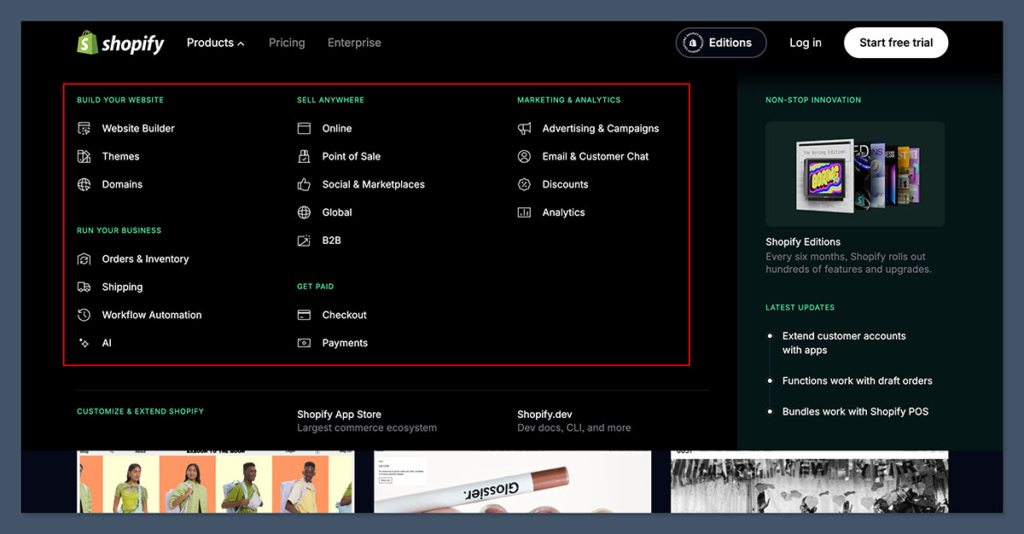
If your goal is to sell to the world, or even just run a multi-region shop Shopify has got a tool set that is far more comprehensive.
Currency conversion, automatic translation – it’s all built with global commerce in mind.
Shopify’s Global Tools
Shopify does international selling with Shopify Markets; a one stop shop for managing currency, pricing, language and duties.
Some of the key features include:
- Multiple currencies that convert automatically
- Auto detect customer location and serve up the right language and version
- Language translation with support for over 30 languages
- Country specific domains so you can be local where needs be
- Country specific tax handling and duty collection
- Tools for shipping internationally and integrating with third party fulfilment
You can offer a really tailored shopping experience by serving up the right language and currency to your customers, which has been proven to get more sales.
Shopline’s Localization
Shopline has a more regional focus and its tools reflect that.
You’ll find:
- Language support for Chinese, English, Malay and some others
- Tax and shipping settings for different regions
- Support for multiple storefronts for different regions
- Built in compatibility with cross border selling in SEA
Shopline does a great job for cross border selling within Asia, but its not got the same level of international support as Shopify.
The Winner
Shopify is the clear winner for international ecommerce.
It’s got the tools for currency, language and logistics to set up and run a global store with confidence. Shopline is a good choice if you’re just focusing on a single region.
Easiest to Use: Shopify
Ease of use is key to getting your store up and running quickly, and getting it running smoothly without needing to lean too heavily on support or developers.
While both platforms try to be beginner friendly, Shopify just gives a more polished and consistent experience from start to finish.
Shopify Onboarding & Usability
Shopify takes you through the setup process with a nice guided onboarding flow. It starts with asking you the right questions about your business type and sales goals, then gives you a handy checklist for setting up:
- Adding your first product
- Choosing a theme
- Setting up payment gateways
- Configuring shipping options
And from there it just helps you along the way with getting everything running smoothly.
The admin dashboard is clean and responsive, and it’s built around the common workflows that online store owners need.
Don’t worry if you’re not tech-savvy, because a lot of tasks are automated or pre-filled depending on the type of store you’re running.
Its editor is section-based, rather than the super common drag-and-drop method, but even so it’s intuitive and pretty easy to get the hang of. You can even see changes in real-time before you publish them.
Shopline Usability
Shopline’s interface is pretty straightforward – especially if you’re selling in Asia, because it’s been translated really well for English users.
The dashboard is also laid out in a pretty logical way. But, there are a few things that do slow down the experience a bit:
- The theme editor seems really dated, and it’s not as flexible as we’d like
- Onboarding could be a lot clearer, with more guidance or walkthroughs
- Most of the templates have fewer customization options
- Setting up a multilingual store is a bit more involved than it needs to be
Overall, it’s a decent experience for getting a basic store up and running, but it doesn’t really scale well when things get more complicated.
The Winner
Shopify wins when it comes to ease of use – especially if you’re looking for a fast launch and a solid onboarding experience.
Its admin dashboard is really refined, and setting up a store takes less time – even with some pretty powerful tools available.
Customer Support: Shopify
Customer support is super important, especially if you’re not working with an agency or development team. Shopify’s support options are a lot more comprehensive and better suited to sellers who work globally.
Shopify Support
Shopify has loads of channels for getting help:
- Live chat that’s available 24/7 for all users
- Phone support for Plus customers
- A massive Help Center with all sorts of searchable guides
- Active user community forums
- Shopify Learn – a free education hub with videos and tutorials
The live chat is pretty fast, and for more complicated issues they can even escalate it to a more technical team. The documentation is really thorough and kept up to date.
Shopline Support
Shopline’s support is pretty good, but it’s a bit more limited in scope:
- Live chat is only available during business hours – which is a bit of a pain if you’re outside of Asia or working late-night hours
- An email ticketing system
- Regional phone support for enterprise clients
- A knowledge base with user guides – but not too much of it is in English
So, if you’re not in Asia and you work non-traditional hours, you might find yourself waiting a bit longer for support. It’s responsive, but it’s more geared towards local businesses.
The Winner
Shopify provides better global support with 24/7 access to help and a lot more educational content on tap.
If you value getting fast answers and having loads of documentation at your fingertips, you’ll be better off going with Shopify.
Final Verdict: Shopify Is the Better All-Round eCommerce Platform
After weighing up everything from pricing to international capabilities, it becomes pretty clear – Shopify is the better all-round platform for most online businesses, especially those that want to grow and sell beyond their local market.
Best For:
- Design Flexibility: Shopify
- International Selling: Shopify
- Asian Market Integration: Shopline
- Lower Transaction Fees: Shopline
- App Ecosystem: Shopify
- Beginner-Friendly Setup: Shopify
- Local Payment Gateways: Shopline
Use Shopify if you want to scale internationally, you’re after customization options, you need robust SEO features, or you’re planning to run a big store with advanced tools.
Use Shopline if your focus is strictly on the Asian market, you need built-in regional features, local payment options, and a simplified setup.
Both offer free trials, so if you’re not sure which way to go, why not try building a test store on each platform? It’s the best way to get a feel for which one works better for your business.


