
 By Bogdan Rancea
Best Overall

Shopify
See pricing Visit Shopify →From $29 per month
billed annually ($39 monthly)
- No product cap
- Abandoned cart recovery on every plan
- Apps and POS for markets
Best for portfolios

Squarespace
See pricing Visit Squarespace →From $19 per month
billed annually, 0% fee from Core
- Portfolio-grade templates
- Portfolio, blog and shop in one site
- Booking and membership tools
Best design freedom

Wix
See pricing Visit Wix →From $29 per month
Core plan, billed annually
- Drag-and-drop design freedom
- Portfolio templates included
- Bookings, blog and events built in
After testing Big Cartel alternatives, I still recommend Big Cartel as one of the simplest, cheapest ways to open an art shop. Its free Gold plan and no platform transaction fees make it a sensible starting point.
That said, product caps and limited design control can hold you back. Diamond-only abandoned cart emails, missing built-in email marketing, and Stripe or PayPal-only payments also explain the interest in Big Cartel vs Shopify. But which alternative is right for your shop?
Switching won’t automatically cut fees: you move for features and room to grow, not to escape a commission Big Cartel doesn’t charge.
Key Takeaways
- Big Cartel stays affordable, but product caps and Diamond-only tools can push growing shops elsewhere.
- Shopify is my best alternative overall, with no product cap and abandoned cart recovery on every plan.
- Squarespace combines a portfolio and shop, with no store transaction fee from Core.
- Wix offers the most design freedom.
- Fourthwall supports merch without inventory, with no platform fee on physical products.
- Square Online suits market and pop-up selling, with a free plan and Square’s point-of-sale hardware.
How I tested the best Big Cartel alternatives
I set up a shop on each platform using the same small art catalog: prints, a T-shirt, and a digital download. Our comparisons covered sales features, design, pricing and fees, creator tools, ease of use, and support.
Top 3
- Shopify for growing past product limits
- Squarespace for a portfolio and shop
- Wix for layout control
On this page
- Comparing Big Cartel Alternatives
- 1. Shopify
- 2. Squarespace
- 3. Wix
- 4. Fourthwall
- 5. Square Online
- How Do I Choose the Right Big Cartel Alternative?
- How Do I Migrate From Big Cartel?
- How We Test
- Final Verdict
- FAQs
Comparing Big Cartel Alternatives
Compare starting prices, selling limits, and fees across these Big Cartel alternatives, with Big Cartel included as your baseline.
| Platform | Starting price | Transaction fee | Product limit | Better than Big Cartel for | Recommended for |
|---|---|---|---|---|---|
| Big Cartel | Free; Platinum $15/mo | 0% (Stripe/PayPal fees only) | 5 / 50 / 500 by plan | (baseline) | Small art shops and first launches |
| Shopify | $29/mo billed yearly ($39 monthly) | 0% with Shopify Payments (2% with other gateways on Basic) | No cap | Catalog size, apps, abandoned carts on every plan | Makers scaling past 50 products |
| Squarespace | $19/mo billed yearly | 2% on Basic, 0% from Core ($29) | No cap stated | Portfolio-grade templates | Artists who want a portfolio and shop on one site |
| Wix | $29/mo billed yearly (Core) | 0% platform fee | No cap stated | Drag-and-drop design freedom | Makers who want full layout control |
| Fourthwall | Free; Pro $19/mo | 0% on physical products | 50 Free / 500 Pro | Print-on-demand merch with no inventory | Bands and creators selling merch |
| Square Online | Free | No platform fee; 3.3% + 30c card rate on Free | No cap stated | Free plan, POS hardware for markets | Makers selling at markets and pop-ups |
Which Big Cartel Alternative Is Best for My Specific Business Needs?
For a growing catalog: I recommend Shopify, so you can add designs without removing older products to make room.
For a portfolio-led brand: Choose Squarespace for a portfolio and shop, or Wix if precise layout control matters more.
For merch: Fourthwall suits merch without upfront stock, and its Pro plan also sells digital products with no platform fee.
For markets and pop-ups: Choose Square Online if you already use Square readers and want online orders connected to your market inventory.
1. Shopify: For Growing Past Big Cartel’s Product Limits
Shopify is the best Big Cartel alternative for a growing catalog. Product limits stop dictating what you can list, making it my recommendation for makers who need a long-term store rather than another increase in listing space.
Big Cartel’s Diamond plan accommodates 500 products, which may already be plenty for your work. Shopify removes the cap and offers a broader choice of selling tools, so its appeal isn’t just extra listing space.
What I Like
- Shopify has no product cap. You can expand your print collection without deleting older designs to make room. I prefer this for a catalog that grows with each release.
- Abandoned cart recovery comes on every plan. Big Cartel reserves recovery emails for Diamond, while Shopify includes them alongside discount tools across its plans. That makes the entry plan useful if customer follow-up drives your switch.
- Apps let you build around your business. The large app store covers print on demand, email, and reviews, while Shopify POS supports market selling. You get more choices than Big Cartel, although apps can add costs.
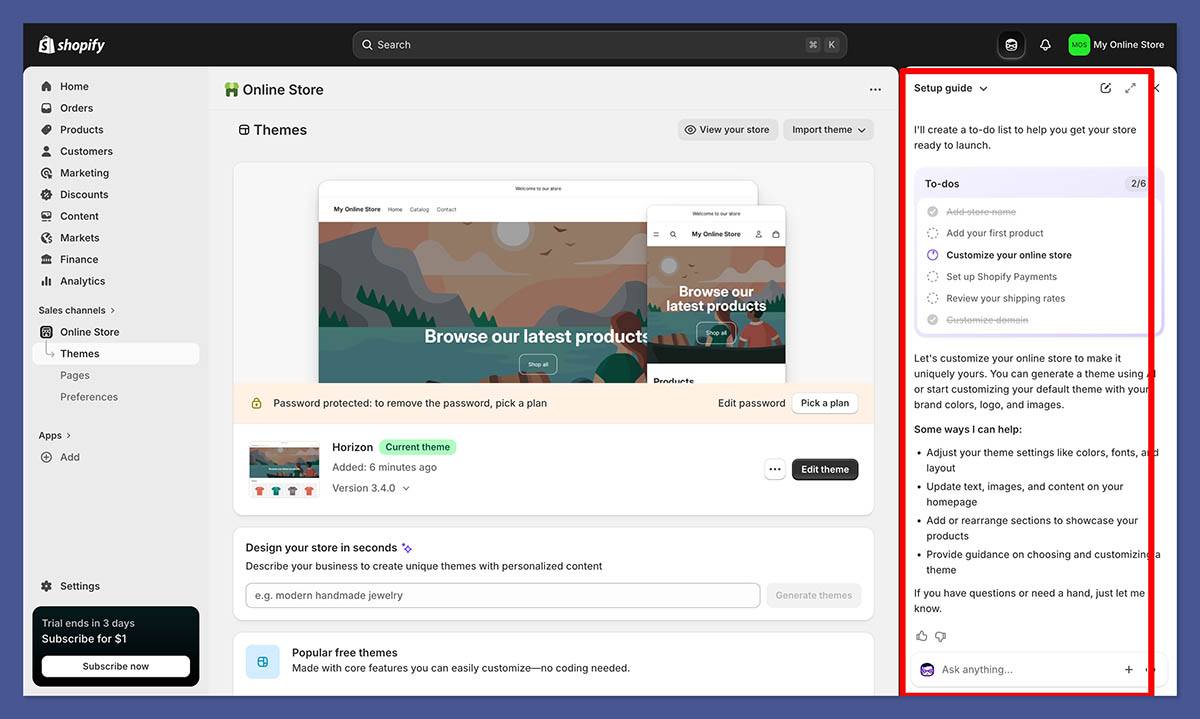
- Themes and AI tools give you a design starting point. The admin puts an AI theme prompt beside the Sidekick setup guide. I like having store-building assistance close to setup tasks.
What I Dislike
- The subscription costs more than Platinum. Paid apps can widen that gap further. Shortlist essential apps before subscribing rather than assuming every feature in a Shopify review is included.
- Using another payment gateway adds a platform fee. Shopify Payments avoids that extra charge, but your preferred gateway might not. Big Cartel adds no transaction fee to its supported processors.
- There is no direct Big Cartel Store Importer option. You’ll need a product CSV or migration app. Check imported images and variants before publishing your new catalog.
How Much Does Shopify Cost?
Shopify‘s Basic, Grow, and Advanced plans cost $29, $89, and $359 per month respectively (billed annually), or $39, $105, and $399 on monthly billing. Basic’s online card rate is 2.9% + 30c; other gateways add 2%, which Shopify Payments avoids. The Shopify free trial lasts three days, followed by $1 monthly for three months. Basic exceeds Big Cartel’s $15 monthly Platinum, so budget for the full subscription after the introductory offer.
How Does Shopify Compare to Big Cartel?
- Choose Shopify for uncapped catalog growth, marketing tools, and apps that support a more involved retail business.
- Keep Big Cartel for simplicity and lower monthly costs if your small catalog doesn’t need Shopify’s extra capabilities.
2. Squarespace: For Artists Who Want a Portfolio and Shop in One
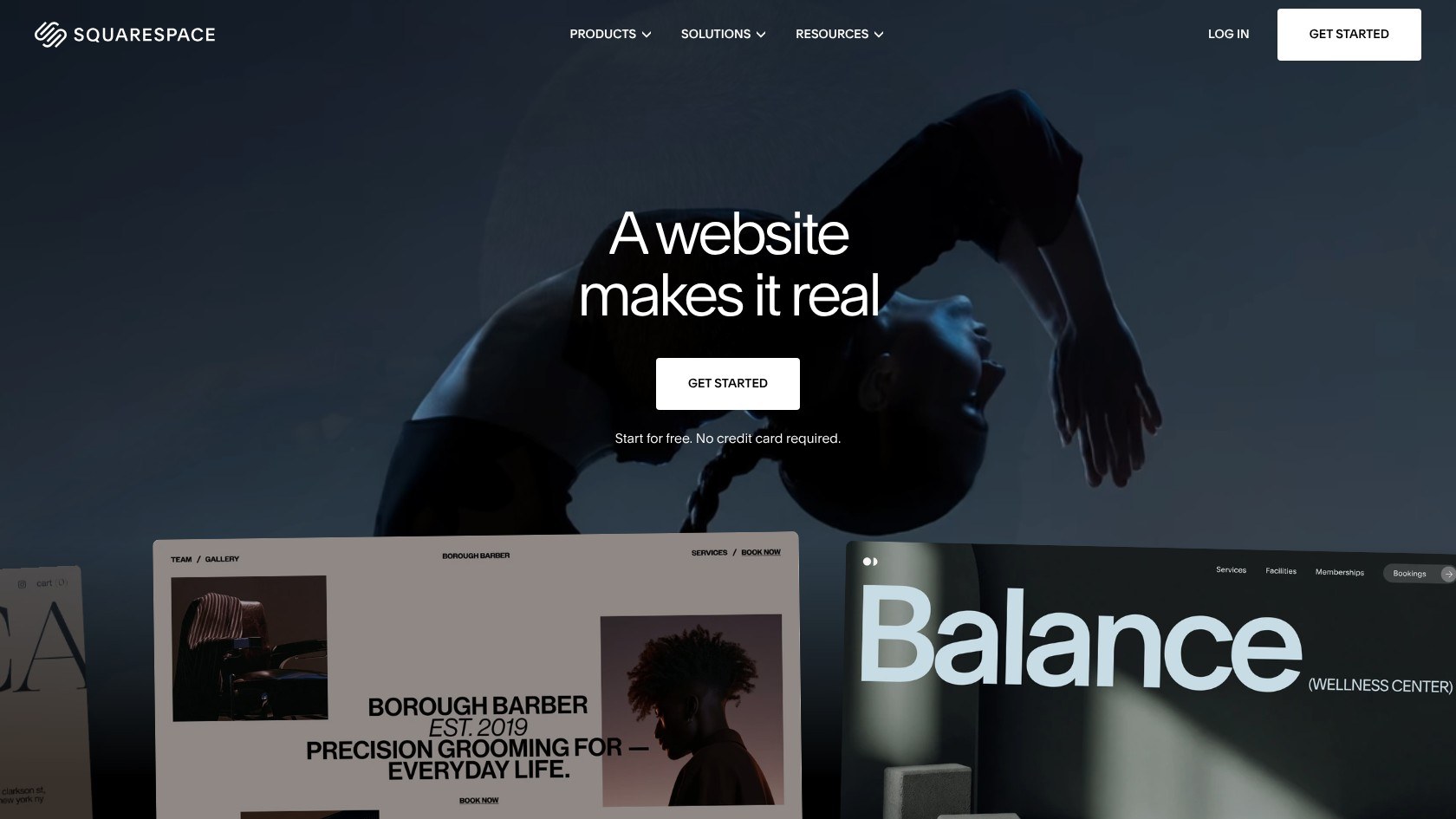
Squarespace is the best Big Cartel alternative for a portfolio and shop on one site. Its templates put your work first, and I recommend it when presenting your practice matters as much as presenting your products.
Big Cartel works well as a straightforward shop, but Squarespace gives you more room for content around the work. An illustrator can present a portfolio alongside purchasable prints instead of expecting product listings to explain the whole business.
What I Like
- Portfolio-grade templates suit visual work. Squarespace is my pick when you want a strong design starting point without arranging every element yourself. Its templates suit a broader artist website better than Big Cartel’s shop-first approach.
- Your portfolio, blog, and shop can share one home. You can publish the story behind a collection alongside the collection itself. I like this for artists who need a professional portfolio, not just a checkout.
- Core removes the online store transaction fee. You don’t need the highest plan to avoid that charge on ordinary store sales. Digital content and memberships have separate fees, so check your product category.
- Booking and audience tools support more than products. Squarespace offers booking tools, memberships, and email tools for artists branching into commissions or classes. That’s a stronger reason to switch than wanting different product pages.
What I Dislike
- Basic adds a transaction fee to store sales. I recommend Core if removing that fee is a priority. Big Cartel doesn’t require an upgrade to remove a commission because it doesn’t charge one.
- The selling ecosystem is smaller than Shopify’s. Squarespace lacks a comparable large app store. Choose Shopify if specialized sales tools matter more than portfolio presentation.
- Support is limited to email and chat. There’s no phone support, and some users describe slow replies. Consider that limitation if you prefer talking through urgent store problems.
How Much Does Squarespace Cost?
Squarespace pricing starts at $19 per month for Basic (billed annually), with Core at $29, Plus at $49, and Advanced at $99; monthly billing costs more. Store fees are 2% on Basic and 0% from Core; digital content and memberships cost 7% on Basic, 5% on Core, and 0% on Advanced. There’s a 14-day trial without a card. Core’s annual-billing rate is close to Big Cartel’s $30 monthly Diamond but higher than $15 Platinum.
How Does Squarespace Compare to Big Cartel?
- Choose Squarespace for portfolio design and supporting content, especially when your shop is only part of your creative business.
- Keep Big Cartel for a small, inexpensive storefront if you don’t need a portfolio or booking tools alongside it.
3. Wix: For Total Design Freedom
Wix is the best Big Cartel alternative for layout control. Its flexible drag-and-drop editor suits artists with a particular storefront composition in mind, rather than those who want a theme to make most design decisions.
Big Cartel’s theme-bound layouts keep building manageable, but that simplicity can become restrictive. Wix offers more freedom to position content, while Squarespace is my stronger recommendation if you want a template-led starting point.
What I Like
- The editor gives you control over placement. You can arrange elements where you want them instead of working around Big Cartel’s theme structure. I like this for artists whose visual identity depends on an unusual composition.
- The template library includes portfolio starting points. You don’t have to begin with a shop-only layout if your work needs an exhibition-style presentation. Wix gives you more directions for the overall website than Big Cartel.
- Built-in website tools extend beyond selling. Bookings, blogging, and events help you build a site around your practice. That makes Wix useful if workshops or appearances need space beside your products.
- The AI builder provides an editable first draft. You can start with a prompt and continue in the drag-and-drop editor. I treat that output as a starting point for art direction, not a finished storefront.

What I Dislike
- The free plan cannot accept payments. You must upgrade to Core or above to sell, and Light doesn’t solve that limitation. Big Cartel Gold is better if avoiding a subscription is your priority.
- Changing templates means rebuilding the site. Test the layout with real artwork and product descriptions before polishing every page. Your initial choice matters more than it might appear.
- There are more settings to learn than on Big Cartel. The editor’s freedom gives you more decisions to make. Skip Wix if you want a tightly guided shop rather than an open-ended design project.
How Much Does Wix Cost?
Wix’s selling plans cost $29 per month for Core, $39 for Business, and $159 for Business Elite (billed annually). Core costs $36 on monthly billing; neither the free plan nor Light at $17 per month billed annually can accept payments. Wix charges no platform transaction fee, though processing applies. Core costs more than Big Cartel’s $15 monthly Platinum, so I recommend paying the difference for design freedom or broader website tools.
How Does Wix Compare to Big Cartel?
- Choose Wix for layout freedom and broader website features when your artist website needs more than a product grid.
- Keep Big Cartel for a simpler, cheaper small-catalog shop if layout decisions feel like a distraction.
- Read Shopify vs Wix if you’re choosing between design flexibility and selling-focused tools.
4. Fourthwall: For Selling Merch Without Inventory
Fourthwall is the best Big Cartel alternative for merch without upfront inventory. Print-on-demand costs come out when a product sells, making it my recommendation for bands and artists testing demand before ordering stock.
Big Cartel added a Printify integration in December 2025, so print on demand alone no longer makes switching necessary. Fourthwall’s stronger case is its merch-focused setup and more generous free-plan catalog.
What I Like
- You don’t need to buy stock upfront. Print-on-demand base costs come out of each sale rather than requiring an inventory purchase. That suits a band testing a shirt design, although production costs still affect the margin.
- Physical products have no platform transaction fee. That applies on Free as well as Pro. Like Big Cartel, Fourthwall still involves payment processing, so a free storefront doesn’t mean cost-free selling.
- Creator tools go beyond a merch shelf. Fourthwall supports memberships and digital products, plus integrations with the platforms creators already use. I like this for artists whose shop supports an existing audience.
- The free plan offers more listing space. Fourthwall allows 50 listings, compared with Big Cartel Gold’s five. You can launch a broader collection without immediately paying for more catalog room.
What I Dislike
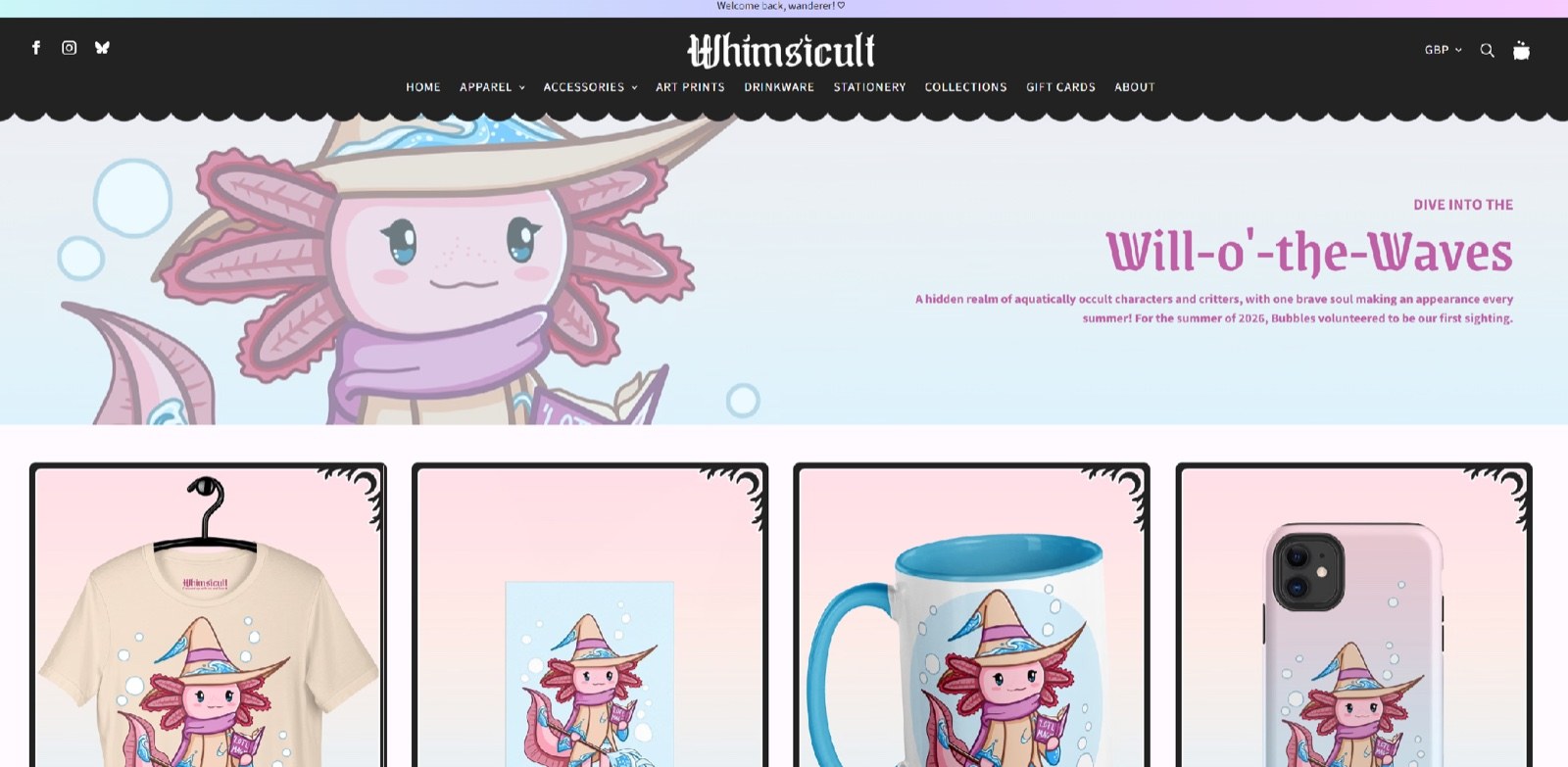
- The storefront approach is merch-first. I prefer Squarespace for a portfolio-led website or more individual presentation of original work. Big Cartel remains a straightforward fit for handmade pieces you ship yourself.
- Support delays can complicate print problems. Some sellers describe slow replies and misprints that take time to resolve. Order samples before promoting a collection rather than judging production quality from storefront images.
- Memberships carry a platform fee. Moving to Pro doesn’t remove that charge. Compare membership costs separately from physical merchandise before deciding Fourthwall is your cheapest option.
How Much Does Fourthwall Cost?
Fourthwall has a free plan and Pro at $19 monthly or $180 yearly. Physical products carry no platform fee; digital products cost 5% on Free and 0% on Pro, while memberships cost 5%. US card processing is 2.9% + 30c, or 3.49% + 49c through PayPal, with print-on-demand production costs deducted separately. Pro’s monthly price sits between Big Cartel’s $15 Platinum and $30 Diamond; our Fourthwall pricing guide explains the costs.
How Does Fourthwall Compare to Big Cartel?
- Choose Fourthwall for merch-focused selling and more free listing space, particularly when you don’t want upfront stock.
- Keep Big Cartel for one-of-a-kind handmade products, or try its Printify integration before rebuilding an otherwise suitable shop.
5. Square Online: For Selling at Markets and Pop-Ups
Square Online is the best Big Cartel alternative for sellers already using Square at markets. Online and in-person sales can share inventory, which matters when your market stall is a regular part of the business.
Big Cartel supports in-person selling on its paid plans, but Square isn’t a supported processor. If you already use Square readers, Square Online is the natural storefront to evaluate before adding another payment workflow.
What I Like
- The free plan doesn’t cap your products. You aren’t limited to Big Cartel Gold’s five listings when building the online side of your stall. Square suits a broad handmade catalog before you need paid features.
- Online and in-person sales share inventory. Square’s POS and readers connect with the online store instead of leaving you with disconnected sales channels. This is my main reason to choose it over a design-focused builder.
- Pickup and local delivery support nearby customers. You can offer fulfillment options beyond shipping, which suits a maker with a local following. Test these workflows with your own products before committing.
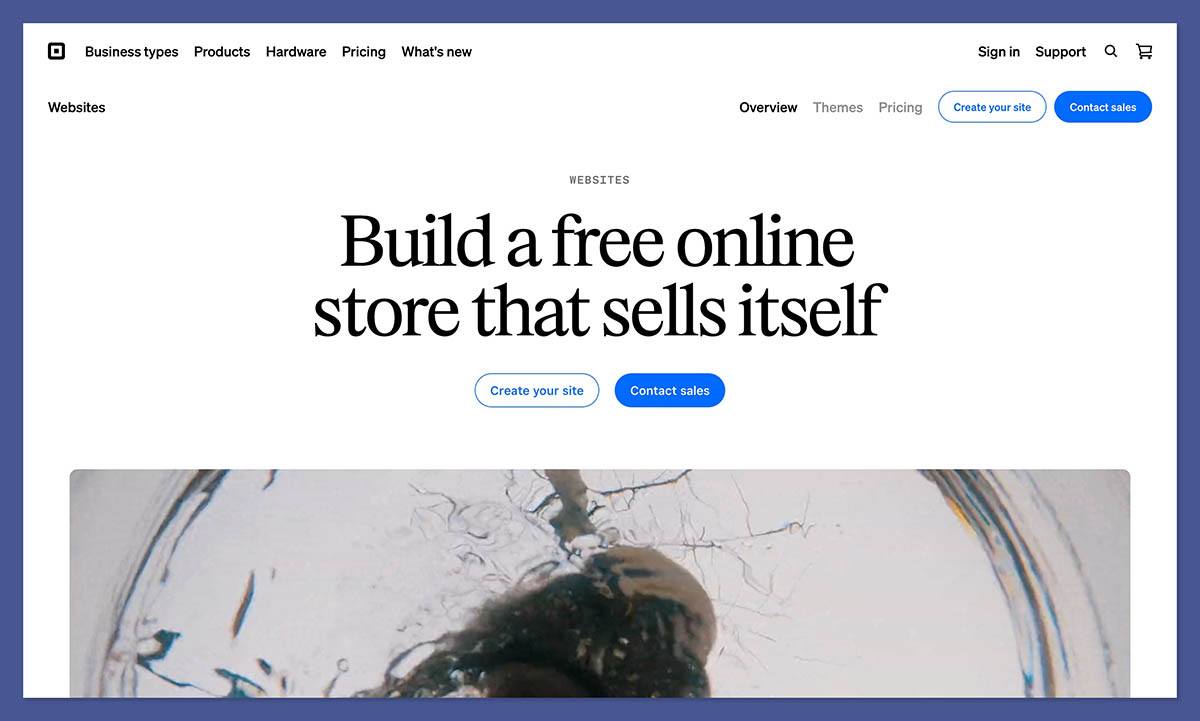
- The setup suits a straightforward shop. Square Online emphasizes a functional storefront rather than extensive art direction. I like that trade-off for an existing market business that needs online buying more than a portfolio.
What I Dislike
- Free-plan online processing is higher than before. The increased rate makes the subscription only part of your cost comparison. Estimate online and in-person payments separately because they use different card rates.
- Design is template-bound and comparatively plain. Squarespace is my stronger portfolio choice, while Wix offers more layout freedom. Square’s inventory connection needs to matter more than extensive visual customization.
- Paid features require a substantial subscription jump. Abandoned cart emails sit on paid plans. Reconsider Big Cartel Diamond if recovery emails are your only missing feature.
How Much Does Square Online Cost?
Square Online offers Free at $0, Plus at $49 monthly, and Premium at $149 monthly per location, with no platform transaction fee. Online cards cost 3.3% + 30c on Free, versus 2.9% + 30c on paid plans; Free’s in-person tap, dip, or swipe rate is 2.6% + 15c. Plus costs substantially more than Big Cartel’s $15 monthly Platinum and $30 Diamond. Start with Free and identify the paid feature that justifies upgrading.
How Does Square Online Compare to Big Cartel?
- Choose Square Online for an existing Square-powered market business, especially when shared inventory solves a daily problem.
- Keep Big Cartel for occasional pop-ups if Platinum’s Stripe readers or Tap to Pay already meet your needs.
How Do I Choose the Right Big Cartel Alternative for My Business?
Start with the Big Cartel restriction that interrupts your work, not the alternative with the longest feature list. Shopify addresses catalog growth, while Wix addresses layout control; choosing either for the wrong reason creates work without solving your problem. Choosing the right alternative is about matching the platform to the limit you keep hitting.
Before committing to a Big Cartel alternative, compare the plan that includes your required features, not just its cheapest subscription. Use these questions to avoid another migration after your next collection launches:
- Is it worth the money once you add apps and fees?
- Does it sell the products you make: originals, prints, merch or downloads?
- Will your templates show off your work?
- Is there room to grow, or will you hit another cap?
- Can you sell in person as well as online?
For a wider view of where your work belongs, compare our best websites for selling art online, then test your strongest candidate with real product images before paying for a subscription or rebuilding the whole catalog.
How Do I Migrate My Store From Big Cartel to an Alternative?
To move from Big Cartel to another platform, you have three options: copying your products over with a CSV file, using a migration app, or hiring a professional.
- CSV file: Fill the new platform’s product CSV template with your Big Cartel product details. Shopify, Squarespace, and Wix offer templates, but Shopify’s Store Importer doesn’t list Big Cartel. Squarespace imports are one-time transfers, not ongoing syncs; add thumbnails manually.
- App: Specialist migration services can transfer products and customers, depending on the service and destination. Confirm Big Cartel support before paying, then check imported images and variants before publishing.
- Professional help: Hire a specialist for a large catalog if preserving product relationships and old URLs would be difficult yourself. Agree on exactly which content and records the job includes.
Download your product images while your Big Cartel store is still live, and keep control of your custom domain at your registrar. Big Cartel connects domains using a CNAME on www; set up 301 redirects from old product URLs on the destination platform before closing the old shop.
You can download order data from Big Cartel’s Orders page, but don’t treat that as a product export. Use our how to start an online store guide to review the new shop before launch.
How We Test Ecommerce Website Builders
Every Big Cartel alternative I’ve discussed was tested by our team using the same small art catalog. We set up prints, a T-shirt, and a digital download so the comparisons reflected an artist’s mixed selling needs rather than a generic online store.
I focused on whether each builder solves a reason to leave Big Cartel, while our evaluation weighted sales tools, design, and total costs most heavily:
- Sales features: 25%
- Design features: 20%
- Pricing and fees: 20%
- Creator tools: 15% (print on demand, digital downloads, drops, in-person selling)
- Ease of use: 10%
- Help and support: 5%
- Reputation: 5%
An artist’s shop may also serve as a portfolio, but editor freedom isn’t automatically better. I recommend simpler storefronts when selling and fulfillment matter more than precise layout control.
Ecwid didn’t make the list: it dropped its free plan, and Starter caps you at 10 products. Our Ecwid review explains the platform; Etsy is a marketplace, rather than a store builder.
Prices current as of November 2026.
Final Verdict: Which Big Cartel Alternative Should You Pick?
Big Cartel remains a good place to launch an art shop, and switching only makes sense when another platform solves a specific limitation. These are my recommended Big Cartel alternatives for the next stage of your business:
- Shopify is the best choice for growing past product limits.
- Squarespace is best for a portfolio and shop on one site.
- Wix gives you the most design freedom.
- Fourthwall is best for merch without inventory.
- Square Online is best for markets and pop-ups.
Most offer a free plan or trial, so test your most complicated product before moving the shop. Check its storefront presentation and selling costs, then use our best ecommerce platforms guide if your shortlist extends beyond artist-focused needs.
FAQs
Will switching from Big Cartel hurt my SEO or Google rankings?
Switching can affect rankings, especially if old product links stop working, but a planned migration reduces avoidable disruption. Record your existing URLs and map each to the closest new page using 301 redirects. Keep your domain where possible, then submit the new sitemap in Google Search Console and check indexing. Redirects help preserve continuity, but they don’t guarantee unchanged rankings during the transition.
Is there a free alternative to Big Cartel?
Yes, Fourthwall and Square Online have free plans, although selling still involves fees:
- Fourthwall: 50 listings, no platform fee on physical products.
- Square Online: online card processing at 3.3% + 30c.
Ecwid no longer has a free plan. Big Cartel Gold remains free with five products, so compare the extra listing room and tools before moving solely to avoid a subscription.
Does Big Cartel take a percentage of sales?
No, Big Cartel doesn’t charge a transaction fee, although its payment processors do. US examples are Stripe at 2.9% + 30c and PayPal at 3.49% + 49c. Those processing costs aren’t a Big Cartel commission. Switching purely to remove a platform fee won’t help because there isn’t one to remove; an alternative may add its own charge on top of processing.
Can I move my Big Cartel store to Shopify?
Yes, you can move products using Shopify’s CSV template or a migration app. Shopify’s Store Importer doesn’t list Big Cartel, so don’t assume there’s a direct transfer option. Download product images before closing the old store, populate the destination template, and check imported variants and images. Our Shopify vs Big Cartel comparison can help confirm that the additional selling tools justify the migration and subscription.


