
 By Bogdan Rancea
Best for brand building

Fourthwall
See pricing Visit Fourthwall →Free plan, Pro $19 per month ($15 billed yearly)
5% fee on memberships and digital products
- Fully customizable website
- Built-in print on demand
- Merchant of record for sales tax
Best for memberships

Patreon
See pricing Visit Patreon →Free to start
10% platform fee plus payment processing
- Native video and podcast tools
- Strong community features
- Discovery feed and Quips
I’m a big fan of platforms like Patreon, because they help creators like me, and would-be business owners discover new ways to create a source of income, without giving them a complicated list of tools to figure out. Still, I think Patreon has its limits when you start thinking about building a bigger brand. At that point, I’d recommend looking at something like Fourthwall.
Patreon gives you a good jumping off point when you want to monetize access to something, like a special community experience, exclusive downloads, videos, chats, and newsletters. Eventually, though, you might want your own website, more opportunities to sell a wider range of products, and a little extra help behind the scenes, and Patreon starts to feel a bit restrictive.
If you’re thinking of building a new source of revenue, and you’ve got both Fourthwall and Patreon on your shortlist, this is how I’d choose between the two.
Fourthwall vs Patreon: My Quick Verdict
Patreon still makes plenty of sense if you’re a creator who wants to make money selling access to something, like exclusive content. The podcast tools are great, there’s native video hosting, and the community features are fantastic, although I will say I found the decision to increase the fee on memberships to 10% a bit disappointing.
Fourthwall is the better choice if you want to build a full brand, with a customizable website, access to print-on-demand for merch creation, and the opportunity to sell physical products, digital downloads and memberships in one place. It’s also probably going to be better if you think you’ll need extra help with things like managing your taxes, and handling customer support.
| Comparison Point | Patreon | Fourthwall |
|---|---|---|
| What is it? | A platform for monetizing community access | A full brand-building system with print-on-demand and ecommerce included |
| Starting price | Free (10% platform fee, plus payment processing and payout fees) | Free (5% fee on memberships and digital products); Pro costs $19 per month, or $15 per month billed yearly |
| Branding | Customizable creator page | Fully customizable website |
| What you can sell | Memberships, exclusive content, digital products, and merch (through external partners) | Print-on-demand products, custom products, digital downloads, memberships, and bundles |
| Support | Handles tax elements for memberships and purchases | Acts as your merchant of record and handles customer support for catalog products |
| Community | DMs, polls, badges, Discord, and chats, and social integrations | DMs, polls, badges, Discord, and social media integrations |
Fourthwall vs Patreon: Pricing and Overall Costs
I’m starting with pricing, because one of the biggest things both of these platforms have in common is that they let you get started for free. Still, there’s a big difference in what you actually get on a free subscription.
Patreon doesn’t charge you anything to sign up and build a creator page, but there is a standard 10% platform fee on anything you earn, and you’ll also have to account for payment processing fees too. In the US, those are 2.9% plus $0.30 for each payment over $3. There’s also a small cash-out charge too whenever you transfer your balance to your bank account.
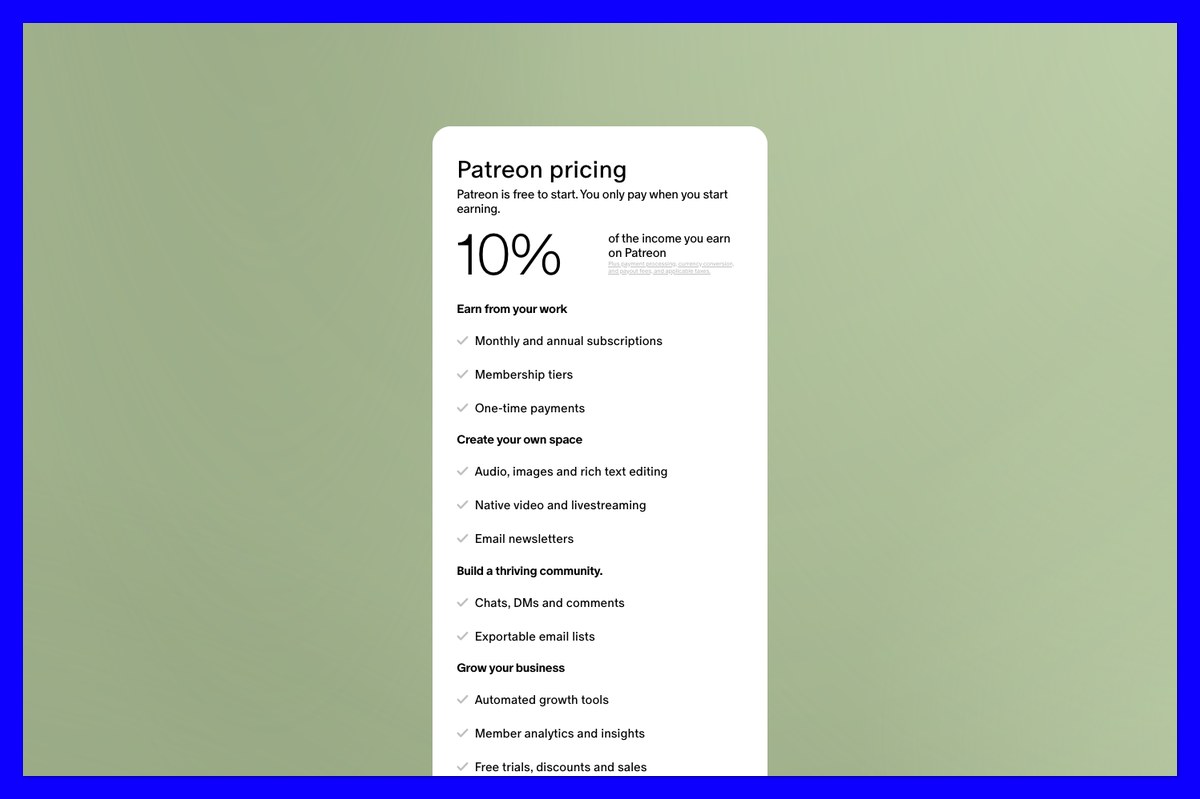
Plus, if you decide you need to build your own website alongside your Patreon page, you’ll need to account for an ecommerce subscription to something like Shopify, too.
Fourthwall also has a free plan, which gives you a customizable storefront and checkout, as well as direct access to tools for selling digital products, memberships, and physical items (including Fourthwall’s POD products). On the free plan, there’s a 5% fee whenever you sell digital products and memberships, plus payment processing fees. Selling physical products won’t incur any fees, aside from what you pay for the base price of products sourced from Fourthwall’s catalog.
There is a premium plan available for Fourthwall too, at $19 per month (or $15 per month if you pay yearly), and that removes the fee for digital product sales, adds higher limits, and gives you priority support. I’ve broken the plans down in more detail in my Fourthwall pricing guide.
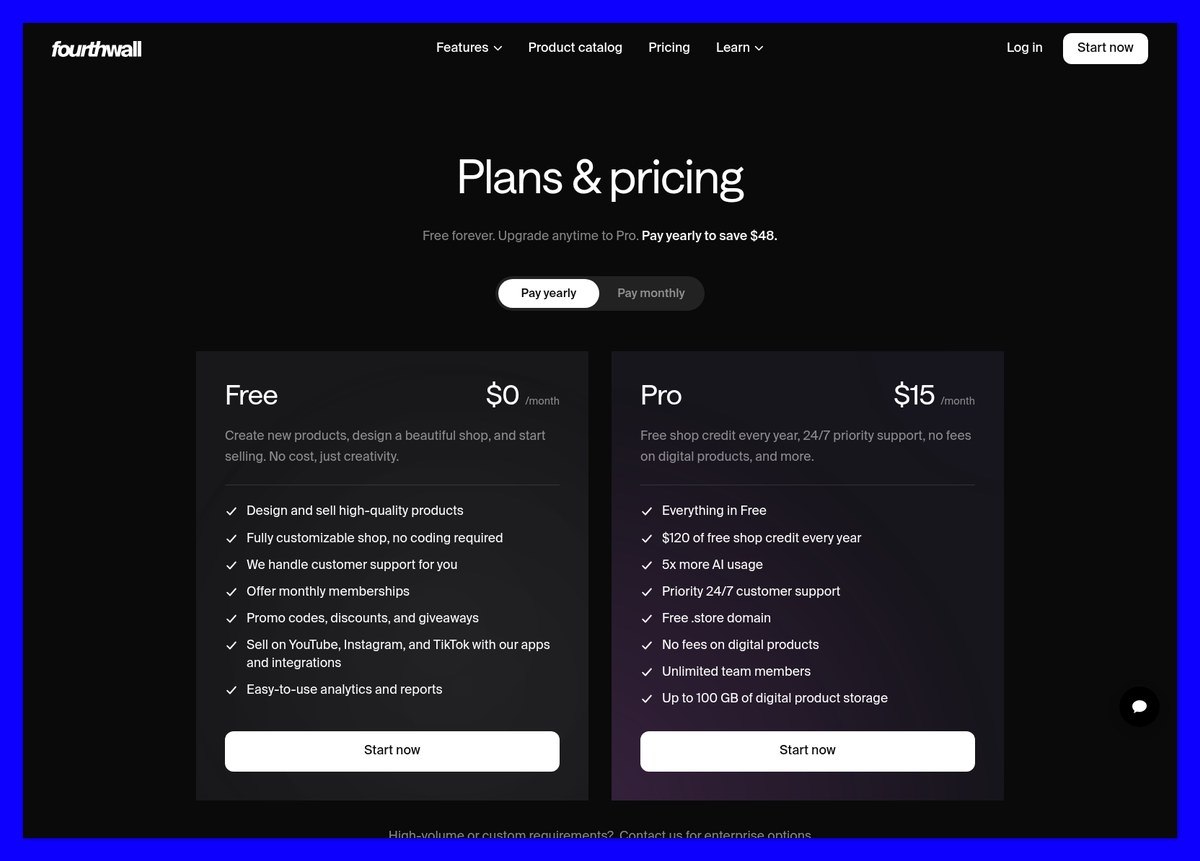
So if you’re wondering what you’ll actually keep from earnings on both platforms, imagine you have 100 members paying $10 per month for a subscription. After Fourthwall’s platform fees and payment processing fees, you’re left with around $891, compared to around $841 on Patreon.
Fourthwall vs Patreon: What Can You Sell?
Technically, both platforms allow you to sell a lot of different things, the difference is how easy it is to explore different categories.
Patreon is pretty much the place to start if you’re selling exclusive content, because it has all the tools you need to charge community members for monthly or yearly memberships, give subscribers access to exclusive content, and host things like livestreams or community chats. You can also sell physical products, but generally it takes extra work, like requiring you to connect your Patreon account to an ecommerce platform such as Wix.

Fourthwall handles memberships and digital content sales too, without the need for an extra subscription or tool. You even get extra features like membership badges and Twitch gifting options.
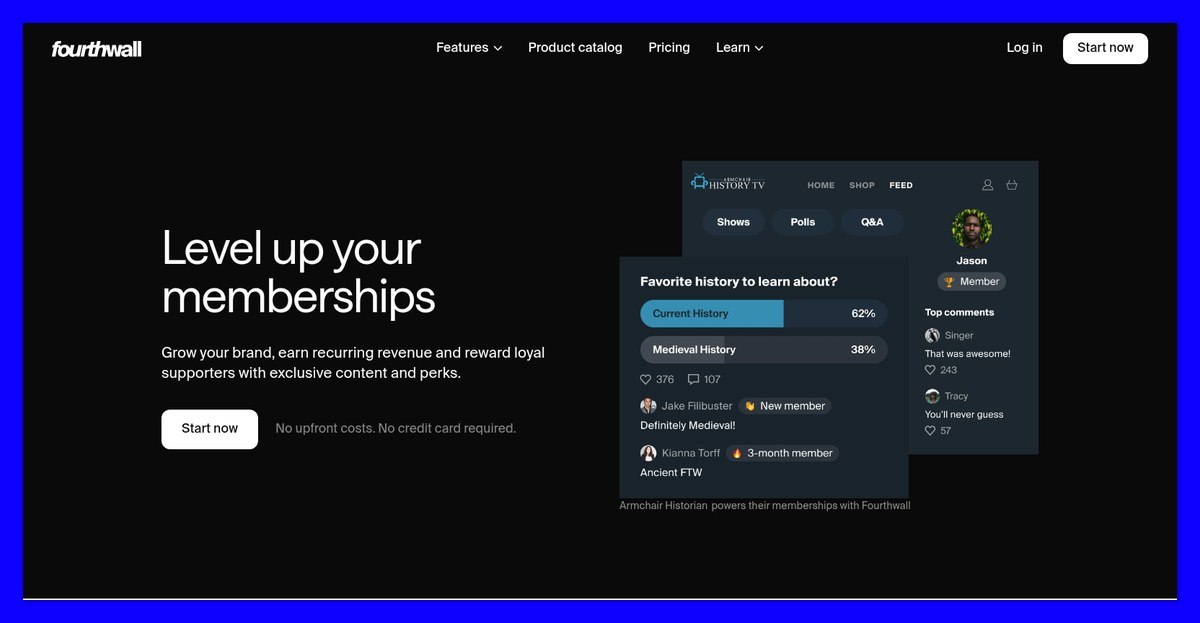
For physical products, you can source and sell items directly, and Fourthwall can even help you find manufacturers of things like custom pins and plushies. Alternatively, you can use Fourthwall’s retail-grade catalog for print on demand, which means Fourthwall handles the production and fulfillment of custom merch for you.
It also deals with customer support for any items purchased from its catalog, which is helpful. Donations are supported on Fourthwall too, without an extra fee beyond payment processing costs.
Patreon vs Fourthwall: Storefronts and Branding
It shouldn’t be a surprise that I think Fourthwall is the better option if you want true brand ownership. Patreon is fine if all you need is a recognizable page where people can sign up and buy access to exclusive content. In fact, in 2026, those pages are more impressive than they used to be, with customizable content shelves, featured collections, and the option to choose your own brand colors and custom domains. You still don’t get a full website, though.
You’re also restricted when it comes to ownership over your audience. Some platforms (including Fourthwall) can help you import existing posts, membership tiers, media, and perks into a new site, but your subscribers’ payment details don’t transfer, so you need to get everyone to sign up again.
Fourthwall gives you more of a complete brand you can own from the very beginning. Even on the free plan, you’ll have a complete website, with themes you can customize, a domain you can choose yourself, editable layouts, as well as options for adding your own code. If you want ideas, take a look at these Fourthwall store examples.

You’ll also be able to connect your Fourthwall website to any of the other channels you use for nurturing your community or selling, including places like TikTok Shop or YouTube Shopping. Also, Fourthwall offers users the opportunity to design their own mobile app, based on their website, which is something you don’t get with Patreon.
Plus, if you ever do decide to move elsewhere, Fourthwall lets you export your customer data, so you’re not facing the same migration headaches.
Fourthwall vs Patreon: Admin Support
Patreon does have a decent reputation for looking after its users, and it definitely helps with a few things. It handles all the membership billing jobs for sellers, and makes sure transactions and annual subscriptions are managed properly. You also get payments that include VAT, sales tax, or GST when necessary, so you don’t have to worry about too much on that side.
Fourthwall goes a bit further in a few ways though. First of all, unlike Patreon, it has a print on demand service built-in, which means if you’re hoping to sell physical products or custom merch, you can ask Fourthwall to deal with the production, packaging, and fulfillment parts of that task. They’ll even deal with customer support for products ordered from their catalog.
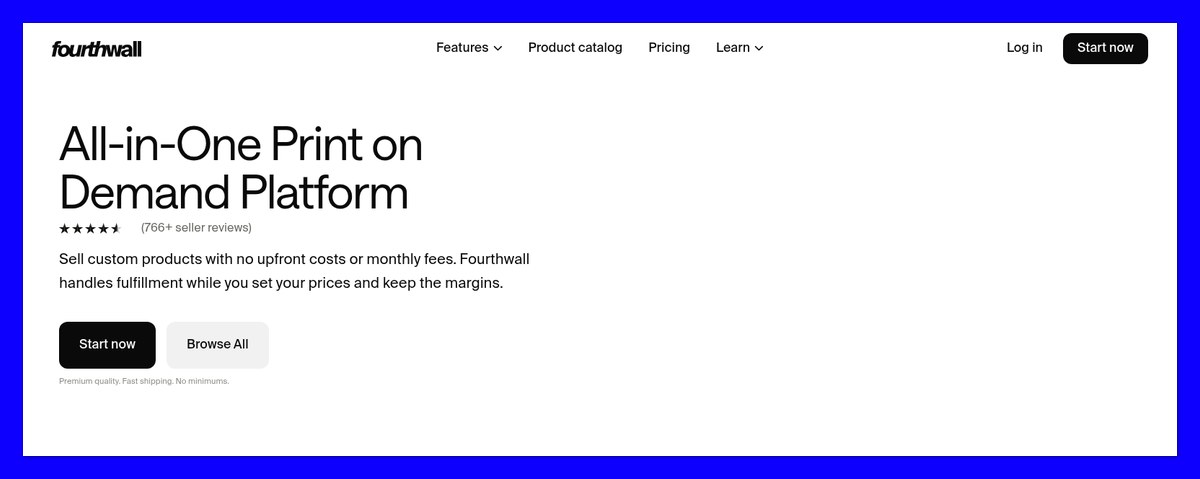
For those worried about tax management, Fourthwall acts as each vendor’s Merchant of Record, dealing with everything from sales tax registration and collection to remittance. Plus, Fourthwall offers other kinds of help too. For instance, it can help you find manufacturers for custom products, or artists to help you produce merch designs.
Fourthwall vs Patreon: The Latest Updates
Before I give my final verdict, I want to acknowledge that both Fourthwall and Patreon are still evolving. I’ve already mentioned that Patreon’s creator pages are a lot better these days, and recently it has made some updates to its discovery feeds, with new spotlights for public posts and shorter updates called Quips, which can help new creators earn recognition. Patreon’s also testing automatic video clips and better previews for any creator selling exclusive content.
Fourthwall has made several valuable moves lately too, including upgrading its membership sales features, now allowing creators to set minimum tips for incoming messages, offer different free message allowances by tier, and sell locked video or audio messages.
The platform updated its analytical features this year too, with new insights into membership cancellations, video watch times, merchandise conversion rates, and revenue earned from specific tracked marketing links. Plus, in the last couple of months, Fourthwall has released AI updates (including an MCP solution), and redesigned the Fourthwall Creator app, for companies that want to produce their own branded mobile experience.
Fourthwall vs Patreon: Final Verdict
I don’t think it would be fair to suggest that one platform is universally better than the other here, because they’re each really addressing different problems. Patreon is still a brilliant platform to get started on if you want to build a business around your audience, offering access to exclusive content and experiences. It can even help you grow your audience faster, by making your content and brand easier to see, especially with its newer discovery features.
Fourthwall, though, is going to be the better option if you want to build a wider brand, and explore a variety of different ways to make an income. The membership fees are lower than they are on Patreon, to begin with, and you get a website you can fully customize and make your own. Plus, you’re free to experiment with selling anything you like, from digital products to print-on-demand products. My full Fourthwall review goes deeper on all of this.
You will be responsible for finding and nurturing your audience yourself, since Fourthwall doesn’t have the same “community” feel as Patreon. Still, if you already have an audience, and you want to take ownership over your brand and discover more opportunities to grow, Fourthwall is the far more flexible choice. If you’re still weighing your options, see how it stacks up in Fourthwall vs Shopify, or browse more ecommerce platforms for creators.


