
 By Bogdan Rancea
Payhip started in 2011 as a simple tool that helped creators sell digital files directly to their audience. The platform was founded by two software engineer brothers, Abs Farah and Kahin Farah, with a clear goal to make ecommerce accessible to everyone everywhere, while staying bootstrapped and focused on what benefits sellers.
By 2026, Payhip has grown into one of the most popular platforms for selling digital products.
While many know it as a free tool with no monthly fees for selling ebooks, templates, and more, there are far more features than most people realize. Its bootstrapped approach has kept pricing low and allowed the team to prioritize features that sellers actually ask for.
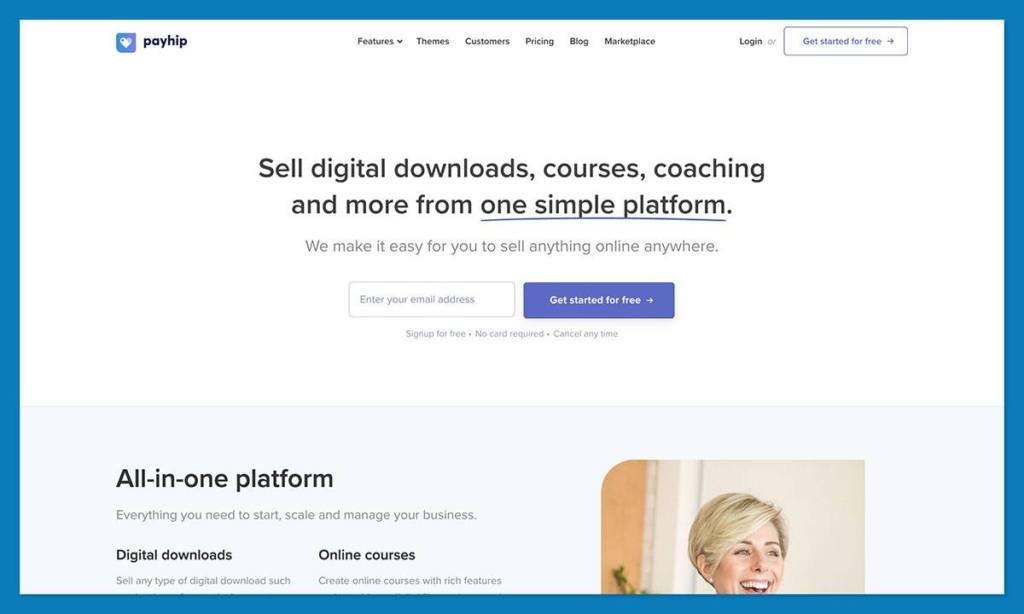
Payhip is now an all-in-one eCommerce platform for selling digital products. Sellers can build a fully customizable storefront without any technical skills. Payhip also offers automatic UK EU VAT handling, built-in marketing tools, an online marketplace to bring in thousands of buyers for Payhip sellers, and so much more.
While it still has limited features for selling physical products, there are a lot of things that I think make Payhip genuinely valuable for digital product sellers, particularly those who don’t want to spend any upfront costs or monthly fees for their online businesses.
Payhip Review: Quick Verdict
Payhip makes the most sense when the job is straightforward. You want to sell digital products, courses, memberships, coaching, and maybe a few physical products without dealing with multiple different tools. Everything is built-in and accessible to you without having to pay anything upfront until you make a sale.
I still might not choose Payhip for a design-heavy brand or a large physical inventory business. The storefront side is still pretty basic, and the SEO controls aren’t especially deep. For digital-first sellers, though, it delivers where it matters without adding unnecessary complexity.
Pros
- All plans include the same unlimitedfeatures. You can start with the free plan with 5% fee, or change to the $99/month plan with 0% once your revenue grows bigger
- Strong fit for digital downloads, courses, memberships, and coaching.
- Built-in EU and UK VAT handling removes a real admin headache for digital sellers.
- Instant payouts with 10+ global payment gateway options
- Very easy to set up and use
- Built-in marketing tools to launch an affiliate program, distribute coupons, cross-sell, and more
- Niche features for digital products: license keys, download limits, PDF stamping, collaborations
- Customizable storefront and checkout pages
- Access to online marketplace to reach new buyers
Cons
- Storefront customization is still limited in places
- SEO controls are weaker than I’d want for a content-heavy store.
- Physical product support is there, but it’s not as in-depth as what you’d get from Shopify
Payhip Review: What Stands Out About Payhip in 2026
A lot of older Payhip reviews freeze it in that “simple digital downloads tool” phase. That might have been the pitch a couple of years ago, but now the value is a lot bigger.
If you check out the updates to the platform over the last few years, you’ll see plenty of evidence that Payhip has actually consistently launched features that sellers asked for, particularly features that help them bring in more revenue.
In 2024, for instance, Payhip launched an online marketplace for digital products, addressing the “discoverability” issue that often convinced new sellers to settle for something like Etsy. The same year, Payhip made improvements to its built-in Marketing tools including the ability to quickly run a sale and automatically implementing a countdown timer to create urgency.
Sellers can also cross-sell products across various products types, effectively increasing the average cart size per customer (i.e. each customer is spending more money on sellers’ stores).
Payhip has also added other features like wishlists, bulk editing, country block and customer block to prevent fraudulent customers, features to sell personalized or custom digital products, and embed codes to support live chat for stores, and more.
In other words, Payhip focused on helping sellers attract more buyers, increase order value, and manage their stores more efficiently without needing extra tools.
In 2025, Payhip expanded its payment gateway options by adding 11 new integrations, including Stripe, PayPal, Square, Mollie, Mercado Pago, Paystack, Flutterwave, Razorpay, PayU, Iyzico, Midtrans, Xendit, and PayTabs.
This unlocked local payment methods across major global regions, making it easier for sellers worldwide to run digital product businesses.
That same year, Payhip introduced collaboration tools with automatic revenue splitting, improved coupon features for bulk promotions, and a content editor for customizable download pages. It also rolled out smaller updates like internal order notes, better filtering, a public API, and more.
Now in 2026, Payhip has introduced customizable checkout pages, which it says have helped increase sellers’ conversion rates across the platform. It also added more default store languages, support for pre-generated license keys for software sellers, and expanded payment options, including Apple Pay.
Beyond that, Payhip is rolling out automatic global tax management tools. These will allow Payhip to automatically collect and remit sales taxes on behalf of sellers, which gives them peace of mind and makes it easier to stay fully tax compliant.
What You Can Sell on Payhip
One of the biggest things to understand about Payhip in 2026 is that it’s grown way past being a basic digital downloads tool. Yes, digital products are still the heart of it, but you’re not stuck selling a couple of PDFs and calling it a business.
You can sell eBooks, printables, music, design assets, software files, guides, templates, ZIP bundles, and full courses with video lessons, written content, quizzes, assignments, and student accounts.
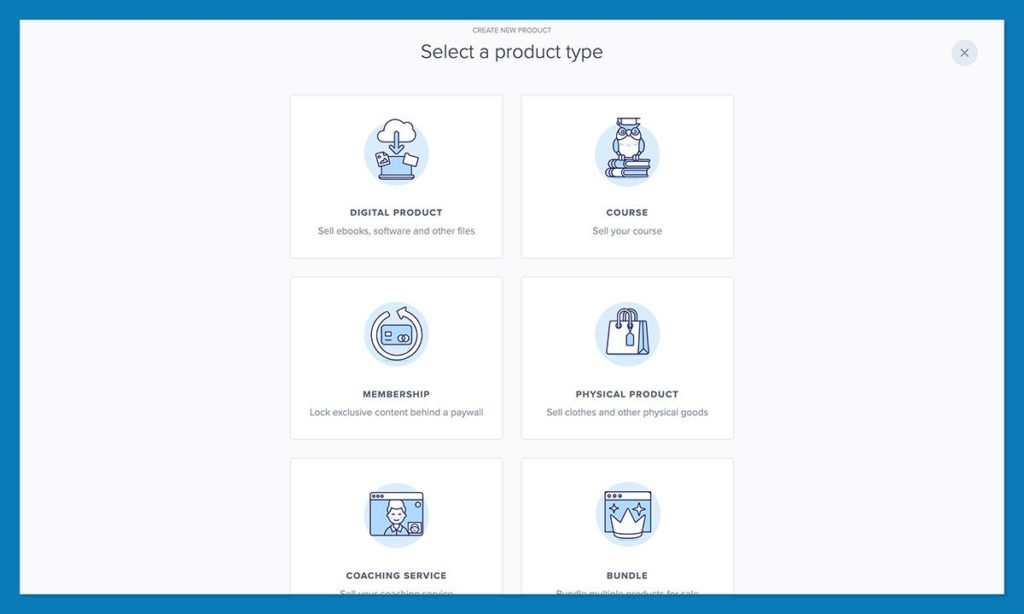
You can also sell online courses. No, you’re not just selling video files. Payhip gives you online course creation tools, including a fully branded online course streaming interface.
You can offer various lesson types (video, text, assignments, etc), drip content, course completion certificates, multiple pricing options for students, and more.
You can also launch a membership sitewhich is great if you want to sell gated content, subscription products, or anything built around recurring income. You can offer multiple membership tiers with different pricing and with different levels of access and benefits.
From the customer side, the experience is smooth and self-serve. Members can upgrade, downgrade, or cancel their subscription whenever they want. They can also update their personal details, such as payment information and email address, and access their billing history without needing to contact support.
Additionally, Payhip lets you run a full coaching business in one place with built-in tools for scheduling, payments, content delivery, and client management.
You can host sessions through Zoom or Calendly, structure programs with milestones, and enhance your offer with courses, memberships, or digital products.
Plus, physical products are supported now, too. They’re still probably not the thing that will attract sellers to Payhip in the first place, but if you’re trying to build out your brand, selling things like physical planners alongside digital calendars, or something like that, Payhip does make that easy.
Store Builder, Product Pages, and Checkout Experience
Payhip has pretty much always had a reputation for being “beginner-friendly”. Just about anyone can build a storefront, a few product pages, and add in a custom domain without spending a week buried in settings and menus.
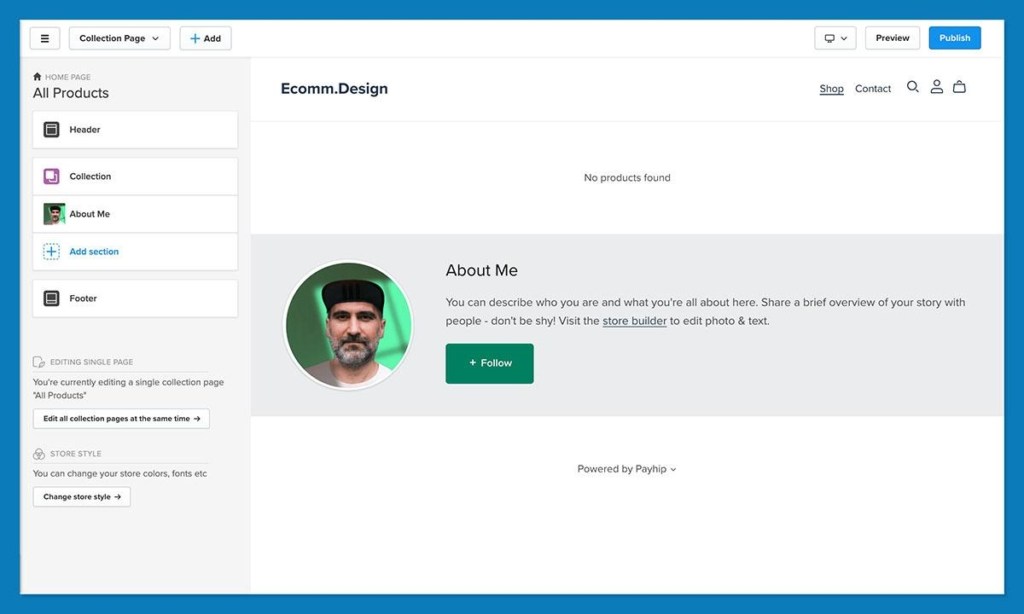
One of the internet’s best kept secrets is that you can use Payhip to launch a fully branded website for free without paying any monthly fees.
If you’re an artist who just needs a portfolio, you can build and host your site for free, with no time limits, and with unlimited storage bandwidth. When you’re ready to start selling, you’ll only pay a 5% fee on each sale.
You’re not getting the “ultimate custom storefront” here, but the basics are solid. The themes make it easy to get started without coding headaches, and you can tweak enough to make your brand feel unique with the drag-and-drop editor.
I think this year’s checkout update is one of the better changes Payhip has made in a while. You can now brand the checkout with your logo, banner image, colours, and custom CSS, which makes the whole thing feel less generic at the point where people are deciding whether to buy. Payment choice is much better too.
If you use Stripe, you can offer Apple Pay, Google Pay, and more than 100 extra payment methods. That’s the sort of change that makes mobile checkout quicker, gives international buyers options they actually recognise, and helps cut down on people dropping off at the last second.
The Sales and Marketing Tools
Lately, Payhip has felt a lot more switched on when it comes to how people actually buy. A lot of the bigger updates from the last couple of years point in the same direction.
More conversions, better order values, stronger repeat purchase potential. You can run sales with countdown timers, which still works because people hate missing a deadline. The coupon tools are better now too. You can create codes in bulk, set minimum spend rules, and control redemptions much more tightly.
Cross-selling also now works across every product type, which is genuinely useful if your offers overlap. A course creator can send buyers to a membership.
A template seller can push a bundle. A coach can add a downloadable extra that makes the main offer feel more complete. You also have the option to trigger a popup when a customer adds a specific product to their cart.
This popup can recommend another cross-sell product at a discounted price, encouraging customers to add more to their order. It’s an effective way to increase the average spend per customer.
The affiliate program is an old-time popular tool from Payhip. Sellers can launch their own affiliate program to recruit others to promote their products in exchange for a commission, turning customers, creators, or partners into an extended sales channel without needing external tools.
Payhip also supports upgrade discounts, which are designed to bring customers back after their initial purchase. Once a customer completes an order, they can automatically receive a discount offer for a higher-value product or next step in your funnel.
It’s a simple way to encourage repeat purchases and increase customer lifetime value without needing to manually follow up or build complex automation flows.
Plus, the new collaboration tools are genuinely exciting. Automatic revenue splitting, in particular, addresses one of the main reasons creators tend to avoid joint launches in the first place. No one really wants to be responsible for tracking percentages, payouts, and who sold what.
Then there are all the other extras:
- Wishlists for buyers who might be interested in a product, but aren’t ready to buy yet
- The content editor that lets sellers shape the download or post-purchase page with extra instructions, videos, links and supporting content (or even a little blurb about your other products to pique their interest)
- Seller responses for reviews to help build trust and strengthen relationships
- Order management improvements, like internal notes for orders, filtering by custom checkout responses, and custom digital orders
- Support emails after purchase and store chat that make the whole setup feel a bit more human
You might not get a full “marketing automation” platform here, but you get enough of the features most sellers need to make an online business grow a lot faster.
Security, Taxes, and Global Selling
Tax has always been one of Payhip’s better selling points. It was one of the first digital product eCommerce platforms that offered automatic EU and UK VAT handling for years, which already takes a chunk of admin off a seller’s plate.
In 2026, it’s also working on global tax management, with the goal of automatically collecting and remitting sales taxes on sellers behalf, effectively eliminating any tax headaches from sellers’ plates.. If that rolls out properly, it could make Payhip a much easier choice for smaller sellers trying to reach customers in more countries without turning tax into another headache.
The built-in security features are helpful too. You’ve got things like PDF stamping and licence key generation working as useful protection tools.
Plus, the newer support for pre-generated license keys makes Payhip more useful for software sellers and anyone dealing in unique codes or access-based products.
Add the wider language support from the last couple of years, and Payhip feels far better suited to international sellers than it used to.
Pricing and Value for Money
Payhip’s pricing is one of the things that has made it pretty attractive to smaller business owners for a while now. There’s a “free forever” plan, which is incredibly useful for sellers who are just testing the waters with a new business idea.
You do have a 5% transaction fee to think about, but even with that, Payhip can be a lot cheaper than something like Shopify, or even Etsy.
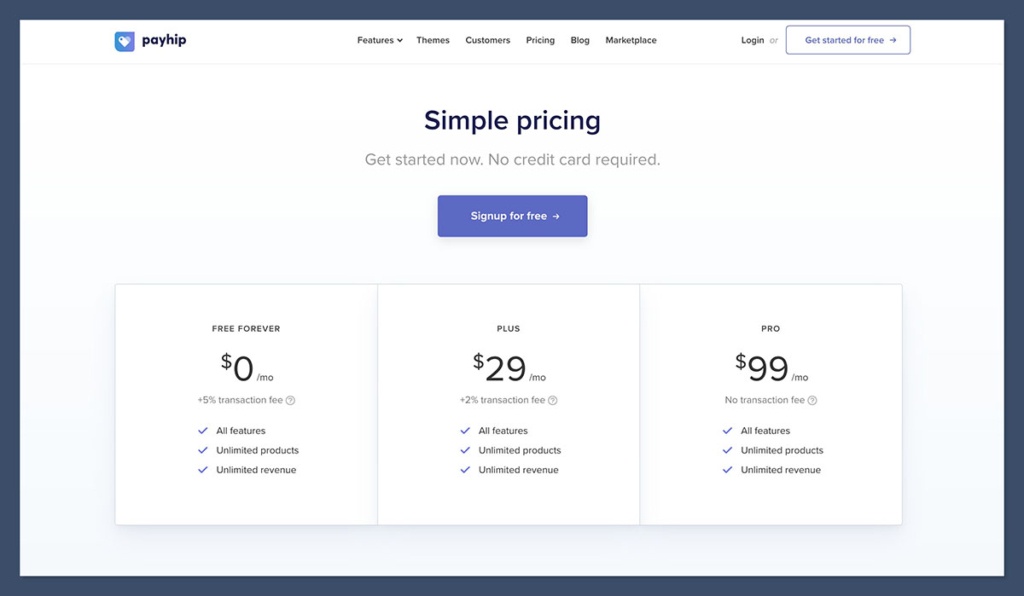
The Plus plan reduces the transaction fee to 2%, and costs $29 per month, which makes it an attractive option when your business starts to grow. After that, there’s the Pro plan with no transaction fees, costing $99 per month.
What I really like most about the whole pricing structure is that Payhip doesn’t play the usual game where a cheap plan mostly exists to pressure you into upgrading.
All plans include the same core features, unlimited products, and unlimited revenue. You’re mainly choosing how much of each sale you want to give up to transaction fees as volume grows.
I still wouldn’t say it’s amazing value for every kind of store. If you need serious design freedom, stronger SEO features, or a more industrial physical ecommerce setup, the savings can dry up fast once the platform starts getting in your way. For digital-first sellers, though, the value is obvious.
Who Should Use Payhip, and Who Should Skip It?
Payhip is easily one of the strongest eCommerce platforms for selling digital products. You can easily get digital products live without dragging a bunch of extra admin, tax confusion, and setup nonsense along with them. Most creators don’t need a giant commerce machine. They need a store that works, a checkout people will actually finish, and a backend that doesn’t become a second job.
That’s where Payhip really makes sense.
If you’re selling downloads, courses, memberships, coaching, software keys, or any other digital product that doesn’t need a warehouse and a logistics team behind it, Payhip is still one of the smartest options in the category. It’s especially good for solo founders and small teams who want low overhead, fewer moving parts, and a platform that handles the practical stuff without making a big performance out of it.
I wouldn’t call it the most exciting ecommerce platform around. I would call it one of the most sensible, at least for the right seller.


