
 By Bogdan Rancea
The internet has a habit of making selling digital products sound like the “easy” low-effort alternative to building a typical ecommerce brand and selling something physical. I understand that perspective.
If you sell ebooks, digital downloads, or templates, you’re not worrying about inventory, fulfillment, or shipping issues. Still, that doesn’t mean there isn’t any real work to do. You still need a specific niche, a product that people actually want, and a plan for how you’re going to pull in buyers, and hopefully keep them coming back month after month.
Underestimate all that, and you end up wasting a lot of time and energy on a business that seemed like a great idea at first, but never got to the point of giving you any consistent income.
I’ve seen that happen a lot, which is why I ended up putting this guide together.
It’s the step-by-step process I’d walk an ambitious seller through now, using one of my favorite platforms for digital sales: Payhip.
How to Sell Digital Products in 2026
I honestly do think that selling digital products is a great way to make money, even in 2026, when there are thousands of other businesses exploring the same strategy.
There’s definitely less work to do in general. You don’t reorder stock, pack boxes, or spend weekends figuring out how to fix shipping mistakes. You just make something valuable, put it in front of the right buyer, and you’re ready to go. Plus, it’s worth saying there are more options for what you can sell in this market than there used to be.
You used to have a pretty narrow list: ebooks, downloads, maybe a course. Now, you can sell just about anything you can imagine, business toolkits, templates, creative patterns, memberships, subscriptions, software, even NFTs.
That doesn’t mean everyone who tries this automatically is guaranteed to get a great source of passive income, though. You still need a step-by-step plan.
Step 1: Find A Profitable Niche
This is the first step that most other guides treat as “obvious” without really explaining what a niche actually is. Choosing a niche doesn’t mean picking something you’d enjoy creating and hoping the market will be interested. You need to decide who you want your buyers to be, and figure out what they actually want or need.
A niche is only good if the demand is already there, and the competition isn’t impossible. Usually, you need a combination of three things:
- A genuine problem to solve
- Evidence that people will pay for the solution
- A gap (something that the competition can’t do as well as you)
The best niche ideas usually sound a bit restrictive when you first say them out loud. That’s a good sign. If you’re selling “fitness guides” you don’t have a niche. If you’re selling “20-minute strength-building plans for busy moms” you do.
There are plenty of places where you can find ideas. Marketplaces like Payhip, Etsy or Udemy show you what people are already buying. Communities on Reddit give you insights into customer pain points. I like using Google Trends and SEO tools to find trending topics too.
Step 2: Choose The Right Digital Product
When you’ve picked your niche, you can figure out what you’re actually going to sell. That can be simpler than it seems if you already know the problem your customer has.
If a buyer needs clarity on something, a guide, checklist, or short course might be ideal. If they need help doing the work, sell a template, tracker, or spreadsheet. If they want a bigger outcome and expect ongoing support, sell longer courses, memberships, or software.
You don’t need a complicated catalog straight away. It actually makes sense to start with the smallest solution to an expensive or annoying problem.
Before you start building, validate that there’s really demand out there. A lot of sellers still don’t do that. They trust their gut, spend a month making a product nobody asked for, and act surprised when it doesn’t make any money. You don’t need a complicated validation process to avoid that. Just do your homework. Find out if similar products are already selling on other marketplaces.
Consider creating a waitlist and see if anyone actually signs up for it. You can even post on social media or community forums about your idea, and see if anyone responds.
Step 3: Create a high-quality digital product
Once you know people want it, focus on delivering fast value.
A lot of creators get carried away adding extra modules, bonus files, and filler because they’re worried the product will look too small if they don’t.
A good digital product feels easy to use and immediately helpful.
What I’d focus on:
- One clear outcome
- Simple structure
- Clean design
- Obvious instructions
- Examples, screenshots, or a quick-start guide where needed
If your product can get a buyer to a quick win fast, you’re on the right track.
Also, resist the urge to keep polishing and tweaking forever. Launch the useful version fast, and improve it based on the feedback you get.
Step 4: Choose the Right Platform for Selling Digital Products
People waste a lot of energy arguing about platforms when they’re preparing to sell online. Really, all that matters is you choose something that lets you sell quickly, keep control of your brand, and avoid taking on unnecessary admin work.
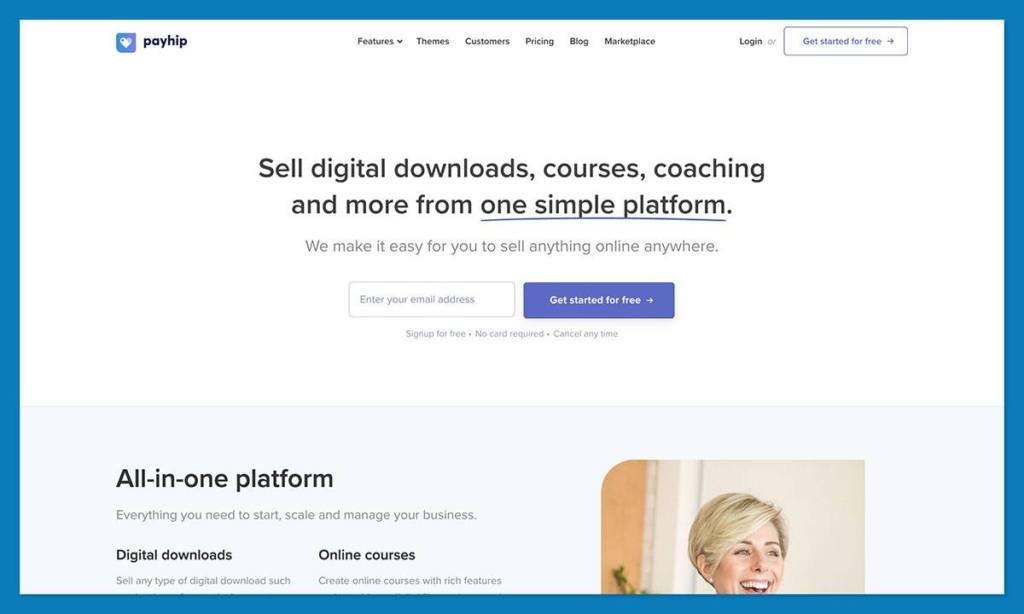
I like Payhip because it respects the stage most sellers are actually at. Early, experimental, trying to make smart decisions without piling on fixed costs and stress.
There’s a free forever plan you can stick with for as long as you like. When you’ve got plenty of evidence that your business model can work, you can upgrade to the Plus plan ($29 per month with a 2% transaction fee), and eventually consider the Pro plan ($99 per month with no transaction fee).
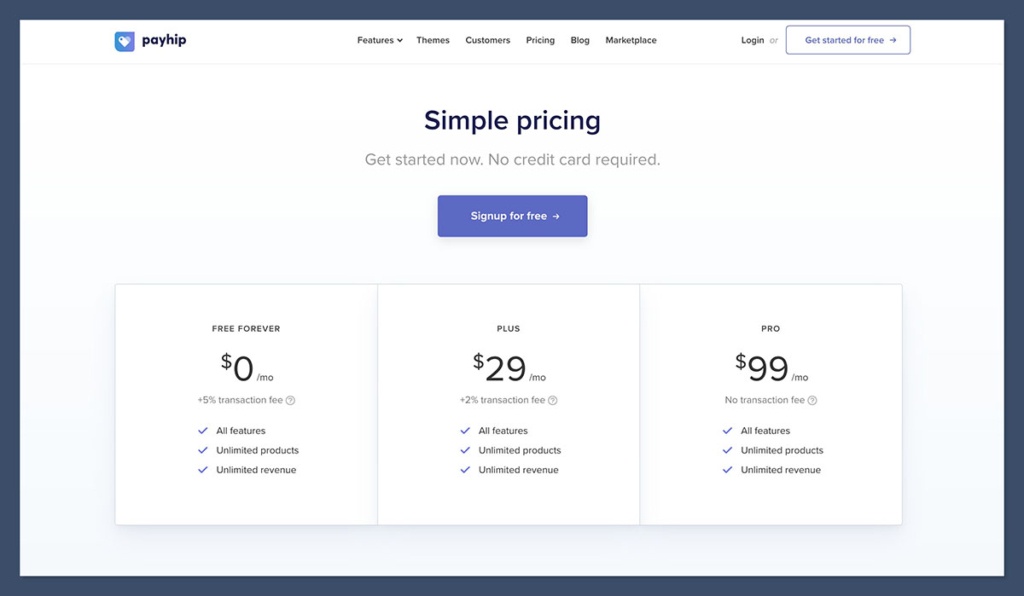
All plans include full access to every Payhip feature, even the free plan. This is rare in eCommerce. There is no feature gating and no locked tools behind a paywall. The pricing simply gives you the flexibility to choose how you want to pay based on what makes sense for your business.
The other reason I rate Payhip so highly is that it’s built for actual digital selling, not just generic ecommerce. You can sell downloads, courses, memberships, coaching, and even physical products from the same store. It gives you a hosted storefront, custom domain support, embeddable checkout, instant delivery, coupons, affiliates, referral discounts, pay-what-you-want pricing, and product protection features like download limits and PDF stamping.
You can build a fully branded online store in a matter of minutes with Payhip’s beginner-friendly website builder. That’s a serious amount of useful infrastructure without needing a pile of plugins.
Plus, the platform keeps improving in all the right ways.
Here are some of the most important updates:
- In 2024, Payhip launched its online marketplace for digital products. Sellers can now put their products in front of thousands of new buyers at no additional cost. Payhip also introduced “gifting,” so customers can purchase digital products for friends and family.
- In 2025, Payhip released collaboration tools. Sellers can create products together and split revenue automatically. Payhip also added 11 new payment gateways, which provide thousands of local payment options worldwide. In addition, they launched a content editor that lets sellers customize their download pages with instructions, images, and more.
- In 2026, Payhip introduced customizable checkout pages to help increase conversion rates. For software sellers, Payhip now supports both custom serial key uploads and automatically generated license keys. There’s also the highly anticipated automated global tax management that is set to launch this year.
Those are all things designed to help sellers convert better, and grow faster.
Step 5: Set Up Your Online Store
This step obviously varies a bit based on the platform you choose, but for this guide, let’s assume you’re using Payhip. Here’s how that setup process works:
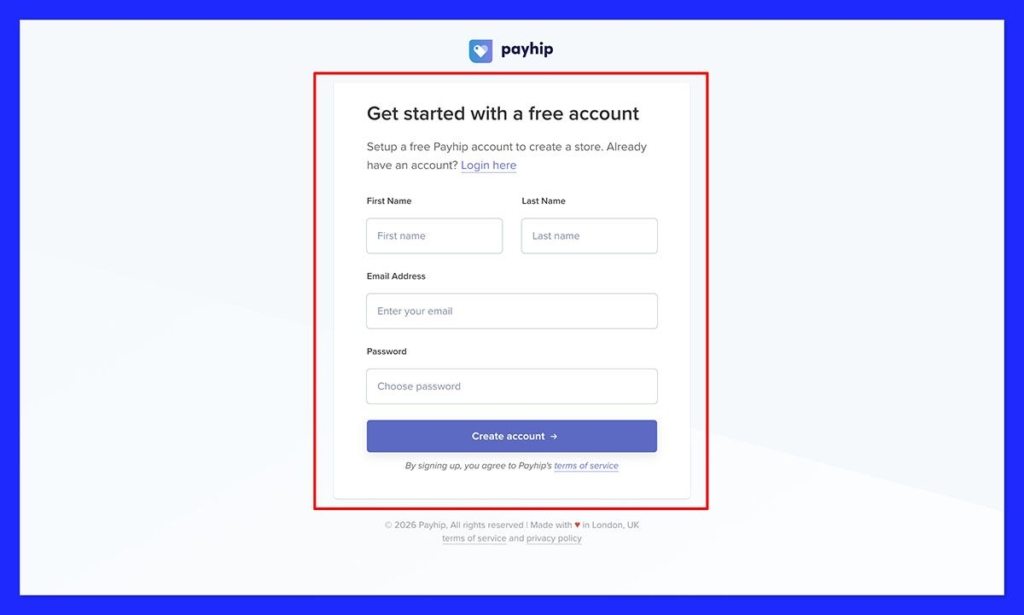
Sign up for the free plan
Start with the Free Forever plan, it just makes the most sense. The paid plans only really start being worthwhile when your sales volume justifies them.
Set up payments
It’s important to make sure that you’re able to receive payments when you sell digital products. Payhip gives you a lot of payment gateway options here (Stripe, Paypal, Square, Mollie, Mercado Pago, Paystack, Flutterwave, Xendit, Midtrans, Iyzico, Razorpay, PayU, PayTabs, and more).
You can connect to one or more payment gateways that are available in your region. Connecting to multiple payment providers to give customers more ways to pay and increase your chances of making more sales.
There are thousands of payment options that are available for your customers including all the major debit and credit cards, Apple Pay, Google Pay, Buy Now Pay Later, and many other local payment methods such as iDeal, Pix, Bancontact, and more.
All you need to do is go into your Account, click on Settings, choose Payment details, and select your region and payment provider. Then enter your payout details. Once you’re connected, all your sales will be processed automatically.
Payhip offers instant payouts with no minimum thresholds and no holding periods, so you get paid right after each sale is processed. Payhip even handles tax automatically, alongside UK and EU VAT.
Add your digital product
Head to your Payhip dashboard, click on the Products tab, then “Add New Product”, then choose the type of product you want to sell.
When you add the product, keep the basics sharp:
- A direct title
- A short description built around the outcome
- A sensible price
- Clean images or mockups
- A preview if you can offer one
- Files that are named properly and easy to use
Payhip also gives you more flexibility than a basic file upload. You can add product variations, use pay-what-you-want pricing, include license keys, and use the content editor to build your own post-purchase page from scratch.
Customize your store
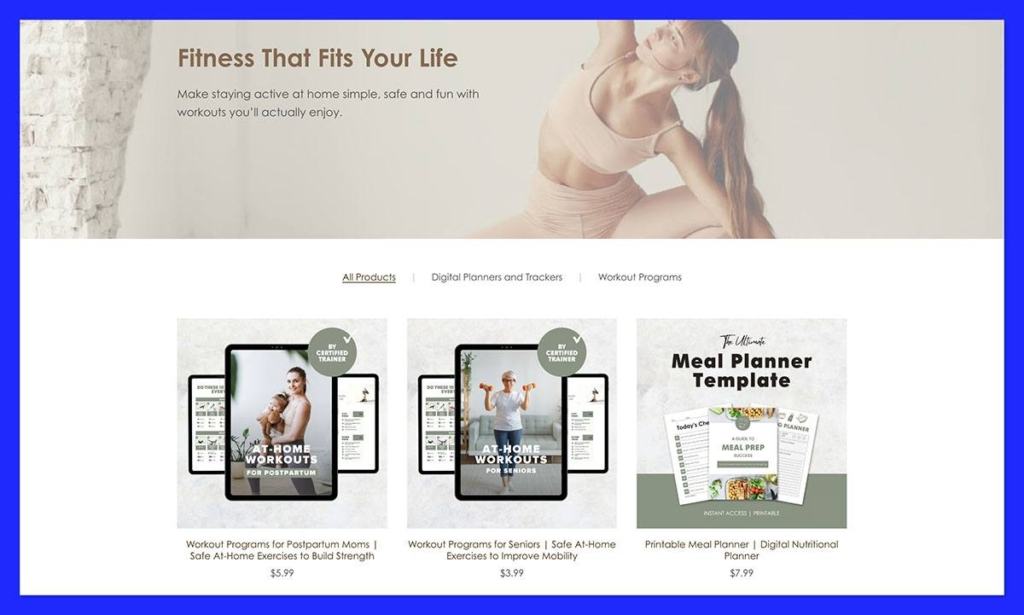
You don’t need anything too fancy here. People aren’t looking for an unforgettable brand experience when they’re buying a template or guide, they just want a store that feels easy to use.
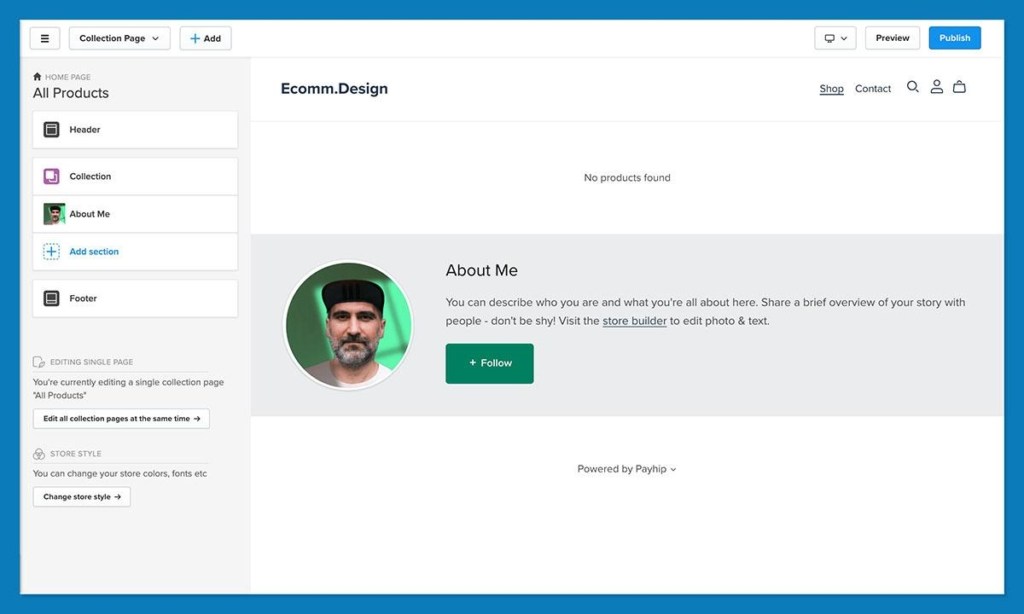
I’d focus on the essentials:
- A clean homepage
- Strong product pages
- An FAQ
- An about page that sounds human
- Contact details or a support email
Payhip gives you plenty of pre-made website sections you can choose and customize with a drag-and-drop editor, so you don’t need to worry about coding here.
Launch and start selling
Once your payout information is set upand the product page is published, your store is officially launched!.
You don’t have to wait for the moment when the store feels “perfect”. Your goal here should be getting the product in front of buyers and seeing how they respond.
This is another reason Payhip works well as a starting point. Your Payhip store is fully hosted and you get a free domain as well, so you won’t have to pay any third party services for these.
You can also connect your own custom domain, or embed Payhip into an existing site if you want to use a separate website builder alongside Payhip. So you’re not trapped if the business grows or your setup changes.
Step 6: Drive traffic and get your first sales
You can have a genuinely useful download, a clean store, a fair price, and still end up with a failed business if the right people never find you.
The tricky part is there’s no single, universal way to guarantee you’ll get traffic. Most sellers I’ve worked with end up using a mix of different strategies.
1. SEO: the slow traffic option
I still rate SEO very highly for digital products because it brings in people who are already looking for a fix. That’s different from trying to interrupt somebody on social media while they’re watching cooking videos.
The trick is going after searches with real buying intent, not vague “awareness” fluff. A post targeting “best content calendar template for coaches” has a lot more commercial value than something broad and empty like “how to grow on Instagram.”
Experiment with:
- Product-led blog posts
- Comparison posts
- Use-case pages
- Tutorials built around the exact problem your buyer wants solved
If you’re using Payhip as your online store, you can easily publish blogposts (at no additional costs). Just click on Store and head to the Blog Posts tab. Then click + Add new blog post.
2. Social media: show the product doing its job
When it comes to social media, a lot of companies post far too much “content” and not enough proof.
If you’re selling digital products on Instagram, TikTok, Pinterest, or LinkedIn, the best thing you can do is actually show the product in use. Show what it does. The before and after, the problem it fixes, or the result it creates.
If you’re selling a spreadsheet, show what it replaces. If you’re selling a template pack, show how much time it saves. If you’re selling a planner, show how it actually looks filled in by a normal person, not a productivity influencer with suspiciously neat handwriting.
Remember to always put your online store link on your social media bio so people can easily find your products.
3. Email marketing: still one of the strongest sales channels
Email is still valuable, because you’re basically renting attention everywhere else. Platforms change, algorithms evolve, and reach varies from one month to the next. Your email list always stays yours, which is why it’s so helpful to start building it immediately.
Platforms change. Reach drops. Algorithms get moody. Your email list is yours. That’s why I’d start collecting emails almost immediately, even with a small audience.
The easiest way to do it is with a free product:
- A checklist
- A mini template
- A sample pack
- A stripped-down version of the paid offer
Then follow up properly. Not with robotic “nurture” emails. Just useful messages that help, build trust, and point toward the paid product when the fit is obvious.
4. Paid ads: useful once the offer is proven
I probably wouldn’t advise every beginner to rush into using paid ads, but they can be helpful if you’ve already proven that your product works.
Paid ads make more sense once you already know:
- People want the product
- The page converts
- The pricing is in the right range
- The message is landing
At that point, ads can speed things up quickly. Before that, they’re mostly an expensive way to learn that your offer isn’t that appealing.
5. Affiliate marketing and referrals: let other people help you sell
This is one of the easiest growth levers for digital products because the margins are usually high enough to share some revenue.
If the product is good and specific, creators in your niche, newsletter writers, bloggers, or even happy customers can help move it. That’s part of why creator-led commerce keeps getting stronger.
I like this route because it’s performance based. You pay when sales happen.
Payhip’s built-in affiliate tools and referral discounts make this much easier to run than doing it manually, which is exactly how it should be. You set the terms, let people promote, and avoid turning commission tracking into another admin headache.
Step 7: Optimize for more conversions and higher order value
Getting traffic is only really step one. Plenty of people have enough visitors. What they don’t have is a store that turns interest into sales.
Small fixes can make a big difference.
1. Reduce checkout friction
A clunky checkout can wreck a good product. Baymard still puts average cart abandonment at over 70%, and checkout complexity remains one of the main reasons people leave without buying. Stripe also reported in 2026 that 65% of transactions under $50 now happen on mobile, and digital wallets cut average mobile checkout time in half.
That matters a lot for digital products because many of them are impulse-friendly, low-friction buys. If the checkout feels awkward, the sale disappears.
This is one of Payhip’s strongest angles right now. The customizable checkout page, thousands of local payment options including Apple Pay and more help to ensure that your customers are much more likely to complete their purchases instead of clicking away.
2. Use discounts and urgency
I like urgency when it has a real reason behind it. That means you’re not just slapping fake “countdowns” or limited time offers onto every product page.
Still, used properly, discounts work. You could try a launch offer, a weekend sale, a coupon for email subscribers, or a seasonal bundle. All of things give hesitant buyers a reason to stop circling and buy.
Payhip’s sales features help here because you can run coupons, timed promotions, and countdown-based offers without the need for extra tools, too.
3. Increase order value with bundles, cross-sells, and upgrades
This is one of the easiest places to make more money, and loads of sellers ignore it.
If somebody is already buying from you, that’s the best time to show them something related. A template buyer might want the matching guide. A course buyer might want the workbook. A planner buyer might want the sticker pack, the bonus dashboard, the premium version, whatever fits naturally.
Again, Payhip helps you out with this with their cross-selling tool. When a customer adds a specific item to the cart, they will automatically be shown irresistible deals of additional items that they can purchase at a discount. This can exponentially increase the average spend per customer. You can even cross-sell across all product types (e.g. ebooks and courses).
4. Strengthen trust with reviews, previews, and clearer product pages
A lot of weak conversion rates come down to one thing: the buyer doesn’t quite trust what they’re looking at.
That happens when the page is vague, the mockups are poor, the preview is missing, the screenshots are unhelpful, or the description sounds like marketing paste instead of a human explaining the product.
I’d fix trust before I fiddled with traffic in a lot of cases.
A stronger product page usually has:
- A clear promise
- Examples or screenshots
- A preview if possible
- A few reviews
- An faq that answers real objections
5. Use pay-what-you-want properly
A lot of buyers love “pay-what-you-want” offers, for obvious reasons. They don’t work for everything, but they’re great for entry products, community-driven products, creative assets, and lead-generation offers where you want maximum reach.
The important thing is to get the level of “freedom” you give your customers right. Sometimes it makes sense to just set a minimum and let supportive buyers pay more if they think they should.
Payhip supports this natively, which makes it easier to test without turning pricing experiments into a whole separate project.
Step 8: Turn one-time buyers into repeat customers
Once you’ve got people buying, keep them coming back.
Again, there’s quite a few great ways you can do this.
- Follow up after each purchase: After someone buys something, send a quick email thanking them, explaining how to get started, and guiding them towards their first quick win. After they’ve had a chance to get that win, you can send additional emails suggesting similar items they might be interested in.
- Offer memberships and subscriptions: If your niche makes sense for ongoing value, I’d seriously look at memberships. You could promise new templates every month, fresh lessons for a course, private resource libraries, or ongoing coaching content.
- Use collaborations to grow faster: Plenty of creators have overlapping audiences but never do anything together beyond the odd Instagram Story mention. A proper collaboration can really accelerate your growth. Look into selling shared bundles, joint workshops, or co-created products.
- Encourage customer referrals: Happy buyers can do a lot of selling for you, if you make it worth their while. Give them a discount for each referral, a loyalty perk, a bonus file, or a small reward when they introduce a friend.
- Retarget past buyers: Retargeting works because you’re speaking to people who already know what you sell. They visited the page. Maybe they added to cart. Maybe they bought once and haven’t come back. Those are much better audiences than cold strangers.
Make Digital Product Sales Work for You
Selling digital products can be a brilliant business. It can also become a very good way to waste time if you hide in planning, overbuild the first offer, or choose tools that make everything harder than it needs to be.
The strategy that usually works is pretty simple. Pick a niche with obvious demand. Make a product that solves one problem properly. Validate it before you sink too much time into it. Get it live. Drive traffic from more than one place. Improve the page, the checkout, and the follow-up. Then give buyers a reason to come back.
That’s all there is to it.


