
 By Bogdan Rancea
Best overall

Payhip
See pricing Visit Payhip →Free plan: 5% fee
Plus: $29/mo + 2% fee
Pro: $99/mo, no platform fee
- Sell downloads and courses
- Customize your storefront
- Unlimited products on all plans
Best for scaling

Shopify
See pricing Visit Shopify →Basic: $39 per month
Paid monthly
- Sell physical products and POD
- Customize your store and checkout
- Expand with apps and sales channels
Best for larger stores

BigCommerce
See pricing Visit BigCommerce →From $39 per month
Paid monthly
- Built-in ecommerce features
- Sell across multiple channels
- Unlimited products and staff accounts
First, let me say, even though this is an article about Gumroad alternatives, that doesn’t mean I don’t think Gumroad is a good platform. It’s home to more than 20,000 active storefronts for a reason.
If you’re selling digital products, and you don’t want to spend money on monthly fees, or hours on setup, Gumroad is a good choice. It’s just a bit restrictive when you actually start selling. The transaction fees are some of the highest I’ve seen (10% + $0.50 for every direct sale, and 30% if the sale comes from their marketplace). The lack of customization options makes it harder to stand out when your competitors start pulling people away.
Plus, there’s the whole “platform lock-in” issue that makes it harder to move customer lists to a new system if you want to expand elsewhere.
Fortunately, I’ve found some better options.
Why Choose a Gumroad Alternative: Gumroad Pros and Cons
I’ve already touched on this, but Gumroad isn’t a bad platform, it’s just limited for certain kinds of sellers. There are good parts, it’s easy to use, and it acts as a Merchant of Record for sellers, which is rare. The problem is the cons can really outweigh the pros when you start to grow.
Pros:
- Easy to use: You can get setup and ready to sell in about ten minutes (if that).
- No monthly fees: There aren’t any monthly subscription prices, and you only get charged when you make a sale (transaction fees)
- Marketing features: Tools for affiliate marketing, discounts, pre-orders and email newsletters.
- Merchant of Record: Gumroad handles sales tax collection and remittance worldwide.
- Delivery options: You can deliver downloads instantly, or drip out content
Cons:
- Transaction fees: Some of the highest in the industry (10% per sale)
- Limited customization: You can’t really do much with the templates provided.
- Platform lock-in: You can’t easily expose customer data if you decide to move
- High additional costs: If a new customer buys through Gumroad Discover, the transaction fee is 30%.
The Best Gumroad Alternatives in 2026
At a glance, here’s what I ended up with:
- Payhip: Best Gumroad alternative overall
- Shopify: Best for scaling companies
- BigCommerce: Best for bigger sellers
- Squarespace: Best for design-focused brands
- Wix: Best for flexibility
- Kajabi: Best for courses
- Lemon Squeezy: Best for software
- Patreon: Best for selling to fans
- Buy me a Coffee: Best for donations
1. Payhip: The Best Gumroad Alternative Overall
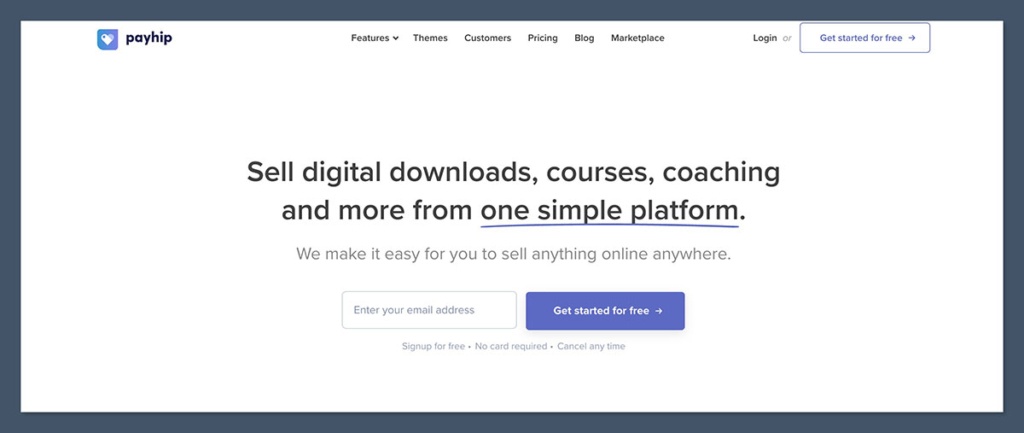
Payhip feels like the platform that Gumroad users actually wanted to begin with. It’s simple enough to make selling your first download easy, but it doesn’t stop you from scaling.
The first, most obvious thing that probably makes Payhip more appealing than Gumroad is the pricing structure. The free plan is free forever, and it only charges you 5% (half of Gumroad’s fee). The Plus plan ($29 per month) cuts that to 2%, and the Pro plan ($99 per month) reduces it to zero. Every plan includes all features, unlimited products, and unlimited revenue.
Another thing is the freedom you get with Payhip on what you can actually sell. Payhip handles digital downloads, courses, coaching, memberships, software, templates, videos, music, design assets, and physical products from one dashboard. So when your ebook turns into a course, then a membership, and then maybe a little merch collection, you don’t have to pay for a new app.
Payhip also has its own marketplace, which rivals the “Discover” feature from Gumroad, and it doesn’t charge you extra, like Gumroad does.
Plus, Payhip lets you create beautiful storefronts with a drag-and-drop builder, lets you sell digital products with checkout links, and even lets you customize checkout pages. Payhip can automatically handle taxes internationally, so you’re not missing out on the Merchant of Record benefits that you get from Gumroad.
Pricing: Free plan to start with 5% transaction rates.
Pros:
- Fully customizable storefront
- Support for all kinds of digital products and physical products
- Extremely user-friendly for beginners
- Much cheaper transaction rates than Gumroad
- Included marketplace for discoverability
- Automatic tax handling
Cons:
- Limited customization compared to something like Shopify
- Not much support for physical products
- No app marketplace
Why Choose Payhip Over Gumroad?
Compared with Gumroad, Payhip wins on fees, product flexibility, and staying power. Gumroad is still faster for a quick “sell this file tonight” test. Payhip is better once the business actually starts to earn something.
2. Shopify: Best for Scaling Ecommerce

Shopify is still the number one platform I recommend to anyone ready to go all-in on ecommerce. If you’ve moved beyond selling digital files, and you’re ready to experiment with print-on-demand, dropshipping, physical products, and more, Shopify has it all.
Shopify lets you create a website that’s truly your own. There’s no platform branding, no limitations on design, and nothing stopping you from exploring every monetization angle you like. You can even sell digital products, although you will need an app.
That’s both a pro and a con with Shopify. You’ll use apps for a lot of things, from print on demand, to marketing, but at least you have the freedom to grow, while maintaining ownership over the customer experience.
Another potential issue with Shopify is that it does demand more work to set up and manage than Gumroad. It’s not really intended as a quick “side gig” platform.
Pricing: The Basic plan starts at $39 per month (paid monthly).
Pros:
- Unlimited flexibility and customization
- Supports physical products, POD, and dropshipping
- Huge range of apps and add-ons
- Excellent storefront and checkout tools
- More suitable for scaling than many alternatives
Cons:
- Slightly more complicated for setup and management
- Platform and app costs can add up
- Needs an app for digital products
Why Choose Shopify Over Gumroad?
I’d choose Shopify over Gumroad if you’re building an ecommerce brand with physical products, POD, inventory, or multiple sales channels. Gumroad is faster for one digital product. Shopify is better when you’re getting real about building an ecommerce brand.
3. BigCommerce: The Best Gumroad Alternative for Larger Stores

BigCommerce exists in a similar bucket to Shopify. It’s not a focused creator platform, it’s for sellers who care a lot about catalog size, channels, staff, inventory, checkout options, and operational stuff.
The plans are generous enough, with unlimited products, file storage, bandwidth, and staff accounts, plus single-page checkout, coupons, discounts, gift cards, product ratings, real-time shipping quotes, multi-currency, and 24/7 support. That’s miles away from Gumroad’s simple checkout-link offer.
You also don’t have to pay transaction fees on anything you sell, which again, makes it more appealing for a lot of Gumroad sellers.
BigCommerce is the kind of thing you’d choose if you’re looking for something that’s feature-rich out of the box, ready to scale, and ideal for selling across channels. It’s not, however, the best option for smaller sellers just getting started, or experimenting with offers.
Pricing: Plans start at $39 per month (paid monthly).
Pros:
- No transaction fees on plans
- Excellent for scaling sellers
- Lots of features included (without the need for apps)
- Multi-channel integration supported
- Unlimited products, storage, bandwidth, and staff accounts
Cons:
- Way too much for most smaller sellers
- Sales thresholds on most plans
- Not really built around creator products
Why Choose BigCommerce Over Gumroad?
If you’re running a proper ecommerce store already, with a huge catalog, and plenty of customers, BigCommerce gives you more space for scale. It’s not the platform you’d choose if you’re just experimenting with a few digital downloads.
4. Squarespace: Best for Design-Focused Brands
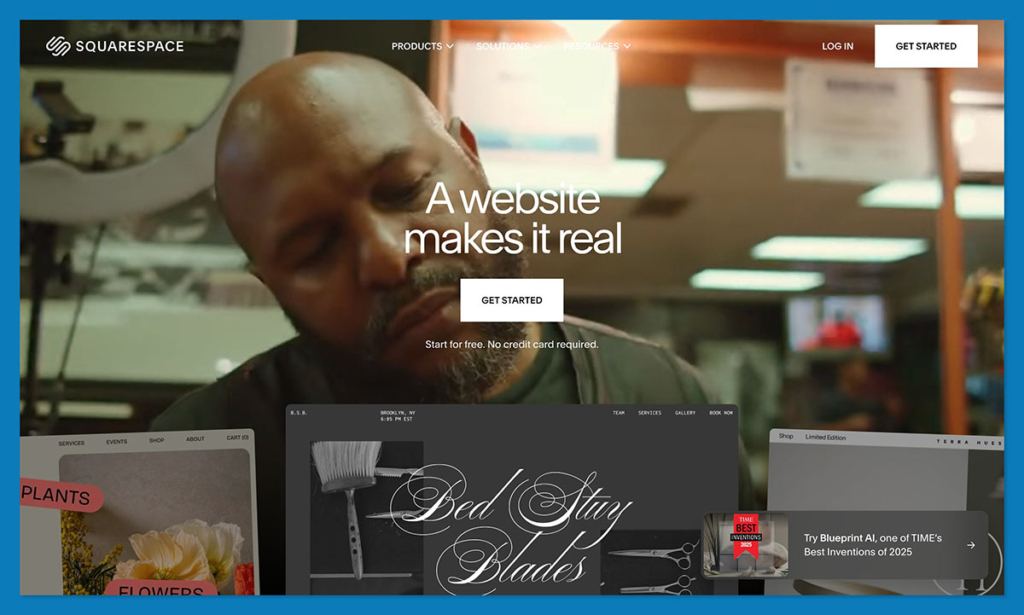
Everyone knows Squarespace as the ecommerce platform you go to when you want to create an eye-catching, unforgettable brand before you even try selling anything. It’s always been attractive to designers, photographers, authors, coaches, and consultants.
It’s not as feature-rich as Shopify or BigCommerce, but it’s much better at helping you make a real impact on your target audience. For instance, while Gumroad product pages work fine, Squarespace gives you full pages, with endless customization options. It also gives you portfolios, blogs, services, scheduling, memberships, video areas, and email campaigns.
It’s also far better than some alternative ecommerce solutions if you’re interested in SEO, or you want to take advantage of blogging to bring new customers your way.
Unfortunately, it does charge fees if you choose to sell digital products, and those fees vary depending on which plan you pick. They’re still lower than Gumroad’s fees, but it’s something worth paying attention to, if you’re trying to cut costs.
Pricing: Plans start at $23 per month (paid monthly)
Pros:
- Beautiful website designs and plenty of customization
- Excellent express checkout
- Great for portfolios, services, blogs, and visual selling
- Supports videos, memberships, courses, and physical products
- Excellent SEO and blogging features
Cons:
- Does charge digital product fees on some plans
- Not as easy to use as Wix or Payhip
- Not as many shipping integrations as Shopify
Why Choose Squarespace Over Gumroad?
I’d pick Squarespace over Gumroad if I wanted to build a brand that people will actually recognize before I start worrying about products. It gives you more space to make your mark online, whereas Gumroad gives you more of a quick digital checkout.
5. Wix: The Best Gumroad Alternative for Flexible Small-Business Websites

Wix is a platform I recommend a lot, particularly to beginners who want to get a great site up and running quickly, without a lot of background work. The paltform and the website builder are both incredibly easy to use, and you’re not locked into a single avenue for monetization.
You can sell physical products, digital products, bookings, services, and subscriptions in one place. Wix also beats Gumroad on site control. You can build comprehensive pages around your products, add apps, take books, and shape your brand properly.
There are no extra transaction fees on Wix plans, either, although there are some limitations for digital sales. For instance, depending on your plan, you might be limited to 50MB for images, or 100MB for audio. It’s worth checking on that before you build your catalog.
Wix also gives customers one month to download a product, and you can’t set your own download limits, which might be a problem for some creators.
Pricing: Starts at $29 per month if you need to sell products.
Pros:
- Flexible options for selling different kinds of products
- Easy and convenient website builder
- Lots of design control compared to Gumroad
- No transaction fees on any plans
- Lots of premium ecommerce features available
Cons:
- Digital file limits can be a bit restrictive
- Less control over download limits
- Not as good for multilingual stores as Shopify
Why Choose Wix Over Gumroad?
Pick Wix over Gumroad if you want a full website that can flex to suit you. It’s great for service business, small brands, bookings, and mixed product sales. Gumroad is still quicker and easier if you’re just selling a file or two.
6. Kajabi: Best for Serious Course Businesses

Kajabi is usually considered the obvious choice if you’re building a business around courses. Although you can sell educational stuff with Gumroad, Kajabi gives you a lot more functionality. You can build a website, stock it with courses, podcasts, and coaching programs, and even set up your own sales funnels.
The marketing and automation tools are excellent, and there are zero transaction fees, no matter which plan you choose, if you’re sticking with Kajabi Payments. Plus, there’s the fantastic AI creator hub, which helps you out when you’re struggling to create content or course outlines.
Gumroad can help you sell a course or product, Kajabi helps you run and scale the entire business around that product. The downside is how expensive the whole system can get. Plans start at around $89 per month, which just isn’t practical for smaller companies.
It also doesn’t give you a lot of room to move out of the “courses” category. You’ll need a different platform, or an integration with something like Shopify to sell physical goods, for instance.
Pricing: Plans start at $89 per month (monthly).
Pros:
- Comprehensive tools for selling courses and coaching
- Built-in website, email marketing, checkout, and sales tools
- Support for upsells, order bumps, and coupons
- Excellent AI capabilities
- No transaction fees if you use Kajabi Payments
Cons:
- Too expensive for beginners
- Limited if you want to sell something other than courses
- Limits on products and contacts
Why Choose Kajabi Over Gumroad?
I’d really only choose Kajabi over Gumroad if courses, coaching, community, and email are the business. Gumroad is better for quick validation. Kajabi is better when you’re selling a serious education product and need the business to run smoothly around it.
7. Lemon Squeezy: Best for Software Sellers

If you’re building and selling software, Lemon Squeezy makes a lot of sense. It’s built entirely for SaaS startups, coders, and indie developers, all the kind of people that don’t usually get much out of a platform like Gumroad.
Again, there are transaction fees to pay with Lemon Squeezy, but they start at 5%, rather than 10%, and there’s no monthly charge for the ecommerce features. You also get the same Merchant of Record advantage that Gumroad gives through Lemon Squeezy, so you’re not handling taxes yourself.
Probably the main thing that sets Lemon Squeezy apart from Gumroad, though, is the licence-key control. You can generate keys after purchase, set activation limits, and tie licences to subscriptions. Those are the sort of features software sellers genuinely need.
The problem is you can’t just sign up and start selling immediately. The Lemon Squeezy team needs to approve your application. Plus, payouts have a $50 minimum threshold.
Pricing: Free with 5% transaction fees on sales.
Pros:
- Strong fit for SaaS, software, and license keys
- Merchant of Record tax handling
- Subscription billing and failed payment recovery
- Fraud protection included
- No monthly fee for ecommerce features
Cons:
- Store approval adds friction
- $50 minimum payout threshold
- Less friendly for non-technical creators
Why Choose Lemon Squeezy Over Gumroad?
Lemon Squeezy is the pick if you’re selling software, digital tools, or apps. It’s not the kind of thing you’d probably use to sell casual downloads. Gumroad is still the easier option there.
8. Patreon: Best for Membership Communities

Patreon is great when people are paying you because they care about your work, your access, your updates, or your community. It’s awkward when you treat it like a regular product store.
Notably, the pricing did change recently. Creators who published after August 4, 2025, are now on Patreon’s standard 10% pricing plan, plus payment processing, applicable taxes, currency conversion, and payout fees.
What you get from Patreon is a full membership machine, where you can experiment with monthly and annual subscriptions, tiers, creator pages, posts, native video, livestreaming, newsletters, chats, DMs, comments, and exportable email lists. That’s all ideal if you’re selling to fans who want regular access to something. It’s probably not ideal if you’re selling occasional templates.
One-time purchases exist, but I still wouldn’t call Patreon a clean Gumroad replacement. The product side feels attached to the membership model, not built as the main event.
Pricing: Free, with a 10% transaction fee.
Pros:
- Strong recurring membership tools
- Good for fan relationships and communities
- Supports posts, video, livestreaming, chats, DMs, and newsletters
- Useful for creators with loyal audiences
- Email export is handy for avoiding lock-in
Cons:
- New creators pay a 10% platform fee
- Not ideal for a digital product catalog
- One-time purchases feel secondary
Why Choose Patreon Over Gumroad?
If you already have an audience, and recurring access to something exclusive is the product you’re selling, Patreon is much better than Gumroad. Alternative, Gumroad is easier if you’re selling one-off digital products.
9. Buy Me a Coffee: Best for Tips and Donations

Buy Me a Coffee is a great little tool if you want to encourage people in your community to support your work, pay for the next episode, or grab something small. You can offer one-off support, exclusive posts, memberships, and small extras. You can’t really sell anything huge, like courses, or physical products. This isn’t really an ecommerce platform.
Buy Me a Coffee is one of the simplest platforms I’ve seen, and one of the most popular for the kind of creator that likes to sell one-off commissions through something like Reddit. It’s not going to help you build much of a brand presence, but it’ll help you get paid fast.
That said, the Stripe minimum payout threshold does depend on your country and currency, so you might end up waiting around to claim your earnings from time to time.
I wouldn’t use Buy me a Coffee for courses, bundles, software, or a growing product catalog. I’d recommend using it more like a digital tip jar.
Pricing: Free with a 5% transaction fee.
Pros:
- No monthly fee, and lower transaction fees
- Easy option for tips and donations
- Free publishing and email features
- Simple options for selling digital products or services
- Goal tracking features included
Cons:
- Not many advanced ecommerce or creator tools
- Some delays on payouts
- Limited profile customization
Why Choose Buy Me a Coffee Over Gumroad?
Choose Buy Me a Coffee over Gumroad if you want tips, donations, and casual supporter payments. Gumroad is better for structured digital products.
Which Gumroad Alternative Should You Choose?
Really, I’d just say pick based on what you sell.
If you’re running a big ecommerce store and want to sell physical products, options like Shopify, BigCommerce, Wix, and Squarespace make the most sense.
If you’re selling courses, Kajabi is the obvious choice. For donations and tips, you’d pick Buy Me a Coffee. Lemon Squeezy is the easy choice for software, and Patreon is ideal if you’re trying to monetize a community.
Overall, though, Payhip is the safest bet for most Gumroad users. It gives you all the benefits of Gumroad, plus a real storefront, built-in security features, handy tax support, and much lower transaction fees. You don’t even have to pay extra if you collect customers from Payhip’s marketplace.
Payhip gives you more selling, and scaling room than Gumroad, without trapping you into something like Shopify-level setup issues, or Kajabi-level pricing.


