
 By Bogdan Rancea
Best Overall

Shopify
See pricing Visit Shopify →$29-$359 per month, billed yearly
$1 per month for the first 3 months
- 1,379 themes, 24 of them free
- Lower fees on every sale
- Your own domain and customer list
Best for first buyers

Etsy
See pricing Visit Etsy →No monthly fee, $0.20 per listing
6.5% transaction fee per sale
- Around 88 million active buyers
- No monthly subscription
- Quick to open a shop
For makers comparing ecommerce platforms, Shopify vs Etsy means building your own storefront or joining a marketplace. Shopify is the better choice for your own brand, store design and customer relationships. Etsy offers a quicker route to finding first buyers.
I compare design, fees, customers, AI rights, selling features and ease of use. Etsy’s terms effective December 16, 2026 explicitly permit AI training, but Shopify’s content licence deserves scrutiny too.
Key Takeaways
- Shopify gives you more design control: 1,379 themes, including 24 free, versus Etsy’s banner, icon and four-slot featured row.
- Etsy is cheaper initially; Shopify wins from order 11: under our $40-order assumptions, Etsy charges $4.25 versus Shopify Basic’s $1.46, plus $29/month billed yearly.
- Etsy brings the buyers: approximately 88 million active buyers in the year to September 30, 2026. Shopify traffic is your responsibility.
- Neither content licence is hands-off: Etsy names AI training without a general US opt-out. Shopify’s licence section doesn’t mention AI, but eligible AI channels default to on.
- Etsy is easier to start; Shopify offers more room to grow.
- You can use both, but Marketplace Connect isn’t accepting new Etsy connections.
A Quick Comparison of Shopify vs Etsy
Shopify gives you an independent storefront; Etsy gives you marketplace access.
| Shopify | Etsy | |
|---|---|---|
| Overall rating | 4.8/5 | 4.0/5 |
| What it is | Your own store and domain | Shop inside Etsy |
| Starting price | $29/month billed yearly ($39 monthly) • $1/month for 3 months after 3 days free | No monthly fee • $0.20/listing • possible set-up fee |
| Fees per sale | Basic: 2.9% + 30¢ • 2% extra for third-party providers | 6.5% transaction • US processing: 3% + $0.25 • Offsite Ads: 15% or 12% |
| Design control | 1,379 themes, 24 free • theme and code editing | Banner, icon, four-slot featured row • Etsy Plus: $10/month |
| Built-in audience | You bring traffic | Approximately 88 million active buyers, year to September 30, 2026 |
| What you can sell | Broad categories, including resale and dropshipping, subject to platform rules | Made, designed, handpicked or sourced items • general resale prohibited |
| AI and content | Broad licence without AI wording in section 8 • eligible AI channels default on, with switches | December 16 terms permit partner AI training • no general US opt-out |
| Pros | Brand control • lower per-sale fees • customer list and email marketing • multichannel selling | Existing audience • no monthly fee • quick opening • US sales-tax handling |
| Cons | No built-in buyers • subscription and extras • surviving content rights | Restricted design • layered fees • mandatory Offsite Ads at $10,000 • AI-training permission |
What Kinds of Business Is Shopify or Etsy Best For?
Choose around your business model, not just the starting price.
Shopify Is Best for…
- Brand-led makers and designers wanting their own domain, customer list and multichannel business. Our Shopify review explores the platform further.
- Sellers outside Etsy’s permitted categories, including general resale and dropshipping businesses.
Etsy Is Best for…
- New makers, vintage sellers and craft-supply shops seeking customers before building an audience.
- Print-on-demand and digital-product sellers testing original designs before investing in a standalone store.
1. Best for Storefront Design and Branding: Shopify
The Winner
Shopify lets you design a whole store; Etsy lets you decorate a shop page
Shopify’s themes, editor and AI tools give you storefront control. Etsy sellers share the marketplace’s page structure, fonts and checkout.
If your look is part of what you sell, Shopify wins by a distance. Etsy keeps its identity around your products; Shopify lets yours lead.
Shopify: Themes, Horizon and AI Design Tools
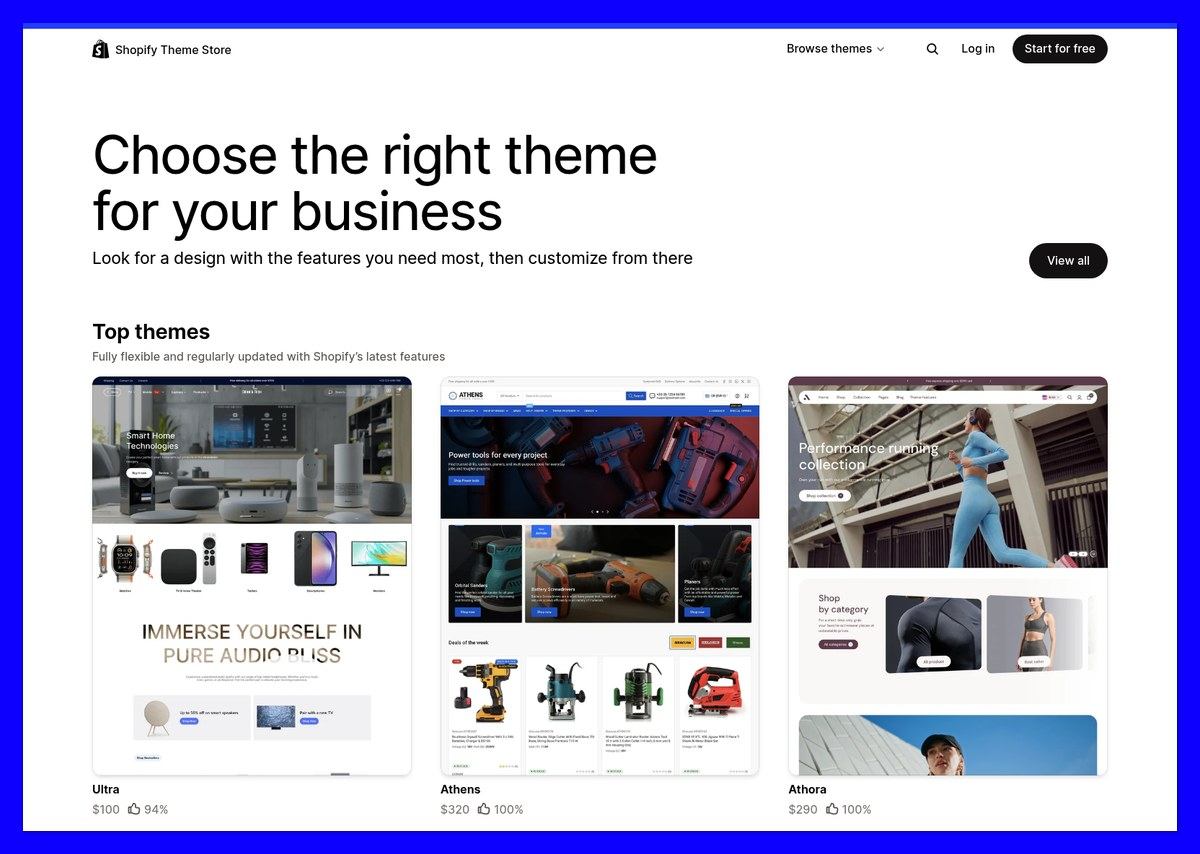
The Theme Store lists 1,379 themes, including 24 free, in the November 23 snapshot. Those include 10 free Horizon themes, so a distinctive starting point doesn’t require another purchase.
Paid themes on the first results page ranged from $150 for Xtra to $500 for Impulse, paid once. Compare the best Shopify themes by product-page layouts, not just homepage previews.
Shopify gives you control over:
- Page layouts: arrange sections and blocks throughout your storefront.
- Visual identity: change colors, fonts and imagery.
- Theme code: edit Liquid and CSS yourself or through a developer.
- Your domain: put your brand in the web address.
- AI-assisted design: Sidekick and conversational store-building tools are included on every plan.
Checkout customization remains limited below Plus. Theme control doesn’t mean you can freely rebuild checkout. ChatGPT shoppers use your store’s checkout; other AI channels have separate checkout arrangements.
Etsy: What You Can Actually Change
A standard Etsy shop gives you:
- Shop icon: displayed as a circle.
- Banner: imagery across the top.
- Featured row: four listings or sections.
- Shop sections: groups organizing your listings.
Fonts, page layouts, listing pages, checkout and your etsy.com/shop/ address remain Etsy’s. Better photography distinguishes your products, not your page structure.
Etsy Plus costs $10/month and adds:
- Carousel banner: up to four images, each at least 1200 x 300 px.
- Collage banner: two, three or four images, with respective minimums of 600 x 300, 400 x 300 and 300 x 300 px.
- Mixed featured grid: one large listing and four smaller listings.
- Shop color theme: another branding option.
- Monthly credits: 15 listings and $5 in Etsy Ads, without rollover.
What You Can Customize
| Shopify | Etsy | Etsy Plus ($10/month) | |
|---|---|---|---|
| Starting point | 1,379 themes, 24 free | Standard shop layout | Same layout, extra options |
| Banner and header | Theme-dependent | One banner | Carousel or collage |
| Featured products | Flexible theme sections | 4 listings or sections | 1 large + 4 small |
| Colors | Full theme control | Etsy’s | Shop color theme |
| Fonts and page layouts | Editable | Etsy’s | Etsy’s |
| Checkout | Branding; limited below Plus | Etsy’s | Etsy’s |
| Web address | Your domain | etsy.com/shop/yourshop | etsy.com/shop/yourshop |
| Theme code access | Yes | No | No |
What About Etsy Pattern?
Pattern is Etsy’s website builder: 30 days free, then $15/month, $14 less than Basic billed yearly. Existing Etsy listings incur no additional listing fee; Pattern-only listings have none and don’t expire. Pattern orders don’t count toward the $10,000 Offsite Ads threshold. Domains cost extra, and Etsy’s account and terms still apply.
Our take
For illustrators, ceramicists and jewelers, Etsy’s design ceiling arrives immediately. Plus decorates the same page. If presentation drives your pricing, consider selling your art on Shopify.
Top Tip
Start with a free Horizon theme. Ask Sidekick for rounded buttons or colors matching your logo before buying a paid design.
Best for: brand-led makers wanting distinctive product pages. Skip Shopify for now if: you only need to list a handful of items.
2. Best for Pricing and Fees: Shopify (Past 10 Orders a Month)
The Winner
Etsy is cheaper to start; Shopify becomes cheaper from your 11th monthly order
For our $40 order, Etsy charges $4.25 versus Shopify Basic’s $1.46 processing fee. Including the subscription, Shopify crosses over at 11 orders billed yearly, or 14 billed monthly.
Higher sales volume makes Etsy’s percentage more expensive, assuming the same orders reach either store.
How Much Do Shopify and Etsy Cost?
Shopify’s standard plans cost $29 to $359/month billed yearly, or $39 to $399 monthly. Etsy has no required monthly subscription.
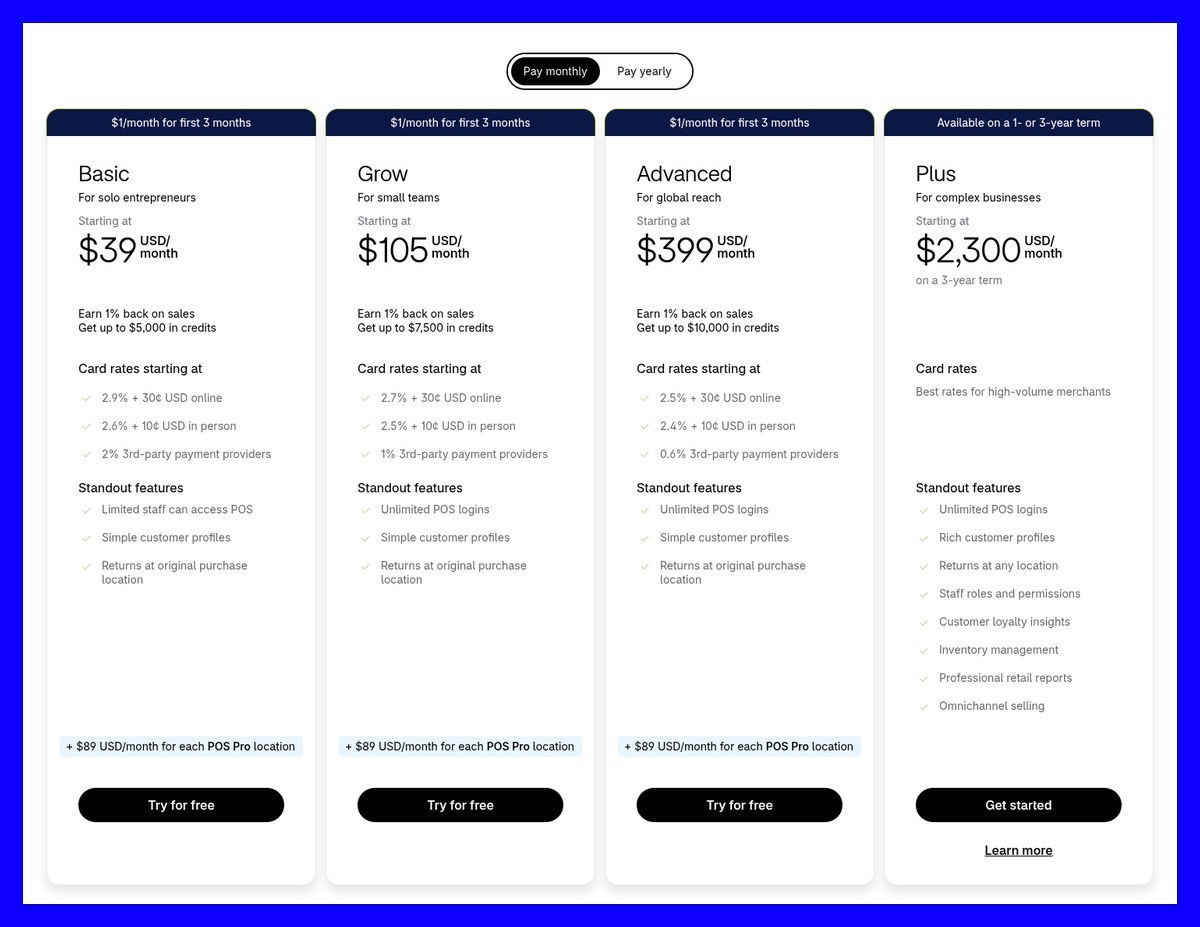
- Basic: $29/month yearly or $39 monthly; 2.9% + 30¢ card processing.
- Grow: $89 yearly or $105 monthly; 2.7% + 30¢.
- Advanced: $359 yearly or $399 monthly; 2.5% + 30¢.
- Plus: from $2,300/month; 2.25% + 30¢.
Additional Shopify payment costs include:
- Premium cards: 3.5% + 30¢ on Basic.
- International cards: an additional 1%.
- PayPal wallet: from 3.49% + 49¢.
- Third-party providers: extra transaction fees of 2% on Basic, 1% Grow, 0.6% Advanced and 0.2% Plus when not using Shopify Payments.
Shopify Basic vs Etsy, Fee by Fee
| Fee | Shopify Basic | Etsy (US seller) |
|---|---|---|
| Monthly fee | $29 yearly, $39 monthly | None; optional Plus $10, Pattern $15 |
| Listing fee | None | $0.20; renews after four months and after multi-quantity sales |
| Sales commission | None with Shopify Payments | 6.5% of item, shipping and gift wrap |
| Payment processing | 2.9% + 30¢ | 3% + $0.25, including tax and shipping |
| Another payment provider | +2% | Etsy checkout required |
| Advertising | Chosen spending | Etsy Ads budget • Offsite Ads 15% below $10,000, opt-out allowed; 12% and mandatory at $10,000 or more in 365 days • $100/order cap |
| Currency-related costs | +1% for international cards | 2.5% conversion when listing and payment-account currencies differ |
| One-time set-up | None | Possible fee shown during onboarding |
| Sales tax | Automatic calculation; 0.35% tax calculation fee after the introductory discount | Calculates, collects and remits US sales tax |
Etsy doesn’t publish a fixed set-up fee; sellers report $15 to $29, depending on location. Certain countries also carry a Regulatory Operating fee.
Mandatory Offsite Ads participation continues for your shop’s lifetime after qualification, even if sales later fall below $10,000.
When Does Shopify Become Cheaper Than Etsy?
I calculated this using a $40 order: $34 item plus $6 shipping, US seller and buyer, one item, Shopify Payments on Basic, no advertising or sales tax.
Etsy charges $0.20 listing + $2.60 transaction + $1.45 processing = $4.25, or 10.6% rounded. Shopify charges $1.16 + $0.30 = $1.46, saving $2.79 per order before subscriptions.
| Orders a month | Monthly sales | Etsy fees | Shopify Basic, billed yearly | Shopify Basic, billed monthly |
|---|---|---|---|---|
| 5 | $200 | $21.25 | $36.30 | $46.30 |
| 10 | $400 | $42.50 | $43.60 | $53.60 |
| 25 | $1,000 | $106.25 | $65.50 | $75.50 |
| 50 | $2,000 | $212.50 | $102.00 | $112.00 |
| 100 | $4,000 | $425.00 | $175.00 | $185.00 |
| 250 | $10,000 | $1,062.50 | $394.00 | $404.00 |
- Yearly billing crosses over at 11 orders, or $440 in sales; monthly billing at 14 orders, or $560.
- During the $1/month promotion, Shopify is cheaper from the first order under these assumptions.
- Offsite Ads add $6.00 at 15% or $4.80 at 12% to an attributed $40 Etsy order.
- Selling 25 items monthly at $34 each passes Etsy’s $10,000 threshold within a year, triggering mandatory participation at 12%.
The Shopify columns exclude a domain, paid themes, apps and customer acquisition. Etsy’s exclude set-up costs and Etsy Ads. Yearly billing means an annual commitment, not monthly payments of $29.
Do Shopify and Etsy Offer Free Trials?
- Shopify offers three days free without a credit card, then Shopify’s $1/month offer for three months on most plans. See the Shopify free trial rules.
- Etsy has no subscription trial to need, but set-up and listing fees can apply immediately. Pattern offers 30 days free, then $15/month.
Our take
Etsy’s fee also buys marketplace access. Below 10 monthly orders without an audience, it’s the cheaper experiment. Shopify’s lower per-sale costs help only if you attract customers.
3. Best for Finding Customers: Etsy
The Winner
Etsy gives you access to approximately 88 million active buyers
Search, recommendations and advertising connect listings with shoppers. Shopify offers independent marketing control, but no ready-made audience or guaranteed traffic.
Etsy wins for sellers starting without an audience, although marketplace access doesn’t guarantee orders.
Etsy’s Built-In Audience
Etsy reported approximately 88 million active buyers in the year to September 30, 2026, up 1.0%. Third-quarter merchandise sales reached $2.6 billion, up 8.8%.
Its discovery routes include:
- Search and recommendations: shoppers browse within Etsy.
- Etsy Ads: promoted listings using your daily budget.
- Offsite Ads: external advertising; qualifying orders within 30 days of a click attract the fees in round 2.
- Generative AI shopping: described in Etsy’s shareholder letter as an increasingly important discovery channel.
The trade-off is direct competition on the same search pages. Engadget also reports criticism of mass-produced and dropshipped listings appearing on Etsy.
Shopify’s Marketing Tools
Shopify supplies marketing tools, not buyers. Its plans include:
- Email campaigns and automations for ongoing communication.
- Customer segments and unlimited contacts for targeted marketing.
- Abandoned checkout recovery for unfinished purchases.
- Discount codes and gift cards for promotions.
- Shop Campaigns for customer acquisition.
- Social and marketplace channels for wider distribution.
- SEO controls: editable titles, meta descriptions and robots.txt, plus an automatic sitemap.
Agentic Storefronts make eligible products available through ChatGPT, Google AI Mode and Gemini, Microsoft Copilot, and Meta. ChatGPT adds no channel fee beyond standard processing and sends shoppers to your checkout; check other channels’ fees in your admin. Round 4 covers permissions behind these AI shopping channels.
Etsy success doesn’t guarantee Shopify traffic. In a January 2024 Shopify Community thread, sellers reporting more than 40,000 Etsy sales described limited Shopify visibility and unprofitable advertising. That account illustrates the acquisition work a marketplace can hide; it doesn’t predict your results.
Can You Sell on Both Shopify and Etsy?
Yes. Use Etsy for discovery and Shopify for your brand, repeat purchases and a permission-based email list. Follow Etsy’s contact rules; marketplace buyers aren’t automatic marketing subscribers.
Before You Connect Them
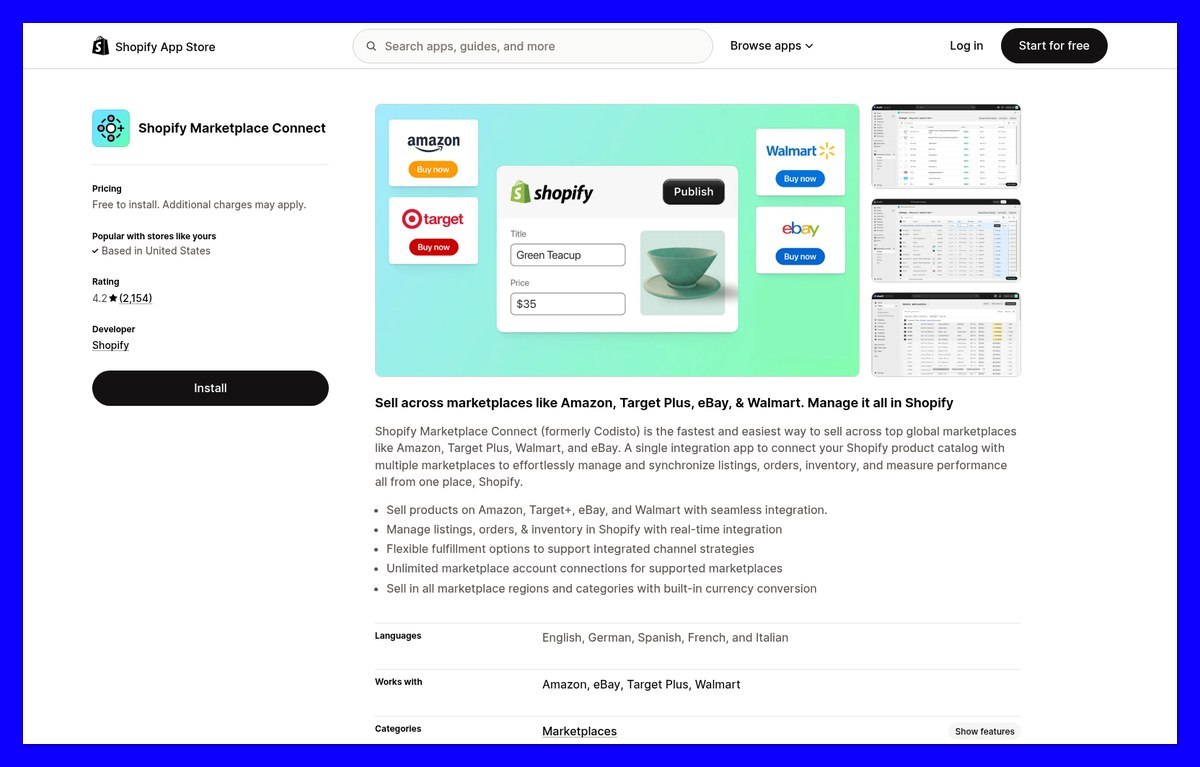
Marketplace Connect cannot create new Etsy connections. Existing connections continue. New connections support Amazon, eBay, Target Plus (US) and Walmart (US).
Its first 50 synced orders monthly are free, then pricing is 1% per order, capped at $99/month. New Etsy integrations require a separate sync app; compare its price and reviews.
Etsy wins on access to shoppers. Shopify wins on building your own customer relationships, provided you earn that traffic.
4. Best for Control Over Your Work and AI: Shopify, Narrowly
The Winner
Etsy explicitly permits AI training; Shopify provides AI-channel switches
Neither licence is narrow. Shopify’s switch controls catalog distribution, not a blanket AI-training opt-out. Its licence section doesn’t mention AI, but its content rights can outlast your store.
I compared both content licences: ownership isn’t the same as control over use. You retain your photos and copy while granting substantial permissions.
What Etsy’s New Terms Say
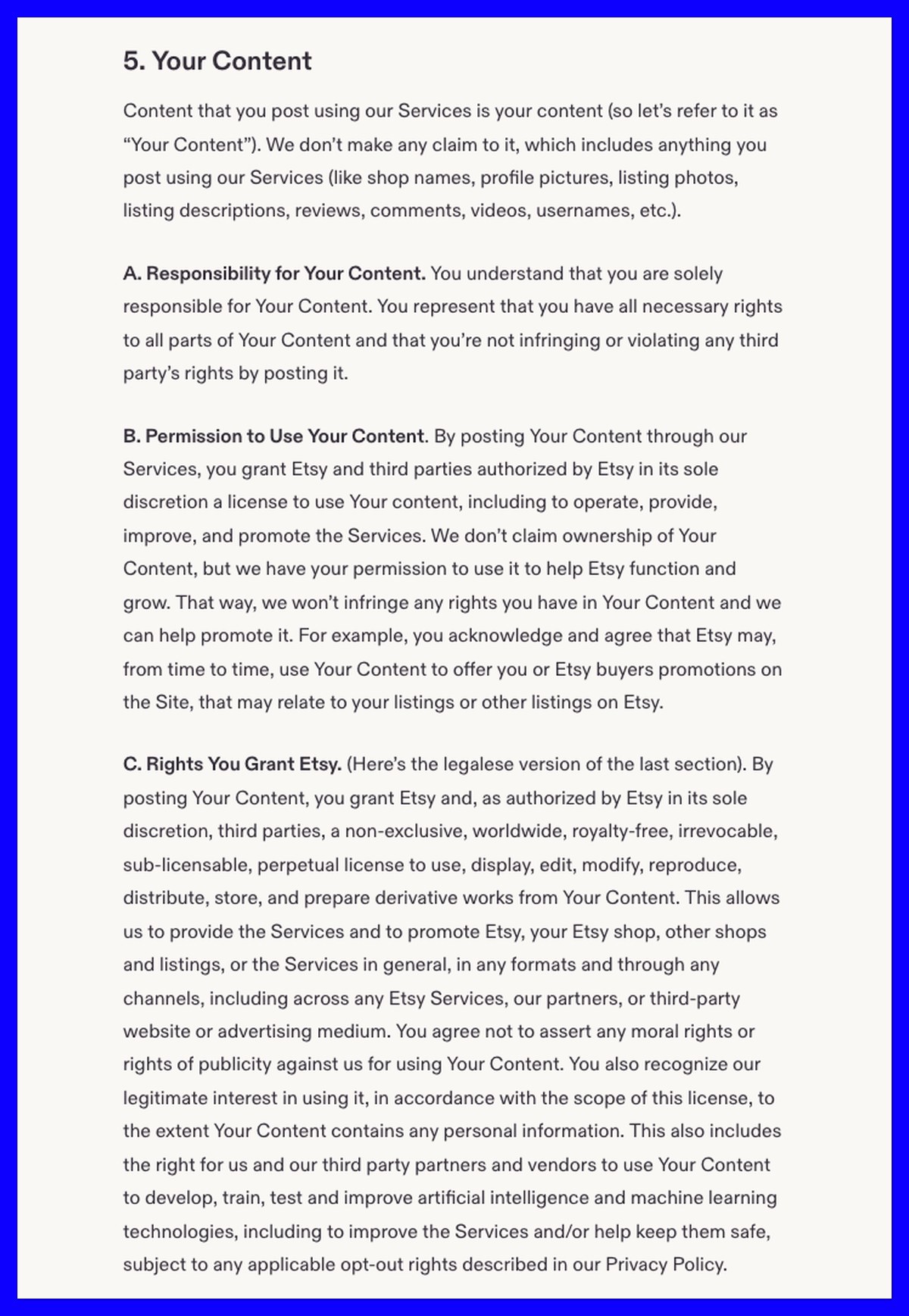
The terms were last updated October 26, 2026 and take effect December 16, 2026. Section 5(C), “Rights You Grant Etsy,” contains the change; the previous version applies through December 15.
Etsy’s licence is non-exclusive, worldwide and royalty-free, but also irrevocable, sub-licensable and perpetual. It covers modifications and derivative works; sellers agree not to assert moral rights against Etsy.
The AI permission reads:
“This also includes the right for us and our third party partners and vendors to use Your Content to develop, train, test and improve artificial intelligence and machine learning technologies, including to improve the Services and/or help keep them safe, subject to any applicable opt-out rights described in our Privacy Policy.”
No general opt-out for US sellers has been published. EU and UK personal-data objection rights may not cover creative work. Closing your shop may not withdraw previously granted permissions under a perpetual, irrevocable licence.
On November 16, Etsy’s VP of Customer Operations, James Ossman, stated:
“We do not use your content to train AI models designed to copy your original work or replace your creativity.”
He cited fraud detection, recommendations and seller tools. Etsy also prohibits unauthorized AI scraping in section 6. That reassurance didn’t amend the clause.
TNW and Engadget, reporting the New York Times, described sellers closing shops; Creative Bloq reported others reluctant to sacrifice reviews and holiday sales. Etsy promised revisions, but its November 23 terms retained the October 26 wording. Separate listing-image rules appear in round 5.
What Shopify’s Terms Say
Shopify’s October 20, 2026 terms, section 8.1, preserve ownership but grant a “non-exclusive, transferable, sub-licensable, royalty-free, worldwide” licence, including permission to “create derivative works of your Materials”.
Its purposes include “operate, provide, evaluate, enhance, improve, and promote the Services”. Shopify can also feature materials through its own or partners’ channels.
Section 8 doesn’t mention AI or artificial intelligence. That silence isn’t a prohibition. Sellers “irrevocably waive any and all moral rights”; removing a store doesn’t terminate rights needed for obligations arising during the relationship.
Shopify’s help describes ChatGPT as “active by default for eligible stores”. The October 6 Agentic Storefronts terms extend permissions to participating channels in section 5, including sublicensing to channel partners. Section 9 says the licence and sublicences survive termination.
Those terms don’t resolve whether channel operators may train on received product data. Read each channel’s terms separately.
Shopify vs Etsy Content Terms at a Glance
| Shopify | Etsy | |
|---|---|---|
| Content ownership | Yours | Yours |
| Licence | Non-exclusive, transferable, sub-licensable, royalty-free, worldwide; derivative works | Non-exclusive, worldwide, royalty-free, irrevocable, sub-licensable, perpetual; derivative works |
| AI training named | Not in section 8 | Yes, including partners and vendors |
| Moral rights | Irrevocably waived in Shopify’s favor | Agreement not to assert against Etsy |
| AI-company access | Participating channel partners | Authorized partners and vendors |
| Default | Eligible AI channels active | New terms apply December 16 |
| Opt-out | Channel switches for future feeds | No general US opt-out |
| After departure | Agentic licence and sublicences survive | Perpetual, irrevocable licence |
| Dates | ToS October 20; agentic terms October 6, 2026 | Last updated October 26; effective December 16, 2026 |
How to Turn Off Shopify’s AI Shopping Channels
- Open Sales channels > Agentic.
- Turn off Allow Shopify to manage for me.
- Click ChatGPT.
- Turn off Shopify Catalog access.
- Click Save. Follow each other channel’s documented controls separately.
For individual products, use Shopify’s “Hiding products from being discoverable by AI channels” guidance.
This stops future catalog feeds, not previously granted licences. Shopify warns that AI tools may still discover products through web crawling.
What Etsy Sellers Can Do Before December 16
- Read section 5(C) and the Privacy Policy for rights applicable where you live.
- Revisit the terms before December 16, since revisions were promised.
- Review future uploads, because the licence covers posted content.
Compare Fourthwall vs Etsy, Shopify vs Big Cartel and other websites for selling art on their terms, not just features.
Our take
Shopify wins narrowly on wording and distribution controls. Neither platform provides an unqualified written promise of no AI training on your work.
5. Best for Selling Features: Shopify
The Winner
Shopify supports more product types and sales channels
There’s no handmade requirement, and you can manage in-person, social, marketplace and AI-channel selling. Etsy offers marketplace checkout with tighter eligibility rules.
Check whether Etsy allows your product before comparing payment buttons.
What You’re Allowed to Sell
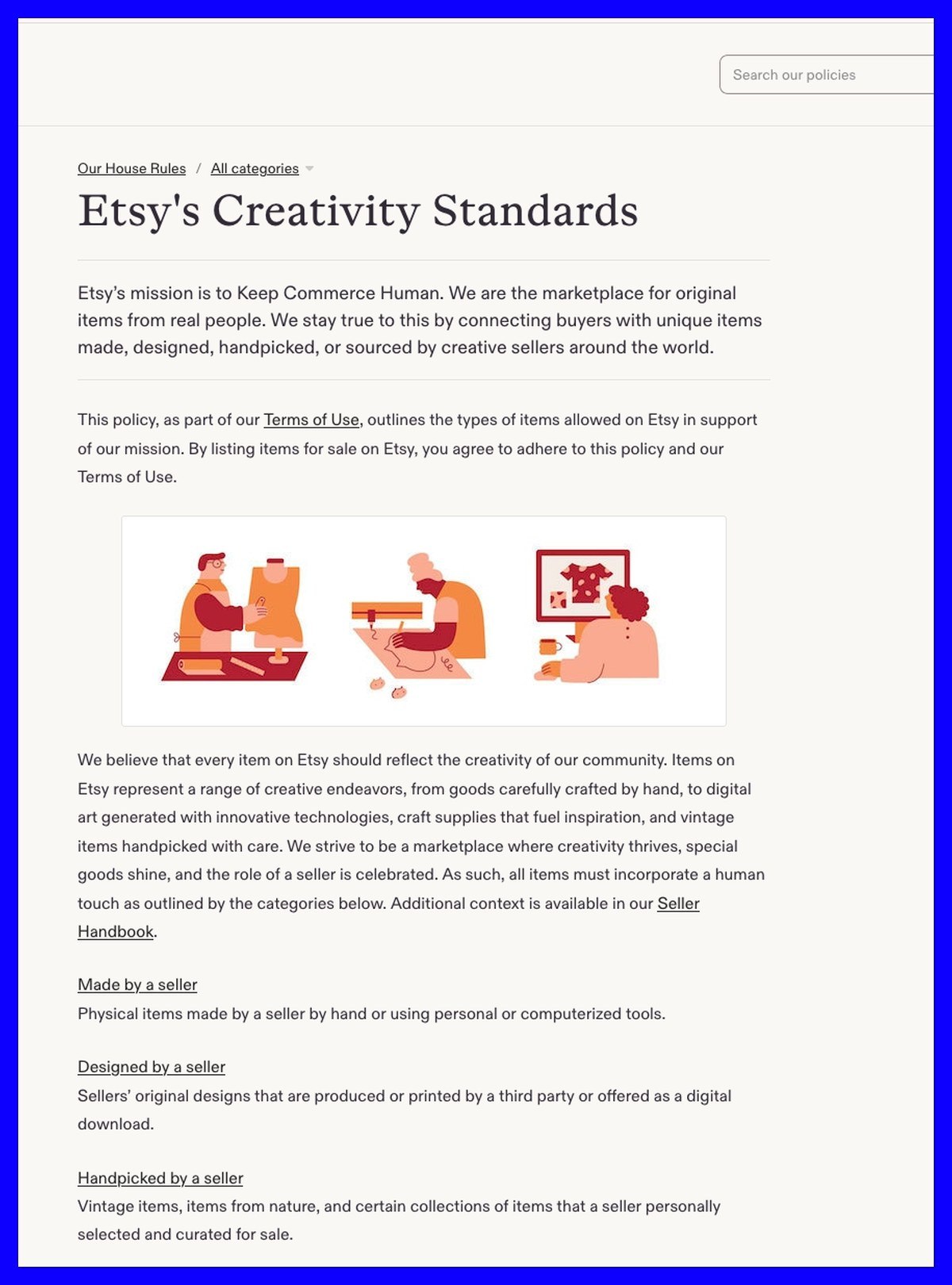
Etsy’s Creativity Standards define four categories:
- Made by a seller: handmade items or products created using personal or computerized tools.
- Designed by a seller: original digital downloads or designs made by a disclosed production partner.
- Handpicked by a seller: qualifying vintage items, natural items and curated collections.
- Sourced by a seller: craft and party supplies, or items personalized with a buyer’s text or image.
General resale of commercially available products is prohibited, outside permitted categories. Seller-prompted AI creations require disclosure.
October 2026 listing rules, revised in November, add restrictions:
- AI-generated patterns, recipes and instructions are banned, alongside bot-generated listings.
- Most listings need an unedited real-item photo. Non-AI cropping, resizing and watermarks are allowed; that photo needn’t appear first.
- POD sellers can use authorized stock mockups, and personalized products can lead with placeholder-text mockups.
Etsy plans proactive enforcement in early 2027.
Shopify has no handmade test, although its platform rules still apply. That accommodates resale and wholesale alongside original work sold through print-on-demand apps or as digital products.
Payments, Checkout and Channels
Shopify offers broader operational control:
- Payments: Shopify Payments, PayPal and third-party providers, with applicable extra fees.
- In person: Basic card-reader rates from 2.6% + 10¢; POS Pro costs $89/month per location.
- Channels: social, marketplaces and AI shopping.
- Inventory: unlimited products and 10 inventory locations.
- B2B: up to three catalogs on Basic, Grow and Advanced.
- Shipping and tax: shipping labels and automatic tax calculations.
Etsy simplifies marketplace transactions:
- Checkout: Etsy Payments within Etsy’s checkout.
- Shipping labels: available when accepting Etsy Payments or PayPal.
- US sales tax: Etsy calculates, collects and remits it on US orders.
- Payouts: eligible US sellers can request instant bank transfers, with fees displayed.
- Listings: expire after four months unless renewed for $0.20.
Best for Shopify: sellers combining online sales with markets, or carrying products Etsy won’t accept. Skip it if: you prioritize handmade selling with marketplace checkout and US sales-tax handling.
6. Easiest to Use: Etsy
The Winner
Etsy gets you started with fewer decisions
You don’t need to choose a theme, domain, hosting or apps. Shopify’s AI builder helps with design, but payments, shipping and tax still need configuration.
If you’d rather make inventory than configure a website, Etsy is the easier start.
Opening an Etsy Shop
Open your shop, add listings and connect Etsy Payments. Listings cost $0.20 each; any one-time setup fee appears during onboarding before being charged when onboarding finishes.
Listing renewals recur every four months. Auto-renewal avoids manual relisting, but still charges $0.20. Your descriptions and photos must also meet the product rules in round 5.
Building a Shopify Store
Shopify provides three days free without a credit card. Start with a theme or conversational AI store design, with Sidekick included on every plan.
Configure these before launch:
- Payments and shipping rates
- Tax settings
- Domain and storefront design
- Any additional apps
I favor Shopify when those decisions provide useful control rather than unwanted work. Compare beginner-friendly platforms or follow our guide to starting an online store before committing.
Getting Help
- Shopify: 24/7 live chat on Basic and Grow, enhanced live chat on Advanced, and priority support on Plus.
- Etsy: the Help Center directs sellers toward relevant guidance and available contact options for their issue.
Shopify has the clearer support offer, but Etsy wins this round by requiring fewer setup decisions.
Choose Etsy to test a product idea. Choose Shopify when you’re ready to manage a branded storefront.
How We Test Ecommerce Platforms
Design and brand control carry the greatest weight because this comparison prioritizes makers and design-led brands.
- Design and Brand Control: 25%
- We compare themes, design tools and control of the shopping experience.
- Pricing and Fees: 20%
- We calculate subscription and per-sale costs at several sales volumes.
- Sales Features: 15%
- We assess eligibility, payments, checkout, shipping, tax and channels.
- Marketing and Reach: 15%
- We weigh audiences against marketing, SEO and AI-shopping tools.
- Ease of Use and Support: 10%
- We compare setup requirements and support options.
- Content Rights and AI Terms: 10%
- We examine licences, AI permissions and opt-out controls.
- Reputation: 5%
- We consider seller accounts and public reporting.
I calculated fees for one $34 item plus $6 shipping, excluding advertising and sales tax. The comparison separates platform features from seller-reported experiences; neither guarantees sales.
The weighted overall scores are Shopify: 4.8/5 and Etsy: 4.0/5. They reflect these priorities, not a forecast of your results.
Shopify vs Etsy: Our Winner
For makers, artists and designers building a recognizable brand, Shopify is the better platform. It wins four rounds: design, fees beyond the stated crossover, selling features and, narrowly, content controls. Its 1,379 themes support your identity, while our $40 order costs $1.46 versus Etsy’s $4.25 before subscriptions and extras.
Etsy is better for testing products and finding first buyers. Approximately 88 million active buyers and no required subscription explain its wins for discovery and ease of use. Keep it alongside Shopify if useful, but Marketplace Connect isn’t accepting new Etsy connections.
If the December 16 terms motivate a move, read the alternative’s terms too. Shopify offers different wording and AI-channel controls, not an unconditional promise against AI training. Our guide to migrating from Etsy to Shopify covers transferring listings and protecting search traffic.
Shopify is my overall recommendation: start its three-day free trial, then $1/month for three months, and build one product page before deciding. Judge whether the design control justifies the setup and customer-acquisition work.


