MATTER OF FACT is a DTC skincare start-up in the clinical/prestige beauty space.
Matter of Fact


eCommerce Websites
MATTER OF FACT is a DTC skincare start-up in the clinical/prestige beauty space.
Mellow is a line of premium chocolate infused with soothing adaptogens shown to help promote relaxation and stress relief.
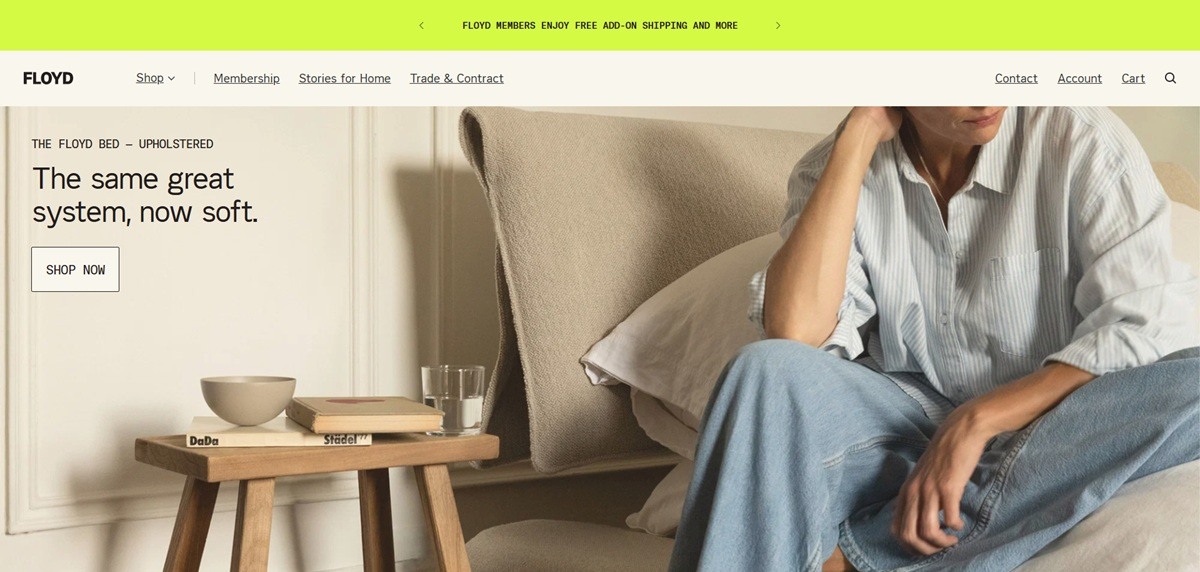
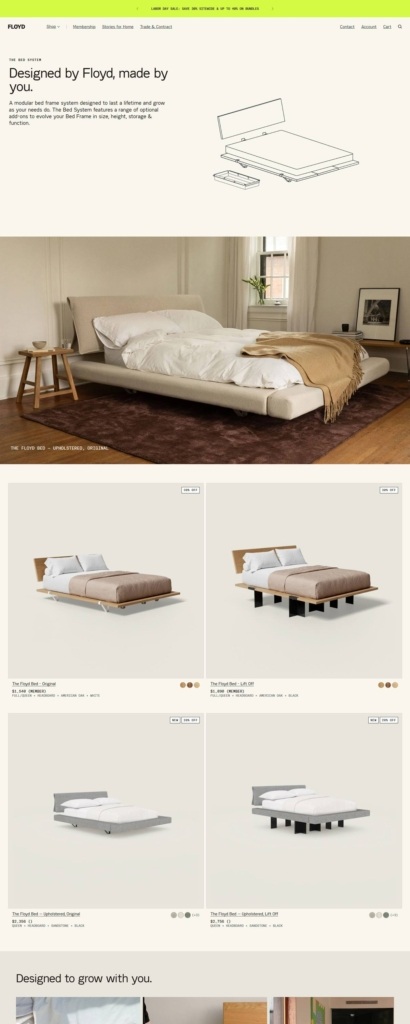
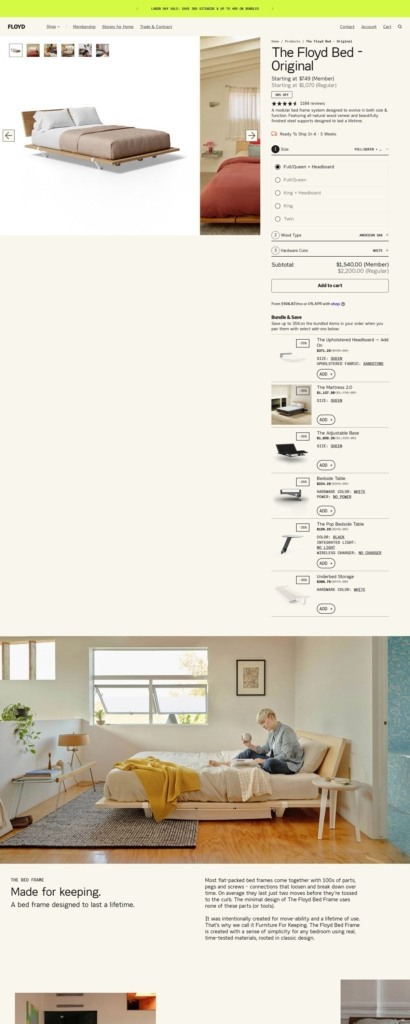
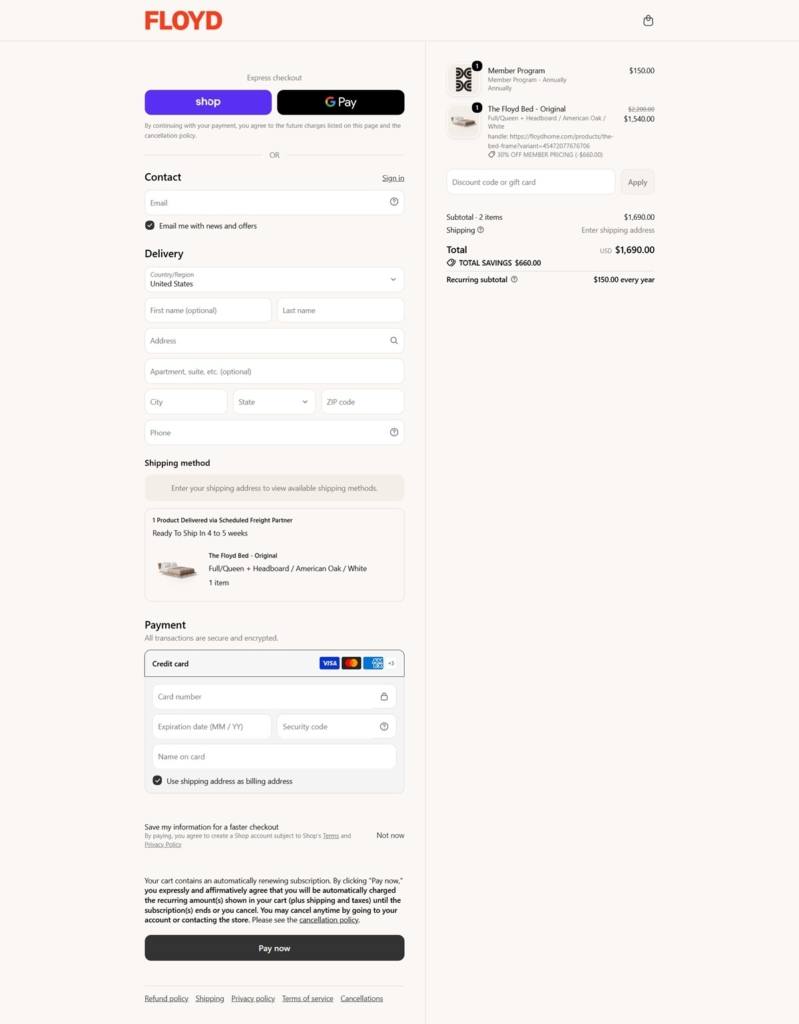
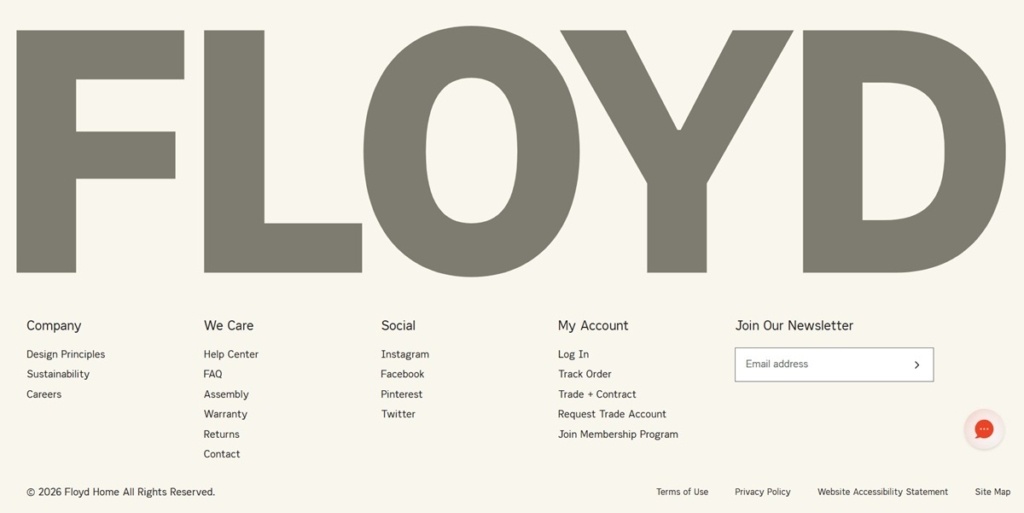
Floyd is a Detroit-founded furniture brand selling modular bed systems, sectional and modular seating, storage blocks, tables, benches and a shared leg hardware system, built on Shopify and positioned around pieces that grow with the owner over successive apartments and homes. A paid Membership tier unlocks 30 percent off sitewide pricing and larger bundle discounts, and a separate Trade & Contract path serves designers and businesses buying at volume.
A warm off-white ground with a single red-orange accent. Pages sit on a cream (#F8F6ED) background with near-black (#231E1E) text, reserving a red-orange (#ff5436) almost entirely for sale tags and the occasional call-to-action.
Two custom typefaces named for the brand. Body and interface text runs in Floyd Gothic, a proprietary grotesque, while a separate display face, Floyd Inktrap, is reserved for larger editorial headlines; a GT America mono variant handles smaller metadata labels.
Studio photography on taupe backdrops. Product imagery favors flat, evenly lit studio shots on warm neutral grounds rather than styled room sets, keeping the focus on the modular hardware and joinery.
An announcement bar above the main navigation. A persistent strip promotes current offers, currently the member sitewide discount and the Sleep Sale, sitting above the logo and menu on every page.
Membership-gated collections. Some category pages, including the seating collection checked directly, return a message that the content is exclusive to members at a given tier, meaning parts of the catalog and its member pricing are only visible after signing up.
Fabric swatches as a standalone step. An “Order Fabric Swatches” option lets shoppers request physical material samples before committing to an upholstered piece, separate from the main add-to-cart flow.
Bundled configuration on bed and seating pages. Beds and sectionals are sold with add-on options, storage blocks, headboards, extra modules, bundled into a single configurator rather than as separate line items.
Modularity as the core claim. Site copy repeatedly frames pieces as systems that expand or reconfigure over time rather than fixed products, tying directly into the brand’s stated design philosophy.
“Stories for Home” as an editorial section. A dedicated nav item hosts brand and design content separate from the shop, giving Floyd space for longer-form storytelling outside product pages.
A decade-plus history referenced directly. The brand describes itself as founded in Detroit “over a decade ago,” using its own longevity as evidence for the durability claims made about the furniture itself.
A named Membership program with tiers. Beyond simple discounts, membership appears to control both pricing (30% sitewide) and catalog visibility, an unusual combination for a direct furniture brand.
A Trade & Contract channel. Separate from consumer membership, this path is built for designers and businesses, listed as its own primary nav item.
Seasonal sale layering. A “Sleep Sale” offering up to 50% off sleep accessories runs alongside the standing member discount, meaning multiple discount tiers can be visible on the same page.
Cometeer produces frozen brewed coffee “pucks” sourced from well-known specialty roasters throughout the U.S
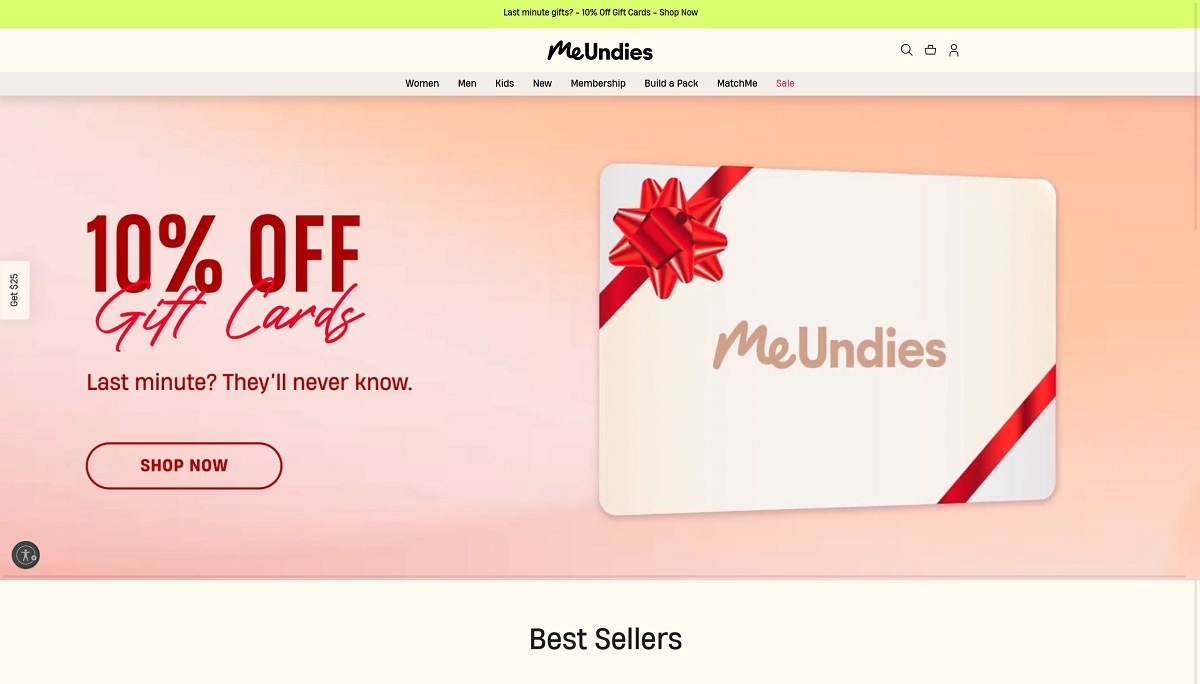
MeUndies specializes in ultra-soft, sustainably sourced underwear, loungewear, and accessories for men and women. Their products feature a variety of colors and playful prints, emphasizing comfort and individuality. The website offers a clean, user-friendly interface with intuitive navigation, high-quality imagery, and detailed product descriptions, providing a seamless shopping experience.
Maisonette ios a modern marketplace for kids – Clothing, toys, gear, and home decor all in one place.
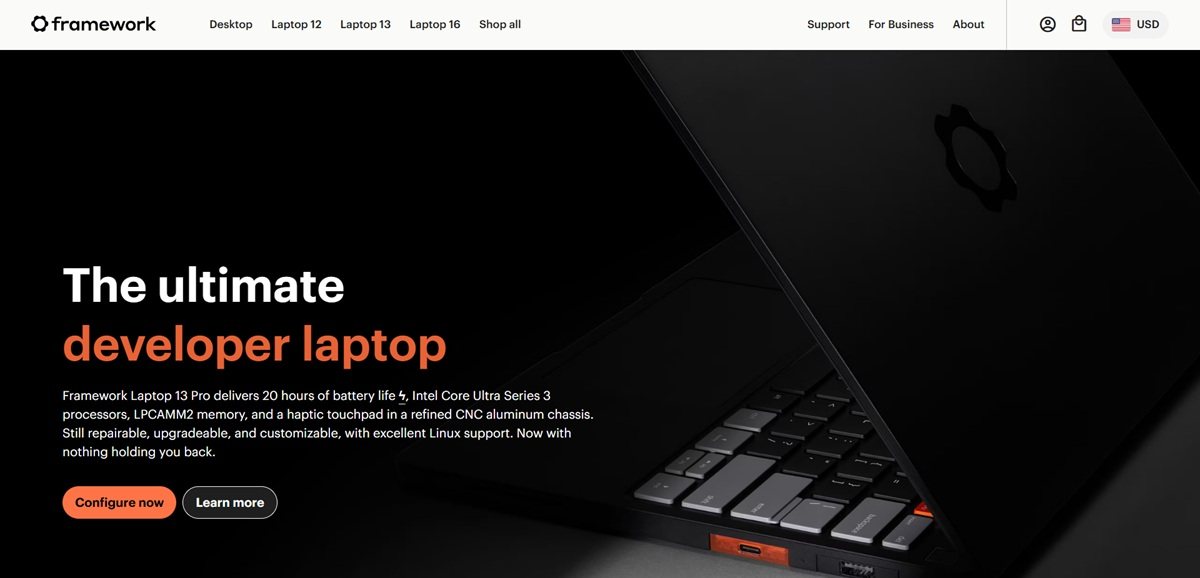
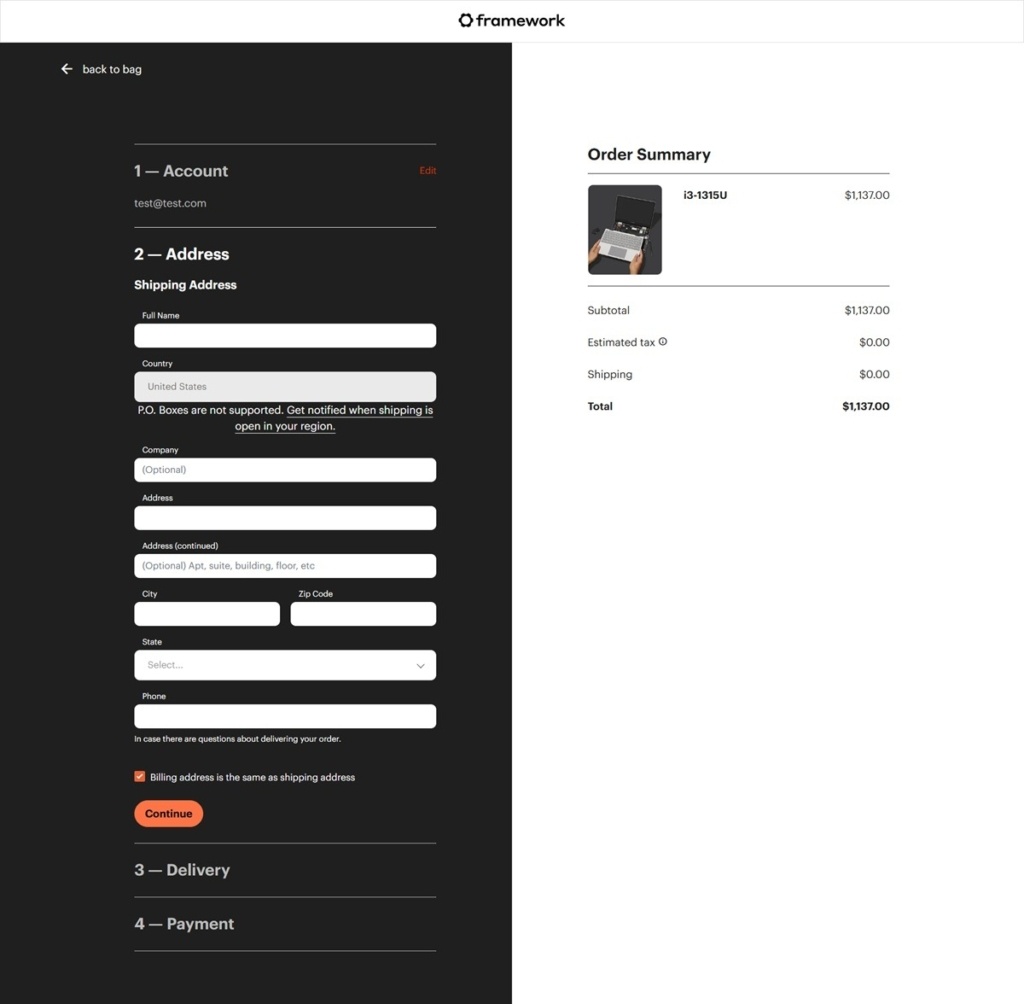
Framework sells modular, repairable computers direct to consumers and businesses: Framework Laptop 12, Laptop 13, Laptop 13 Pro, Laptop 16 and Framework Desktop, plus the parts that make them upgradeable. The stated aim is blunt, set in a homepage headline as “Let’s fix Consumer Electronics.” Alongside the machines runs a Marketplace of 572 components, from mainboards and expansion cards to memory, storage, keyboards, tools and merch. Built on a custom storefront rather than a hosted cart.
Warm greys with a signal orange. The palette sets a near-black and a warm off-white against a brand orange used for primary actions. A secondary set of sage green, lavender, coral and bubblegum appears as product-line theming rather than general decoration.
Graphik, DM Mono and a pixel face. Graphik in regular and medium handles headings and body copy, DM Mono is available for technical strings, and a bitmap display face named Framework Pixel gives the brand its one non-neutral typographic gesture. Material Icons supply the interface glyphs.
Product-first navigation. The header lists each machine before any marketing page, and every product entry expands into the same four links: the product page, Specs, Shop parts and Downloads and guides. Support, Resources and About follow, with Linux given its own nav item.
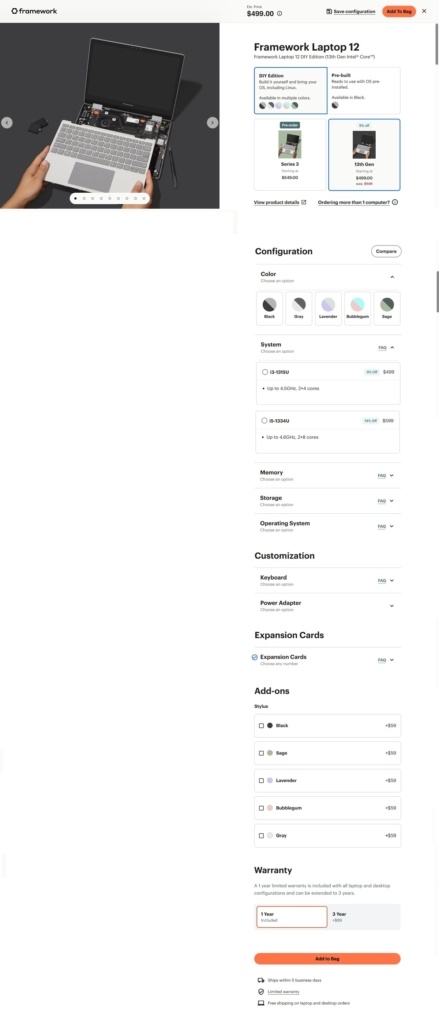
A configurator instead of a product page. Machine pages run as long-form explainers covering storage, memory, expansion cards, battery, screen, webcam, keyboard and privacy switches, with millimetre dimensions and weight, before ending in Configure now.
Pre-built or DIY as an explicit fork. Each laptop offers a Windows 11 pre-built and a DIY Edition where the buyer supplies memory, storage and operating system, with the two labelled “Great for Windows” and “Great for Linux” rather than by price.
Filters built around compatibility. The Marketplace filters parts by which processor generation and chassis they fit, listing counts for AMD Ryzen AI 300 Series, Intel Core Ultra Series 3, 11th through 13th Gen Intel, Chromebook and each laptop model, alongside brand filters covering Framework, Cooler Master, Western Digital, Microsoft, DeepComputing, 8BitDo, NVIDIA and DeskPi.
Stock states beyond in and out. Availability filters separate In stock, Coming soon, Out of stock, Pre-Order and a Register interest bucket, so unreleased parts stay listed rather than hidden. An Outlet view filters to factory seconds, last gen and refurbished stock.
Ownership as the argument. Copy returns to repair, upgrade and longevity: “This isn’t our computer. It’s yours,” and a claim that every part is replaceable with the single tool that ships in the box.
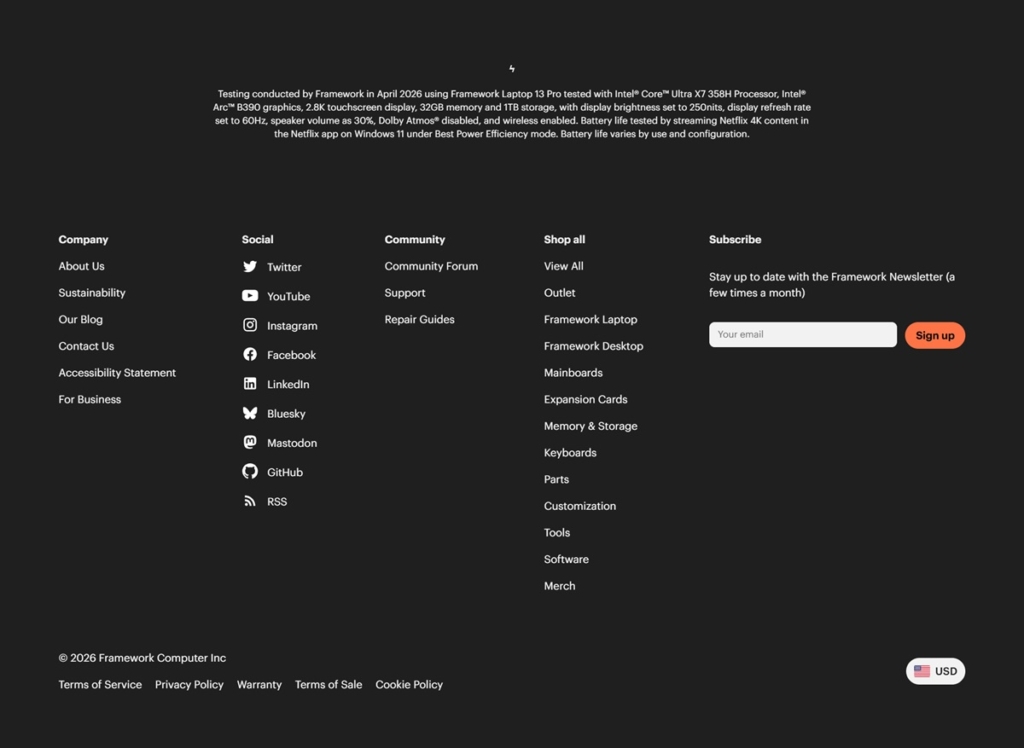
Claims carried with their footnotes. The battery life figure on the homepage is followed by a full test methodology naming the processor, display brightness, refresh rate and the workload used, dated to the month of testing.
A community layer in the footer. Repair guides, a community forum, a knowledge base and a social list running from Instagram and YouTube through Mastodon, Bluesky, GitHub and RSS sit beside the usual company links.
A business route and a product survey. Volume buyers get a contact path from the machine pages, and a homepage panel invites shoppers into a survey shaping future products.

Goby is an oral care brand that engages in the design, manufacture, and marketing of electronic toothbrushes.
Dally brings high design and low speeds in your every day life. Their all-natural botanical hand wash is scented with essential oils and looks like a design object for your counter.
Sparkling water infused with hemp extracts & adaptogens for peace of mind
Humanrace is a product company founded by Pharrell Williams with a mission to empower all people in their pursuit of wellbeing.
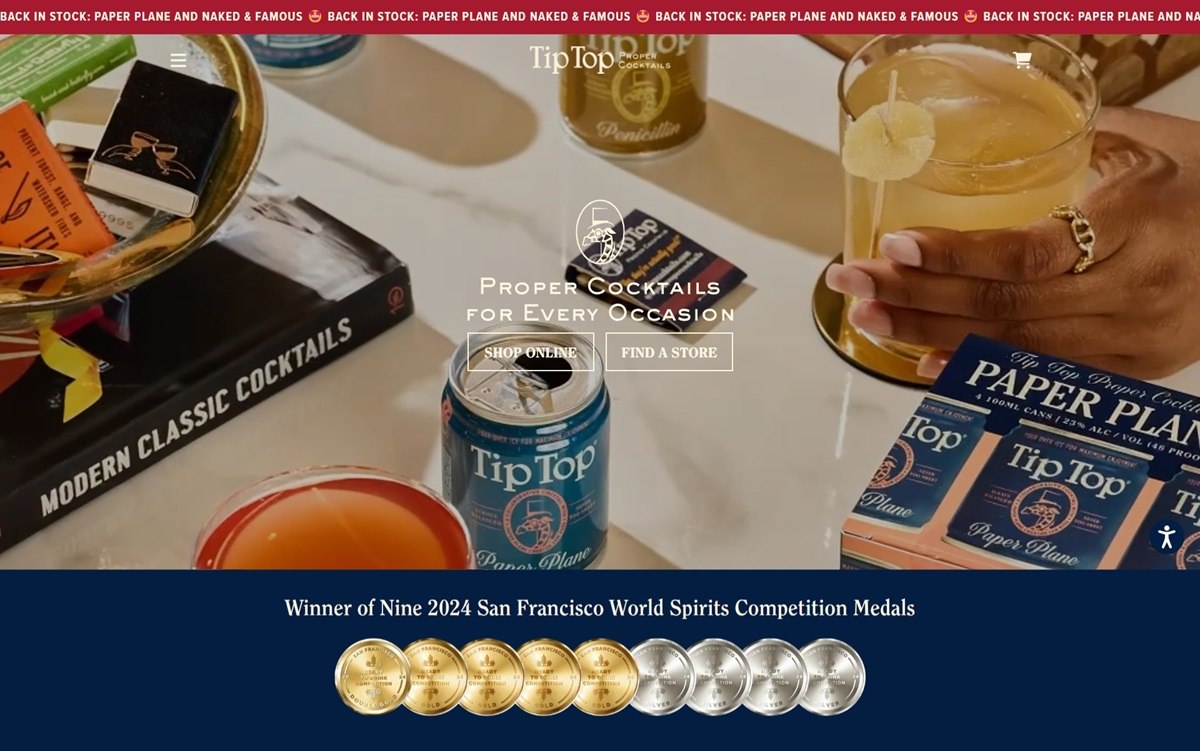
Tip Top Proper Cocktails offers a curated selection of ready-to-drink classic cocktails, including the Old Fashioned, Negroni, and Manhattan, all crafted to deliver bar-quality experiences in convenient, portable cans. The design features compact, retro-inspired packaging that reflects the brand’s commitment to authenticity and quality.


