In 2004, we joined a teacher teaching her love of jewelery. From then on, we were looking for opportunities to make something, even something we would never wear.
Prigipo


eCommerce Websites
In 2004, we joined a teacher teaching her love of jewelery. From then on, we were looking for opportunities to make something, even something we would never wear.
The candles that change everything.
Our aim is to be the most unique gift company in the world. We constantly strive to source, create and deliver stylish presents that excite, inspire and delight our customers.
Since 1935, Sperry has built the tools for life’s adventure on the open sea.
We are Brave the Skies. We create beautiful commerce sites using Shopify. Whether you sell online, on social media, in store or off-world, we have you covered.
The world famous hairbrush brand for detangling and styling in 3 easy steps.
We design and produce with integrity, ambition and class. We operate only where the finest natural materials in the world meet the highest rate of poverty related crime, in order to provide better jobs, new skills and opportunities for women in prison.
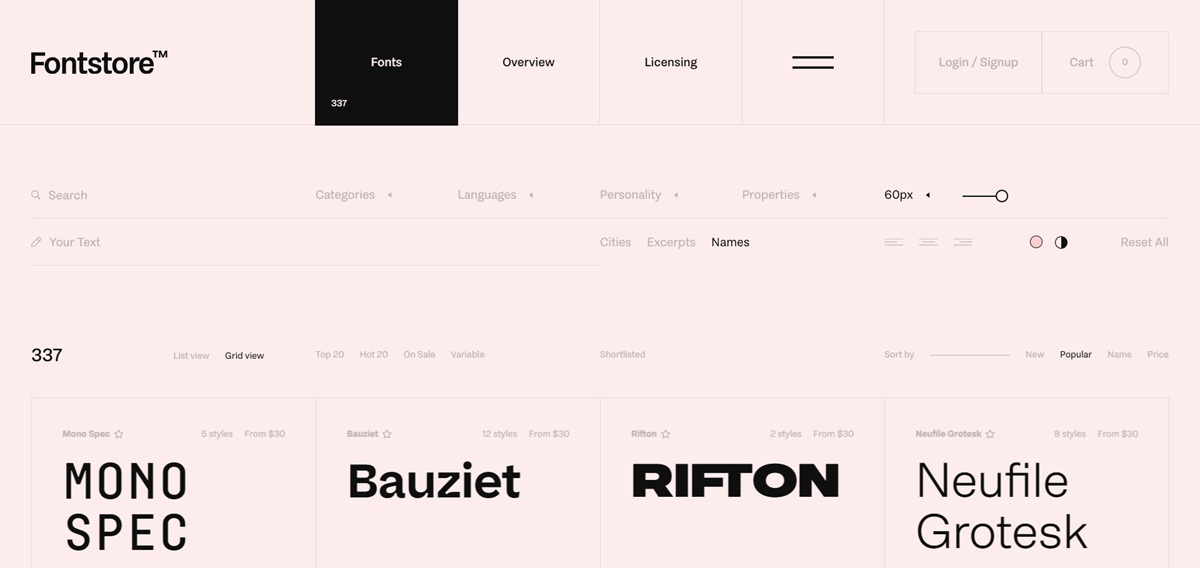
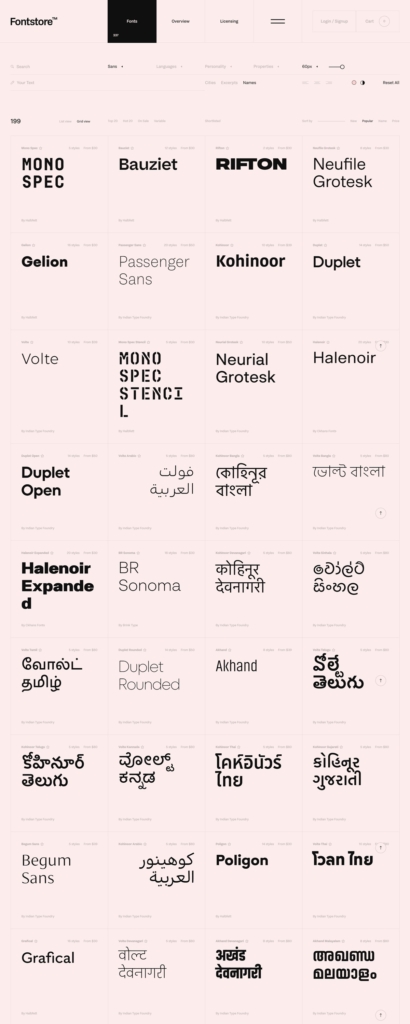
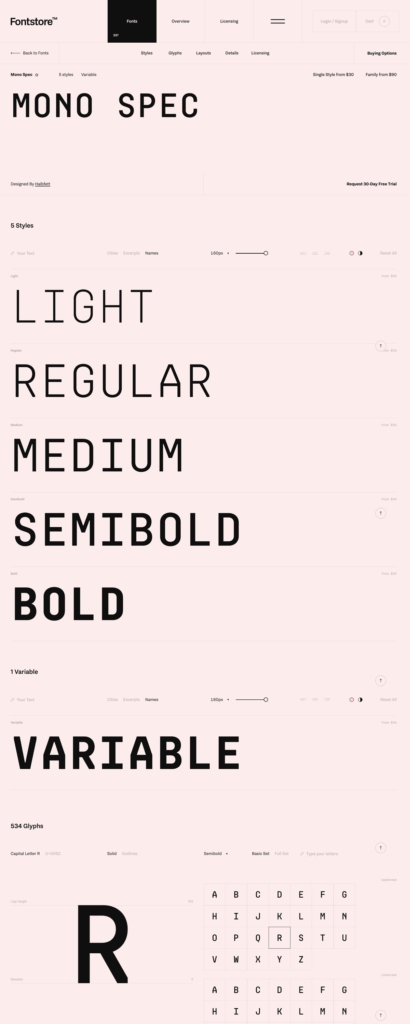
fontstore is a font marketplace from the Indian Type Foundry, selling licenses for typefaces built to support a wide range of writing systems, stated on-page as Fonts for Every Language. The storefront is a JavaScript single-page application built with Stripe for payment rather than a conventional server-rendered site.
A single custom sans. The application preloads one variable font, Passenger Sans, and applies it as the default face across the interface, with no serif or display face layered in.
Pastel category tints. The stylesheet defines a set of five background tints, pale cyan, pale green, pale grey, pale pink and pale yellow, reused as named color variables, the kind of palette typically used to color-code font cards or categories rather than brand the whole page in one hue.
A minimal application shell. The page ships as a single HTML document with one mount point and no server-rendered markup, meaning navigation, the catalogue and checkout all load through JavaScript once the bundle runs.
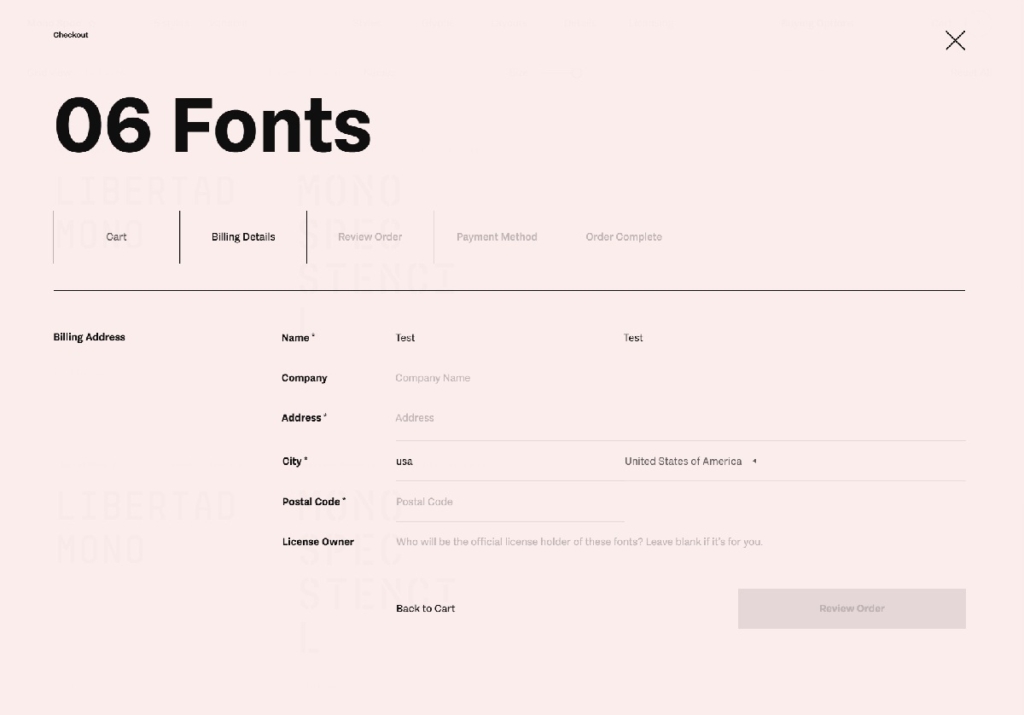
Licenses, not a simple checkout. The client code tracks a license type, a license owner and a list of licenses used per order, with a separate toggle for offline licenses, structure built for buying rights to a font family rather than checking out a single flat item.
Cart with an invoice link. Order objects in the code expose both a fonts download link and an invoice link, indicating a completed purchase produces a downloadable invoice alongside the font files.
Stripe-powered payment. Stripe’s JavaScript library loads on every page, and the checkout flow runs through Stripe directly rather than a third-party cart plugin.
Positioned around language coverage. The site’s own description states the mission directly: a premium font distribution service from the Indian Type Foundry, offering quality fonts for all the world’s languages, making multilingual support the headline claim rather than style or price.
A sibling product referenced in the code. Strings for a Fontshare debut and Fontshare originals appear in the client bundle, pointing to Fontshare, the foundry’s separate free-font arm, referenced from within the fontstore application itself.
Per-font-family counting. The interface pluralizes copy specifically for font families, zero font families, one font family, several font families, tracked separately from individual font counts, a level of catalogue precision aimed at type-literate buyers.
License transfer support. A transfer-license string in the client code indicates purchased licenses can be moved between accounts, a feature aimed at studios changing seats or ownership rather than a one-time individual buyer.
A dedicated licenses section on the buy screen. The buying interface separates popular licenses from a full expandable list, with show-more and show-less controls, rather than presenting every license type on one long page.
A native FontFace loader for previews. The client code calls the browser’s own FontFace API to load and register typefaces on the fly, letting a visitor preview a face directly in the page rather than through a static rendered image.
LANE is a Canadian company founded by a young man with a passion for fashion, for streetwear and a vibe which stands out from other high-end products.
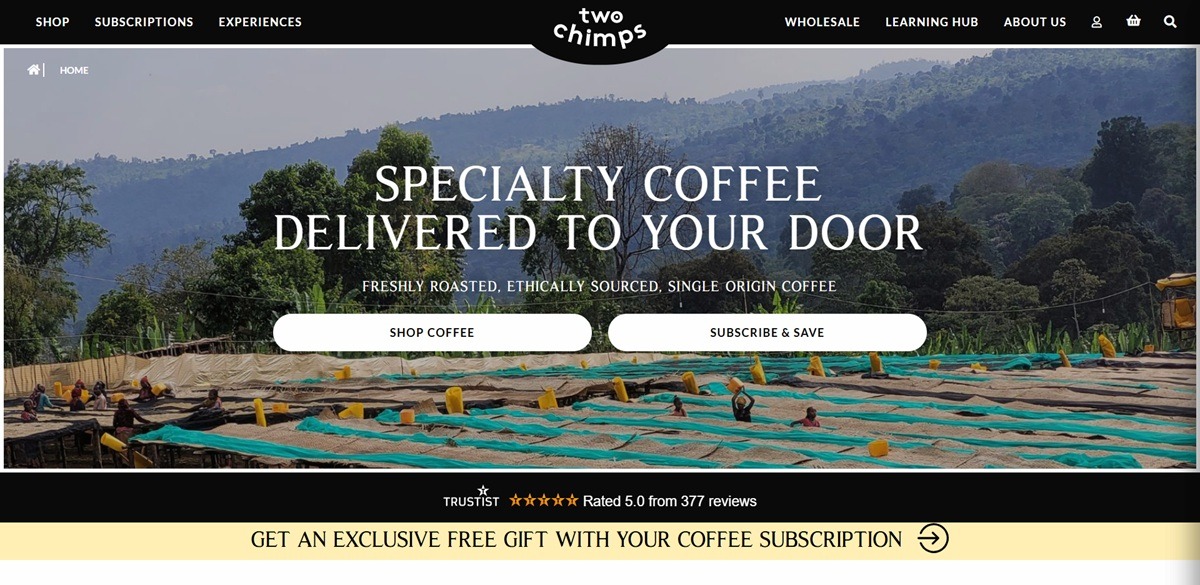
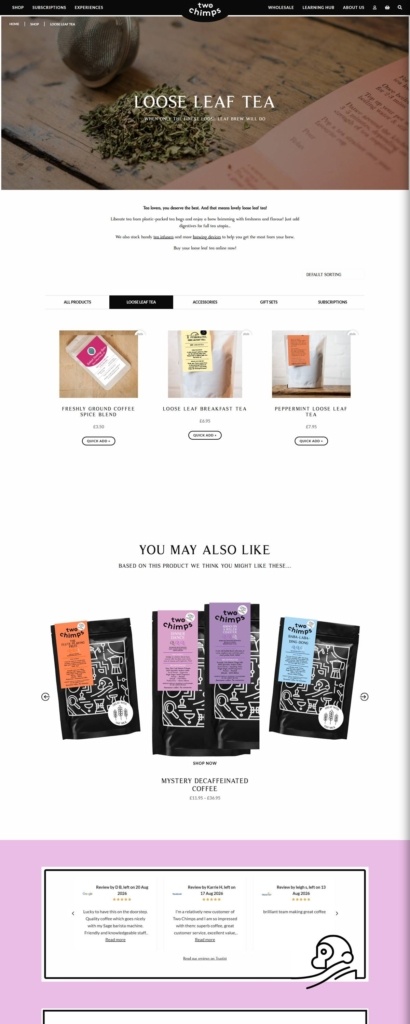
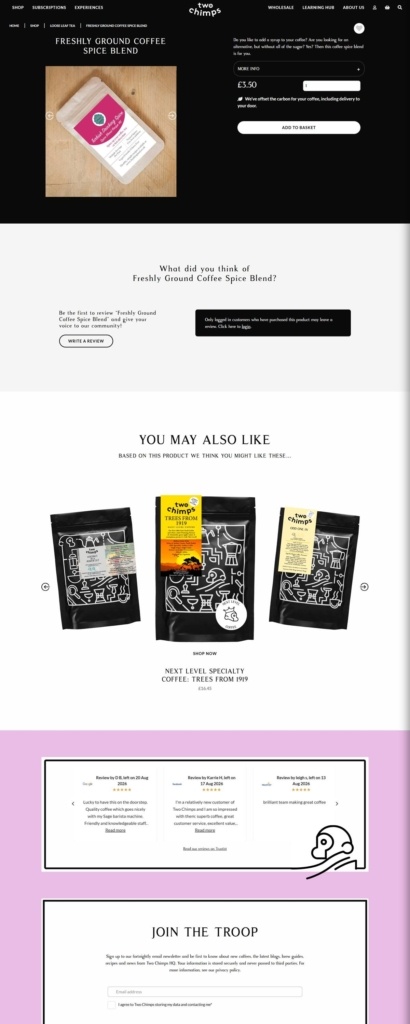
Two Chimps Coffee is a speciality roastery in Oakham, Rutland, selling single origin beans, subscriptions, loose leaf tea, hot chocolate, brewing devices and workshops to UK home brewers. The About copy sets the mission as making “specialty coffee fun and available to everyone, as we know it can sometimes be a little exclusive”. Subscriptions start at £10.45 a bag, workshops at £50. Built on WordPress and WooCommerce with a custom theme.
A black frame around a pastel interior. Header and footer are near-black bars, the body off-white. Full-bleed pastel bands in salmon pink, sage green, butter yellow and lilac break the scroll into chapters, so colour marks position rather than decorating.
Lato with a serif display cut. Navigation, labels, buttons and category pills run in Lato, set small and wide-tracked in capitals. Headings switch to Abhaya Libre, a serif used large and heavily letterspaced across hero photographs.
Illustration carries the brand. Bags are printed with line-drawn doodles and colour-coded labels, and the same hand reappears as a chimp leaning over the review carousel.
Filtered by taste, not category. The coffee listing opens with four filters: Roast Style, Origin, Process and Notes. Origins run from Brazil to South Sudan, and Notes holds around forty descriptors, from Chamomile to Zesty Orange Peel.
Cards that read like spec sheets. Each card in the three-across grid lists region, acidity, origin, process, varietal, roast style, notes and brew suggestion under the price, with a Quick add pill.
The subscription decision sits in the buy box. A product page asks for grind size across six brew devices, weight at 250g, 500g or 1kg, then Subscribe and save against a one time purchase, renewing weekly to four weekly.
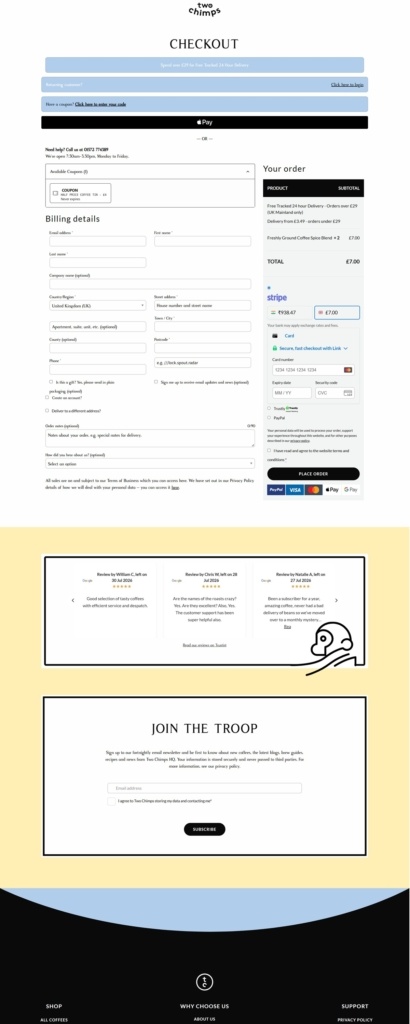
One long checkout page. An Apple Pay button sits above an OR rule, with the roastery phone number and opening hours beside it. Billing runs in one column next to a fixed order summary, with Stripe and PayPal below.
The names do the talking. Coffees are called Baba-Laba-Ding-Dong, Meet Up or Feet Up and Fairy on a Zipwire. The same voice names the newsletter block Join the troop and files blog posts under Our latest mischief.
A house roast scale. Roast depth appears as the Chimpometer, a row of chimp heads where one is light and fruity and two and a half is medium dark. There is no third head, because that roast would burn the flavours out.
Sustainability sits beside the price. A line above the basket button states the carbon for the order and its delivery has been offset, and Net Zero by 2040 appears as a footer badge.
A four question coffee quiz. The Coffee Wizard asks when you drink coffee, what you brew with, ground or whole bean, and how often, then returns a match.
Workshops sold as catalogue items. Six courses, including Latte Art and How to Start a Coffee Shop, sit in the catalogue alongside bags of beans.
Guarantees in the chrome. A referral panel offers £5 to both sides, and the sticky footer strip repeats free tracked delivery over £29 and a money back promise on any coffee you do not like.
Mikimoto UK is the British storefront of the Japanese pearl jeweller founded by Kokichi Mikimoto, who cultured the first pearl in 1893. The site sells necklaces, pendants, earrings, ear cuffs, rings, bracelets and brooches set with Akoya and white, black and golden South Sea pearls, along with picture frames, pens, jewellery cases, trays and candles. Prices run from gift pieces up to five figure diamond settings, and orders ship to UK addresses only. Built on Magento.
A white ground with a champagne accent. The interface keeps to white, greys and black rules, with a pale champagne gold used sparingly for highlights. Full width campaign banners supply the only large areas of colour.
Serif for the brand, sans for the interface. Type is split between Noto Serif and Noto Sans families selected by locale, with Cormorant Garamond carrying display lines. The effect is a serif voice for collection names sitting over plainer sans-serif navigation and specification text.
A nine region switcher built into the header. UK, Japan, Mainland China, Hong Kong, Taiwan, Singapore, Thailand, US and France each appear with their own language options, and a georedirect dialogue asks the visitor to confirm location and language on arrival.
Three routes into the same catalogue. The Jewellery menu splits into Categories, Collections and Pearl Types, so a shopper can arrive through a product shape, a design line such as Les Pétales Place Vendôme, Lucky Arrows, Bow Charm, V Code or Passionoir, or through the pearl itself.
Prices are conditional. The Pearl Necklaces listing runs to 66 products across three pages, sorted by position, price or launch date. Catalogue pieces show a figure, £12,000 or £14,000 for diamond set Akoya strands, while high jewellery references display only a reference code with no price.
Product pages read as specification sheets. A Bow Charm necklace lists at £11,000 under the code KZ 1757D W, followed by a Specifications block giving pearl size of 7.00 to 7.49mm, 0.70ct of diamonds, 18K white gold and an adjustable 14 to 16 inch chain, then accordions for Payment, Shipping and Exchanges and Returns.
Gifting is merchandised by occasion. Anniversary, Birthday, Graduation, Pearl Wedding, Jewellery for Men and Gifts under £1,500 each get their own listing.
1893 is the anchor. The site titles itself “The originator of cultured pearls. Since 1893.” and returns to the founding claim in the About section and campaign copy.
A news feed does the high jewellery work. Dated articles cover the L’éclat collection launch at Hôtel d’Évreux on Place Vendôme during Paris Haute Couture Week, and the campaign fronted by Michelle Yeoh.
Augmented reality try-on. A Virtual Fitting tool is promoted from the homepage, described as using augmented reality to show how a piece suits the wearer.
Appointments sit next to the cart. Product pages carry business hours and a London phone number alongside Store Locator, Schedule an Appointment and a virtual appointment form.
Fulfilment terms stated on the page. Free shipping and packaging, UK addresses only, same day dispatch before midday, Royal Mail Special Delivery with signature required, plus complimentary gift wrapping and a message card option.
Craftsmen for sustainable wooden flooring from the Black Forest.


